YET Architecture
Loop House
Residential Concept — Yakushima, Japan, 2026
Loop House — Residential Concept
Data
Credits
About the Project
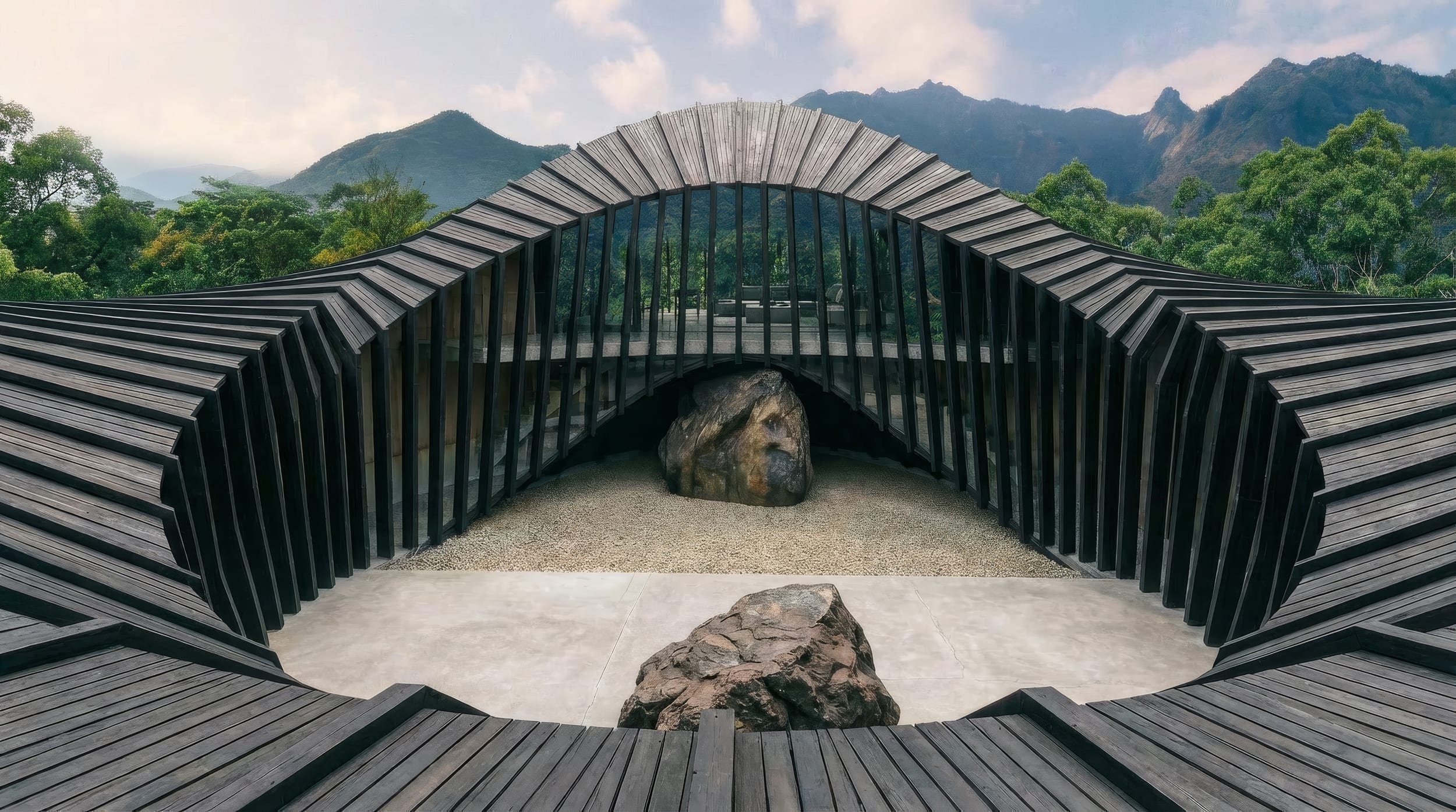
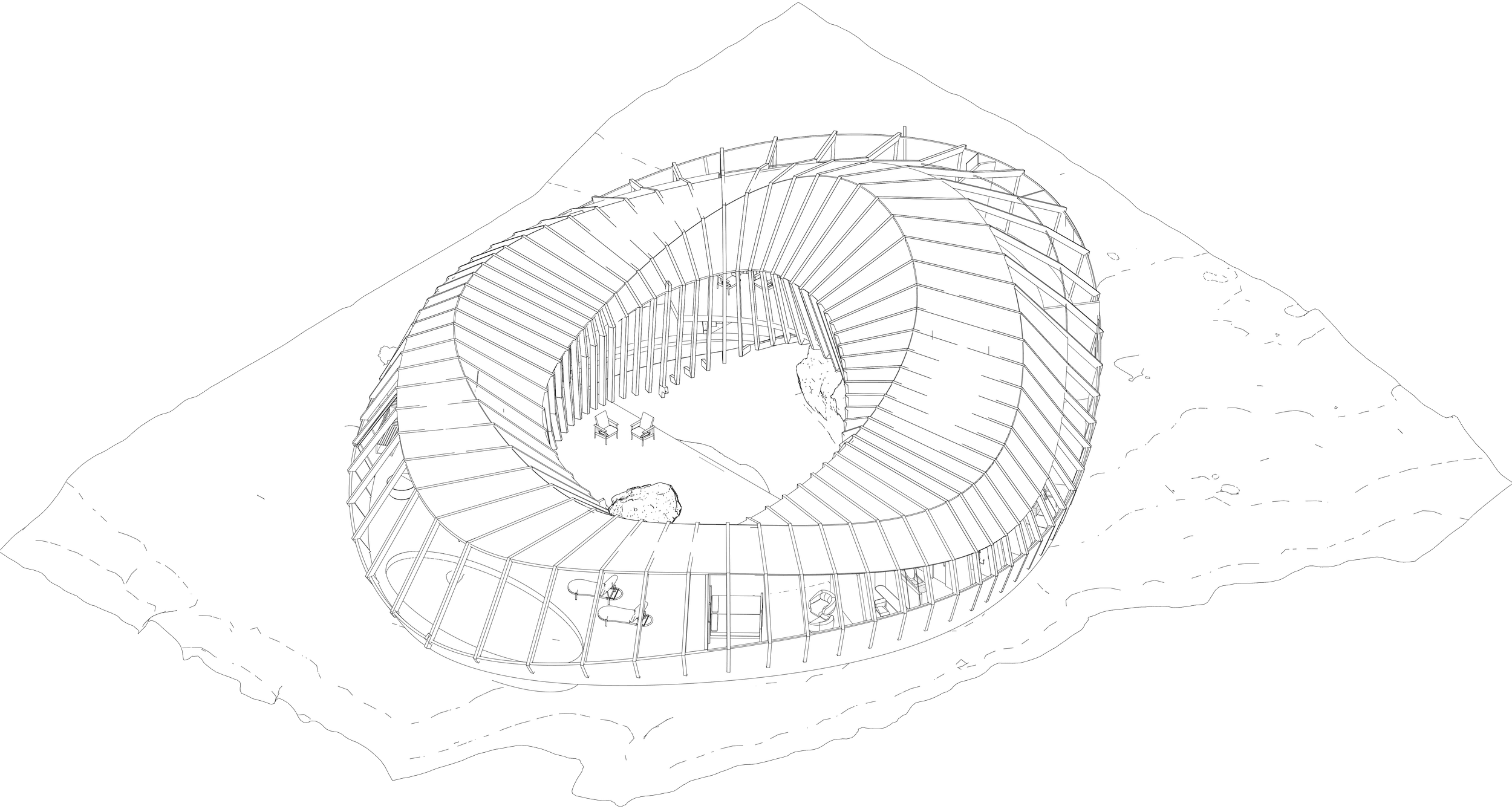
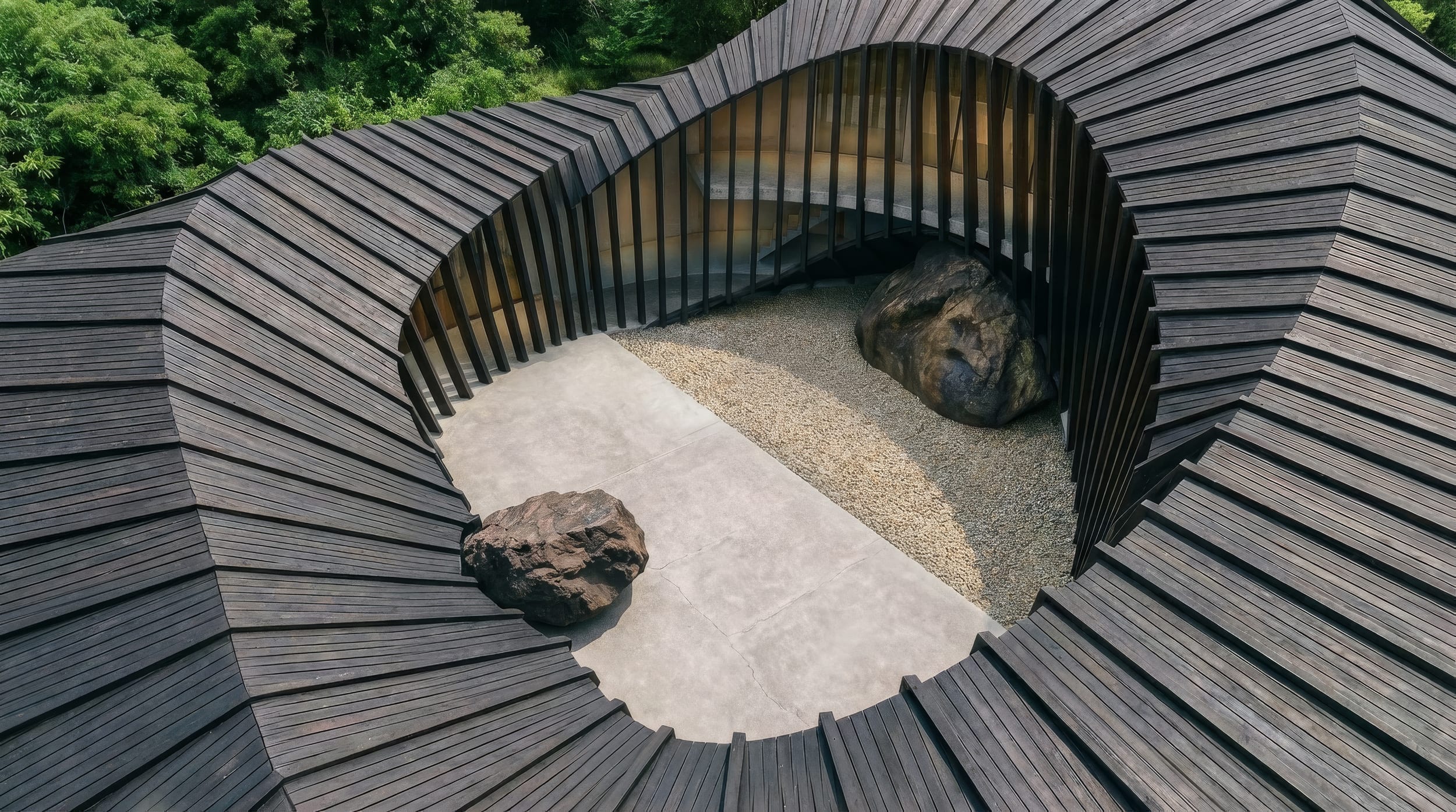
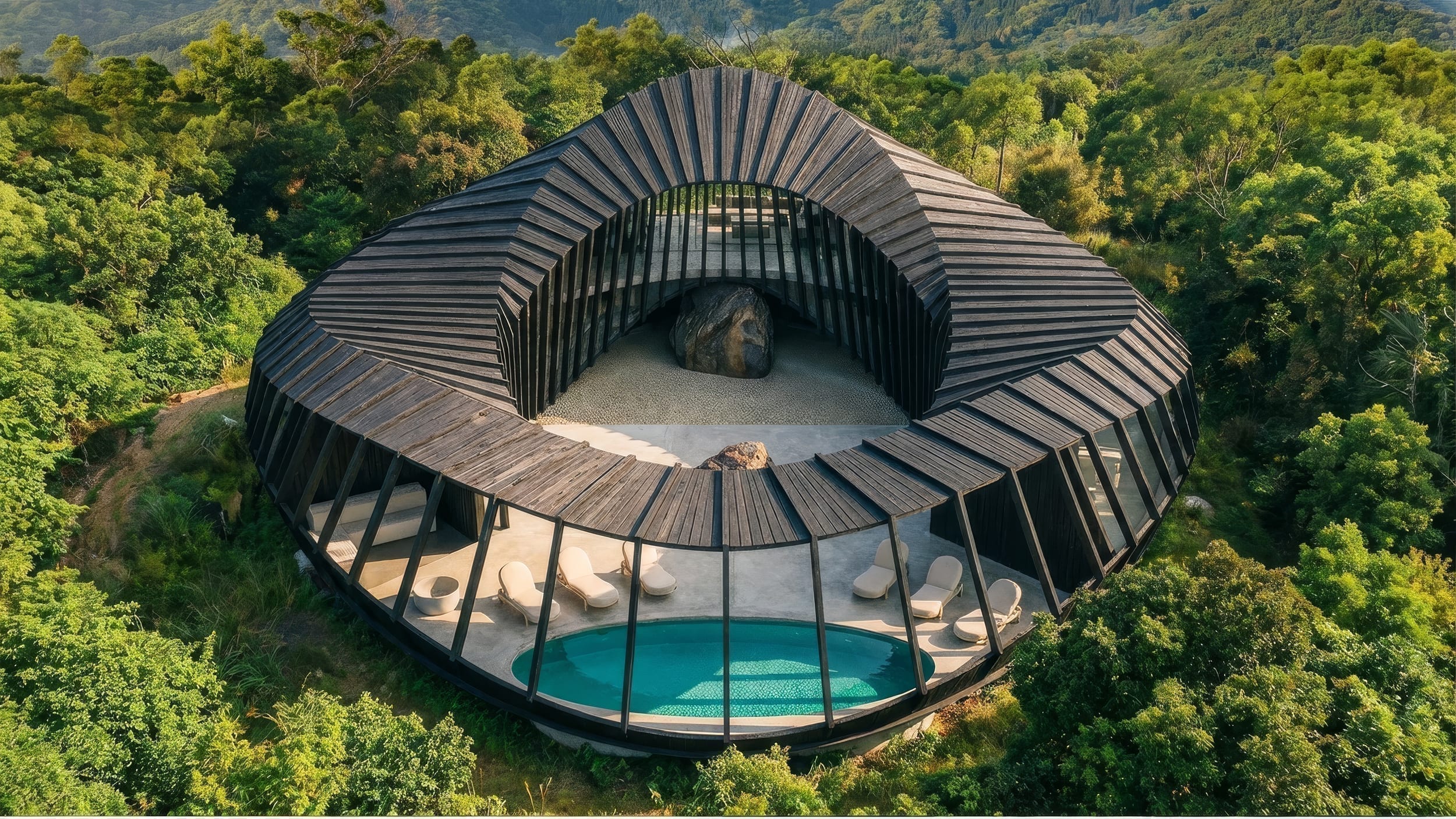
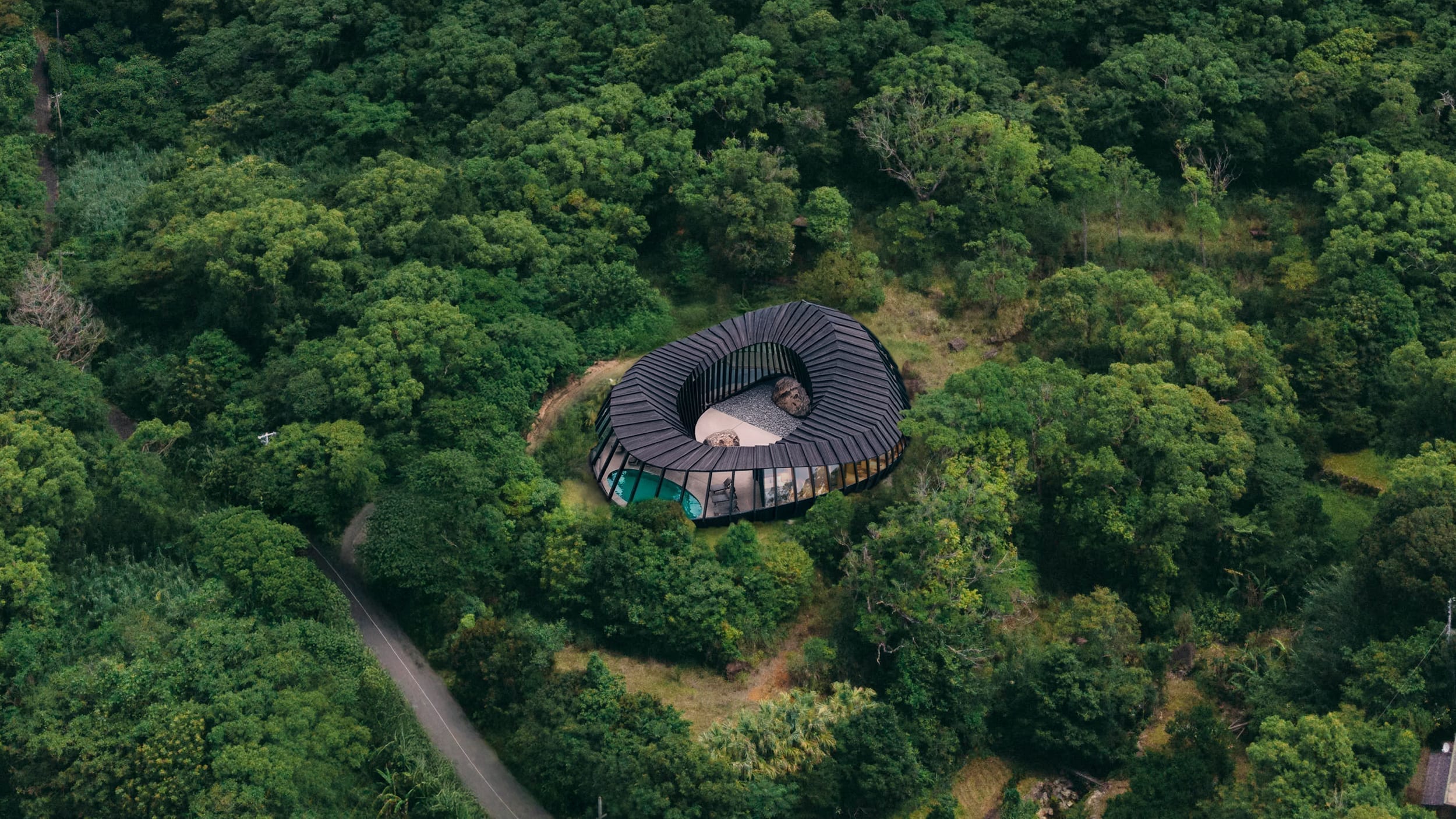
Loop House is generated by the landscape and two existing stones that act as fixed points within the site. The stones shape the architecture, defining a continuous looped form that balances symmetry and variation.
The house simultaneously sits on one stone and is pressed beneath the other, creating a controlled tension between elevation and compression, openness and constraint.
Design Concept
A house shaped by landscape and stone.
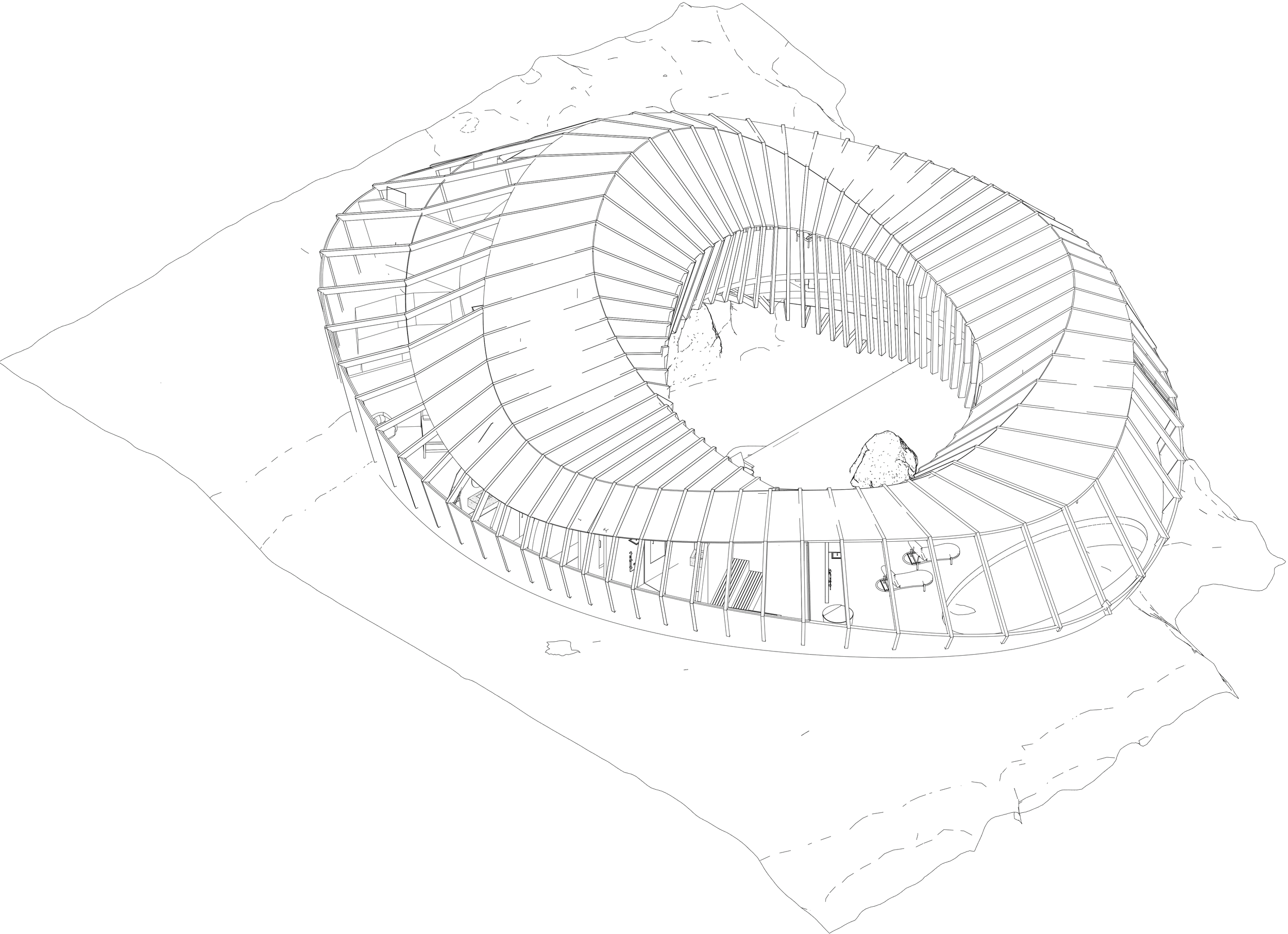
The loop establishes a rhythmic spatial order through repetition, proportion, and gradual change. This rhythm is reinforced by a gradual modulation of the structural columns, whose spacing shifts from dense to open, shaping degrees of enclosure and exposure. The project combines contemporary computational design with principles of restraint and balance, seeking a quiet spatial intensity rather than formal expression.
Loop House
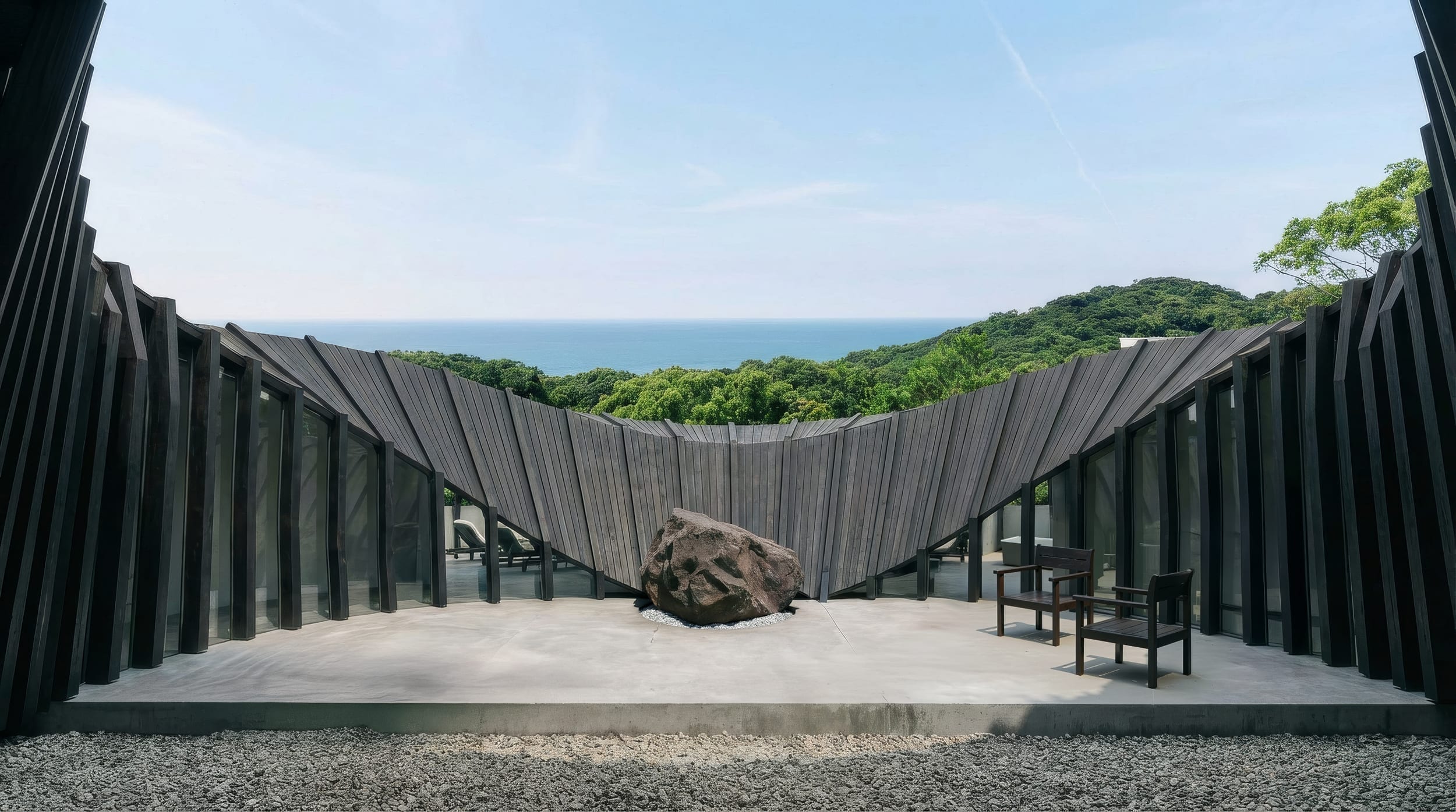
At the center of the loop, a calm inner courtyard contrasts with the surrounding active greenery and expansive landscape. Through minimal material language and controlled geometry, the house creates an atmosphere of stillness and contemplation, mediating between the stability of stone, the fluidity of form, and the natural environment.
[ Structure & Space ]
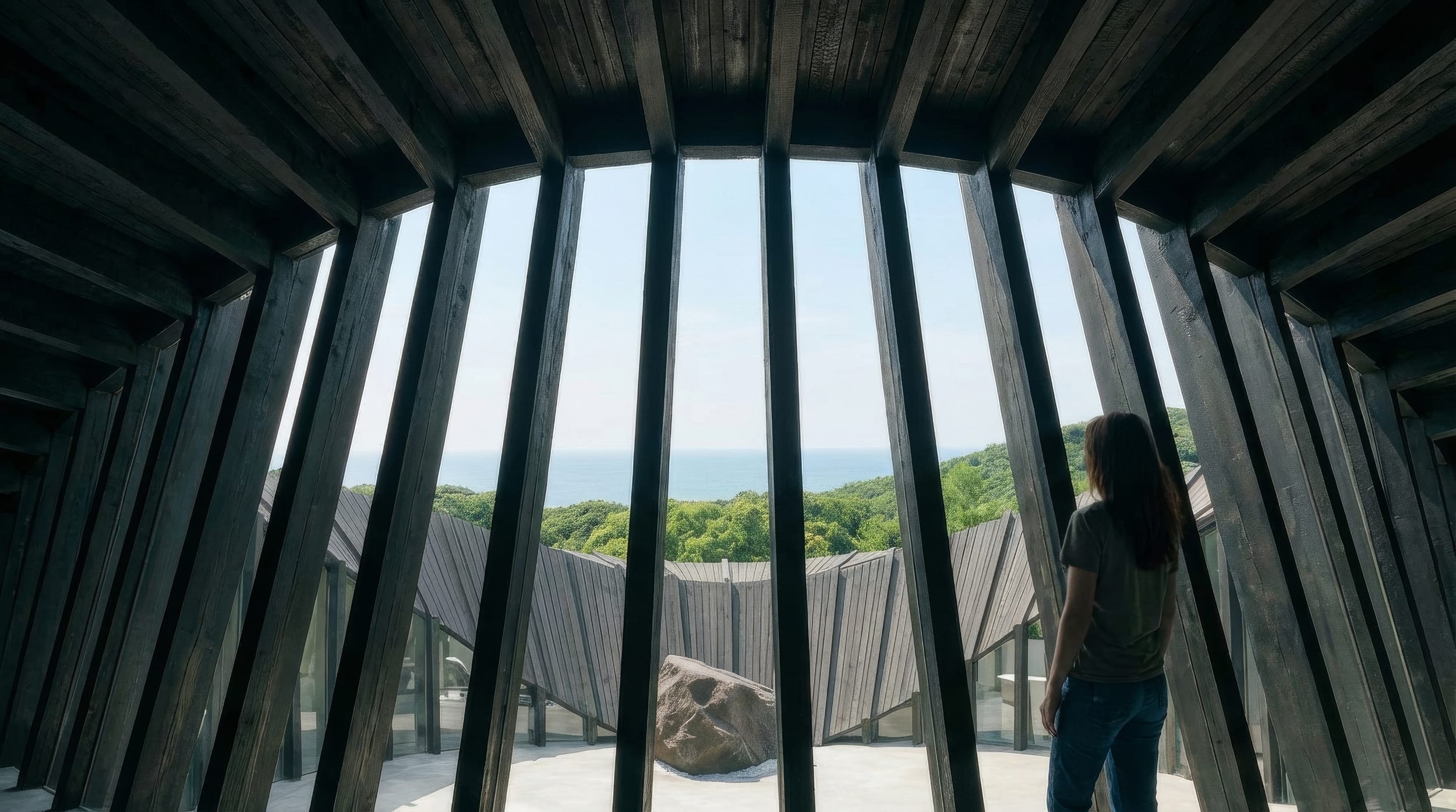
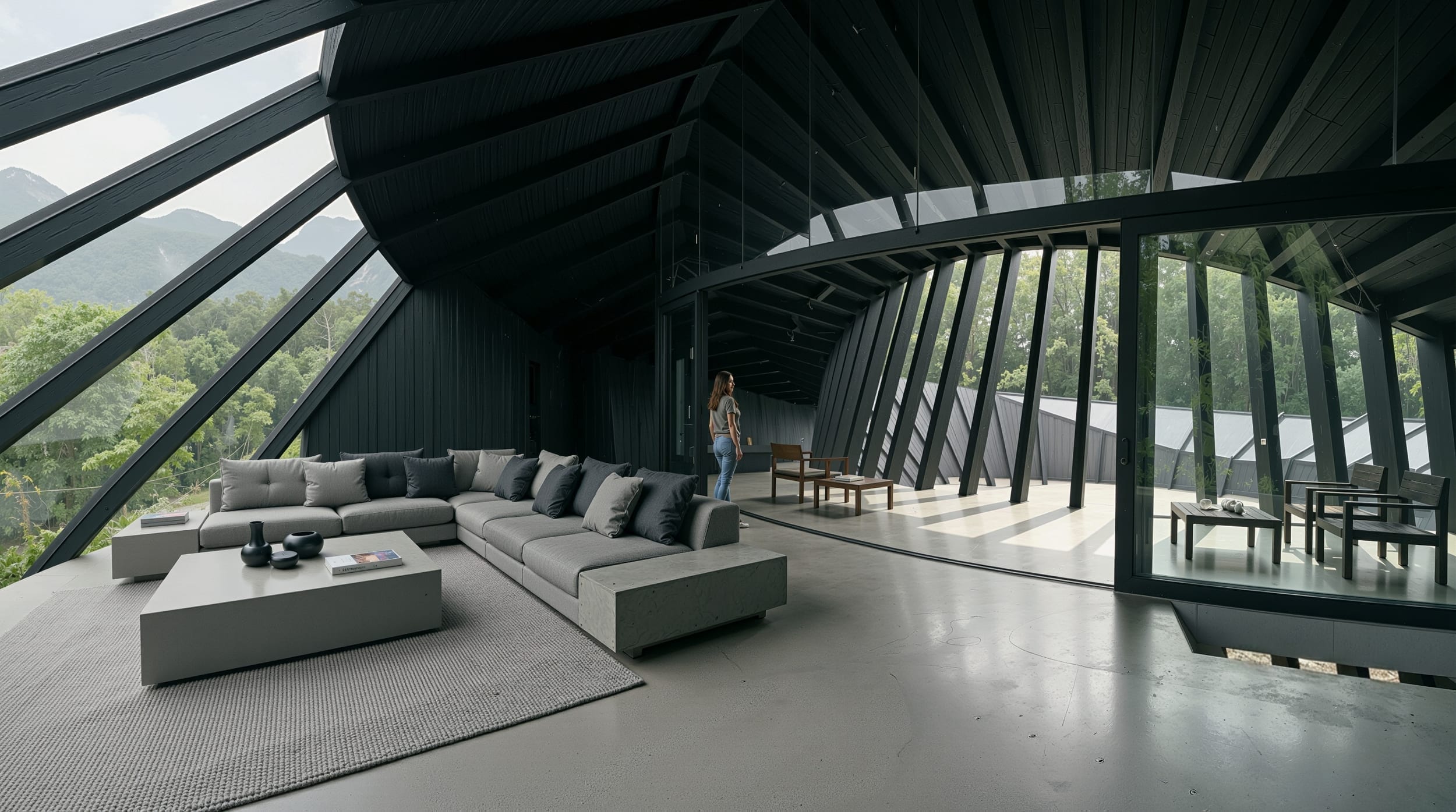
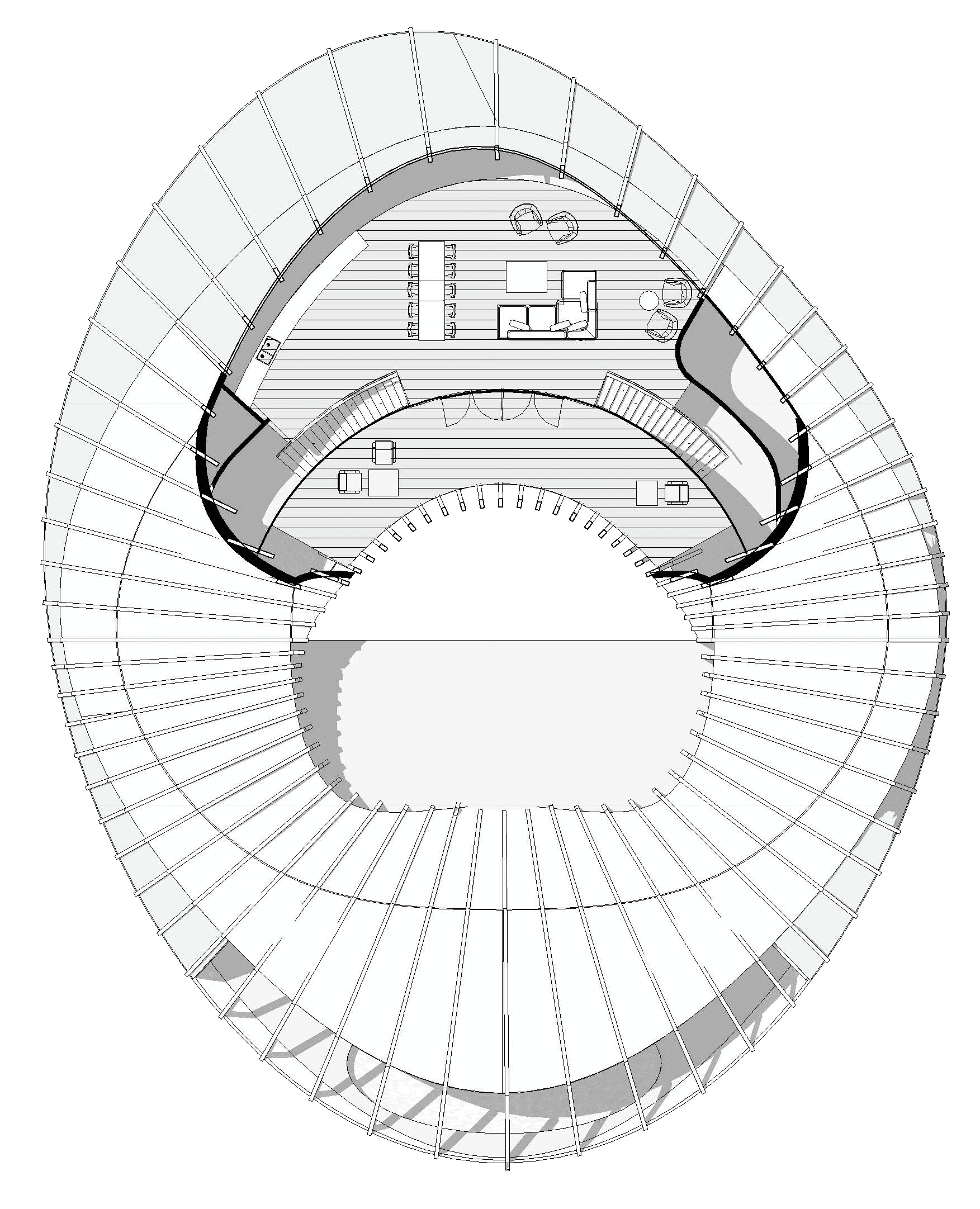
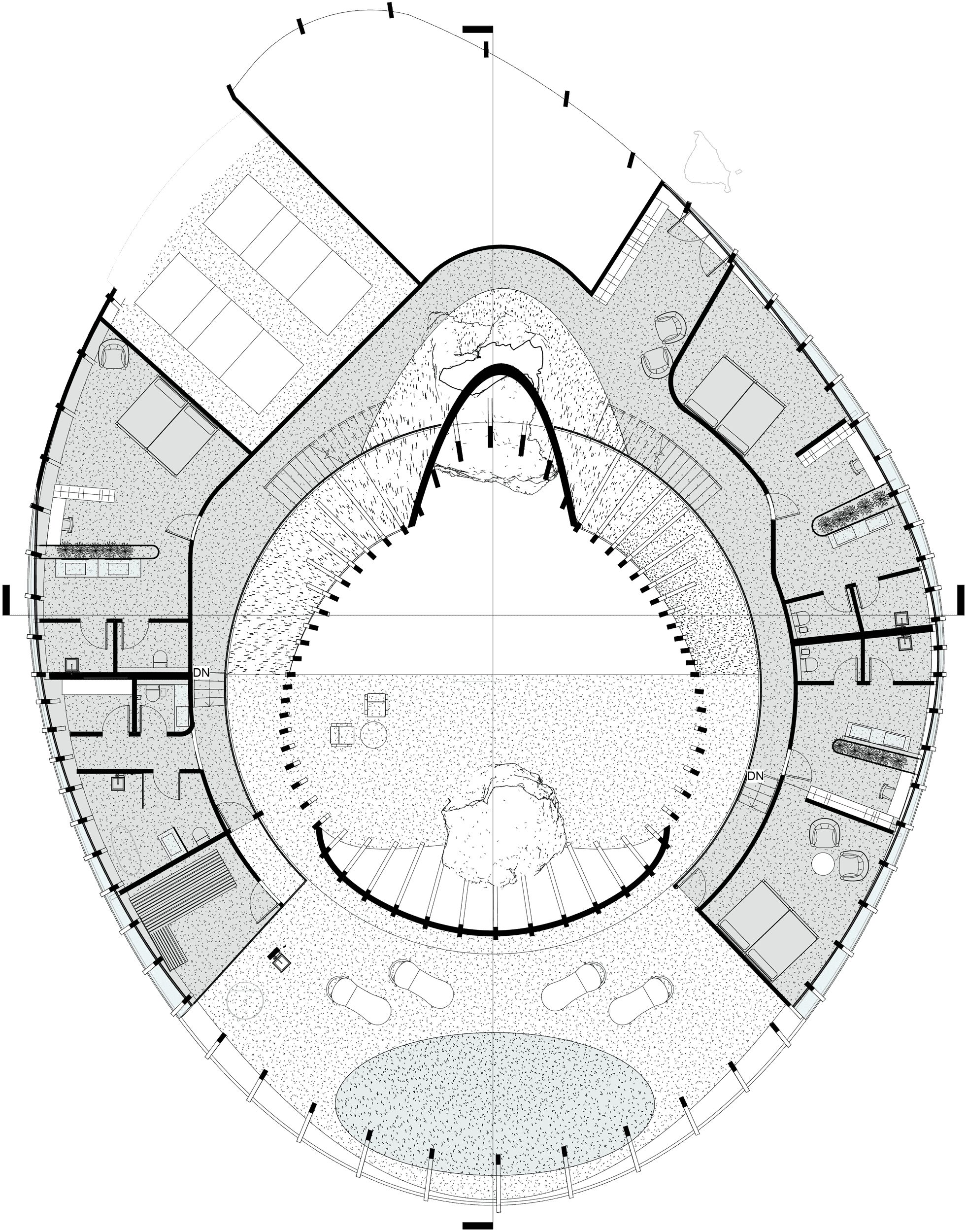
The swimming pool is positioned at the center of the composition and acts as the main spatial anchor. Bedrooms and wellness spaces are arranged symmetrically on both sides of the pool, reinforcing balance and spatial clarity. The living room and kitchen are placed on an elevated level, visually resting on the stone. This deliberate elevation allows the upper living spaces to open above the swimming pool zone, ensuring uninterrupted ocean views for both areas without hierarchy or competition between levels.
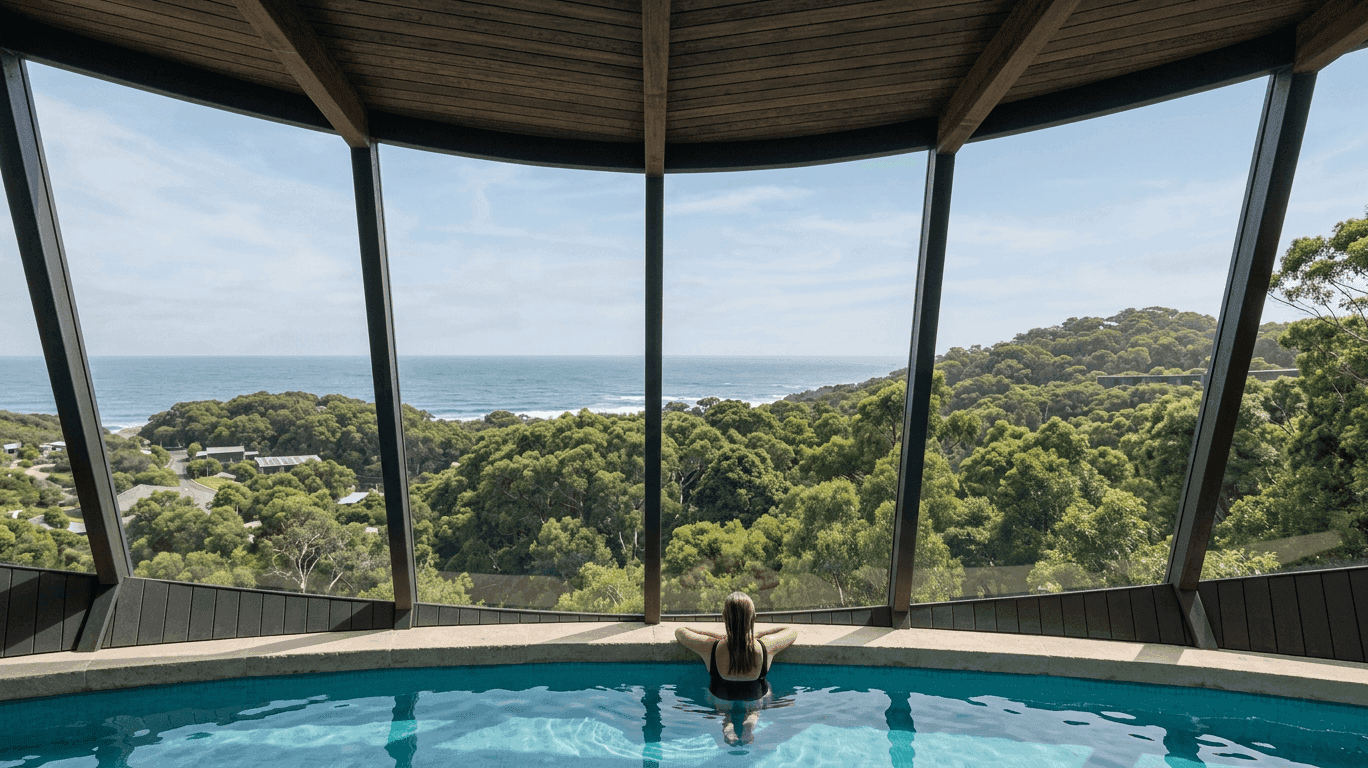
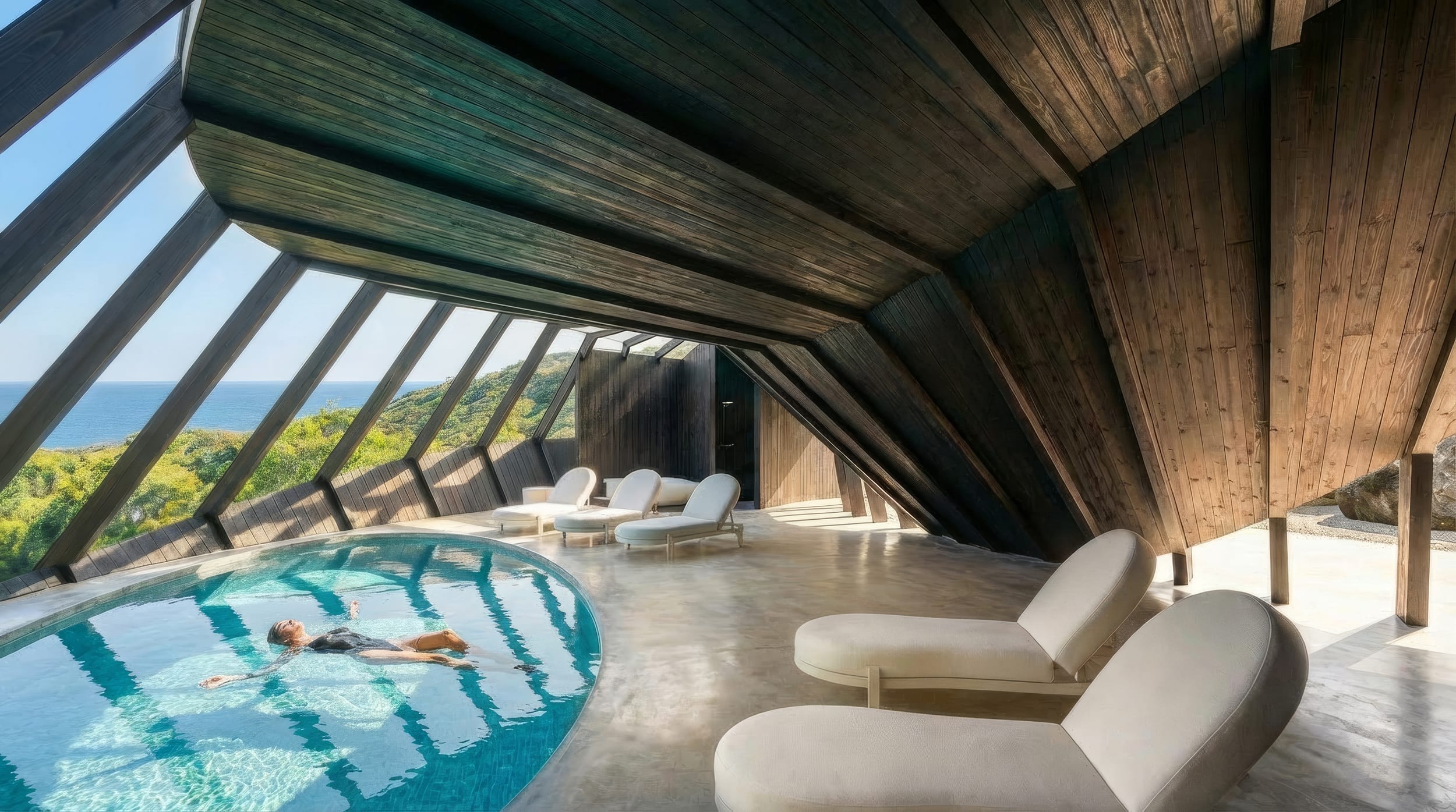
A continuous ring of thick wooden columns defines the structure and the façade. The rhythm of the columns changes gradually along the loop: around the swimming pool and balcony areas, the spacing opens to maximize views and light; along the bedroom zones, the columns become denser, providing increased privacy while maintaining visual connection to the landscape. This controlled variation establishes a calm transition between openness and enclosure.
Index