YET Architecture
SAM&JO
Eyewear Store — Tel Aviv, 2025
SAM&JO Glasswear Shop
Data
Credits
About the Project
What if a retail space didn't try to sell, but instead invited attention — slowing down the act of looking, allowing each object to exist in its own moment, and framing presence as the central experience?
Sam&Jo is not a typical eyewear store. Here, the architecture does not shout. It waits. And the glasses do not compete. They wait too.
Rather than follow the typical grammar of eyewear retail — bright lights, white shelves, repetition — the design dismantles that language altogether. No walls of product. No overwhelming choice. Instead, the project is constructed around three ideas: presence, interval, and attention.
Design Concept
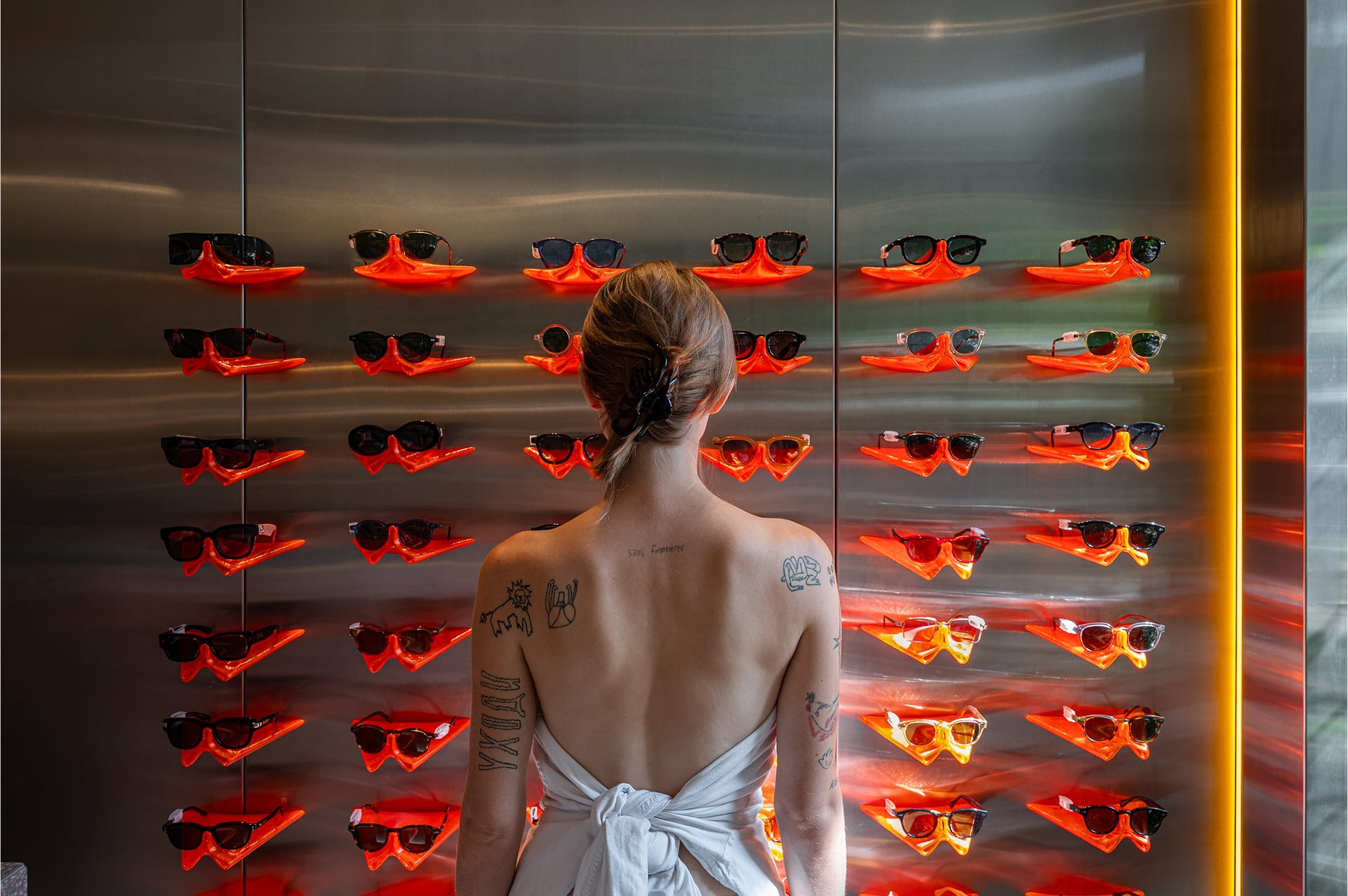
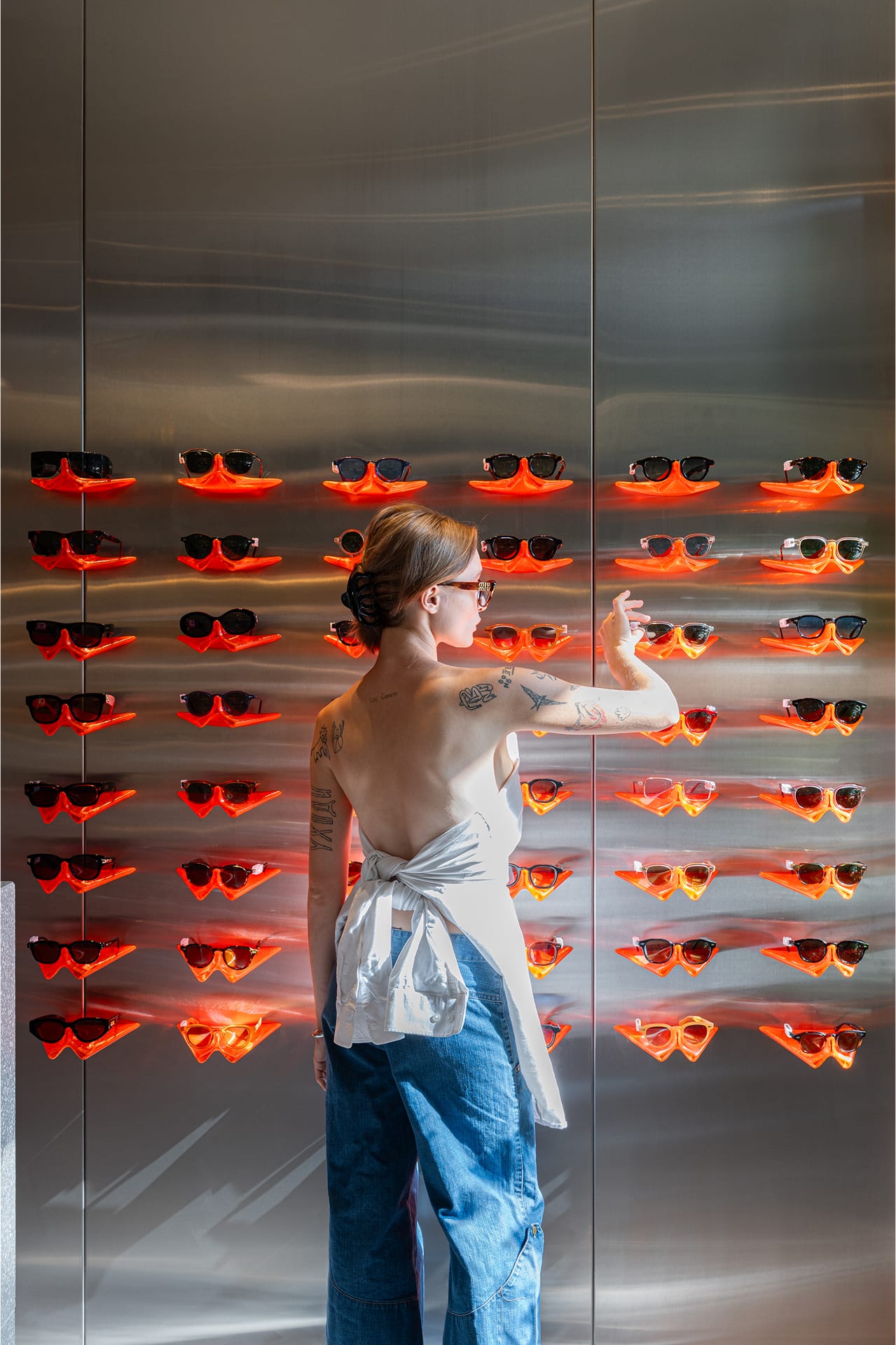
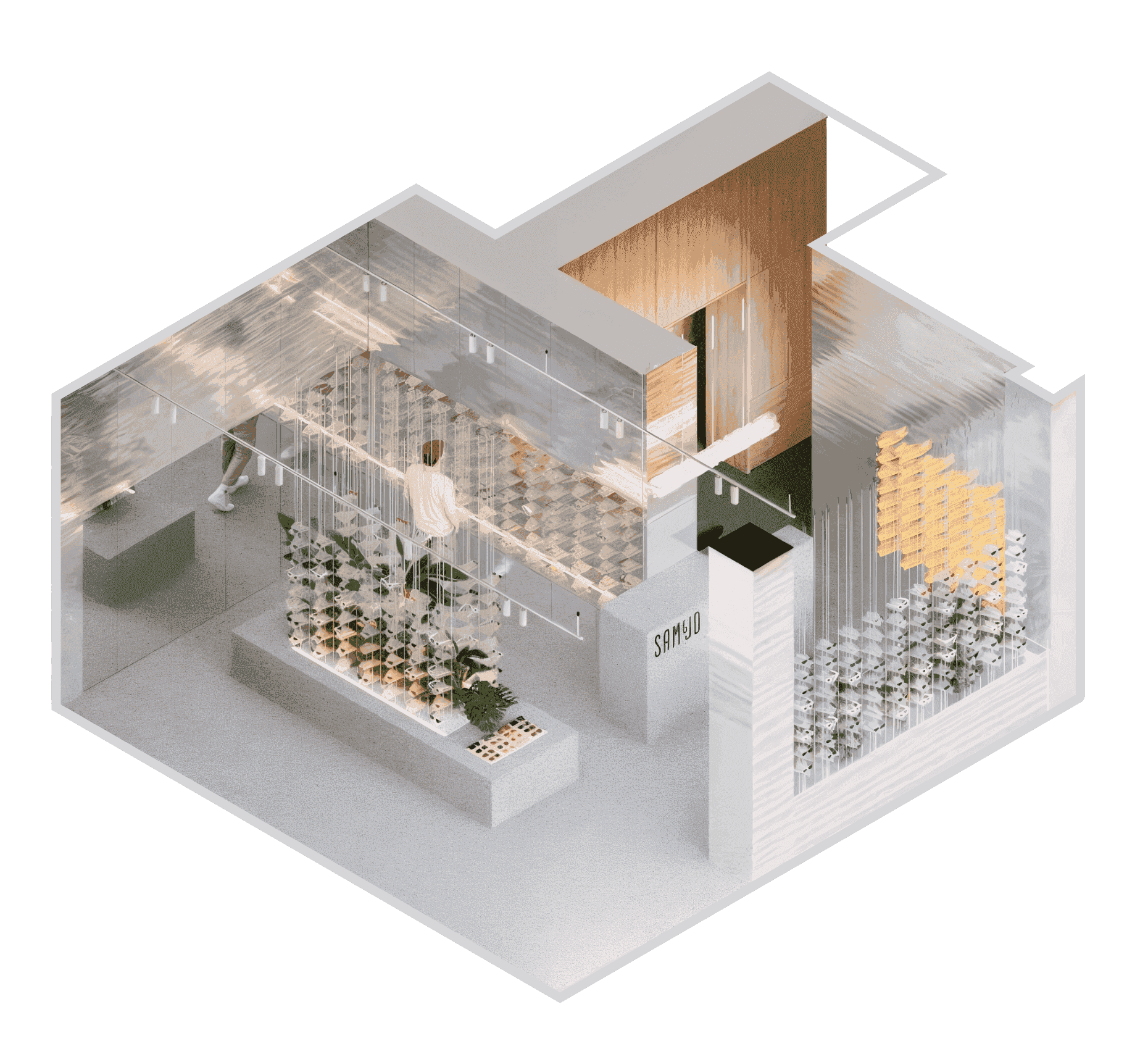
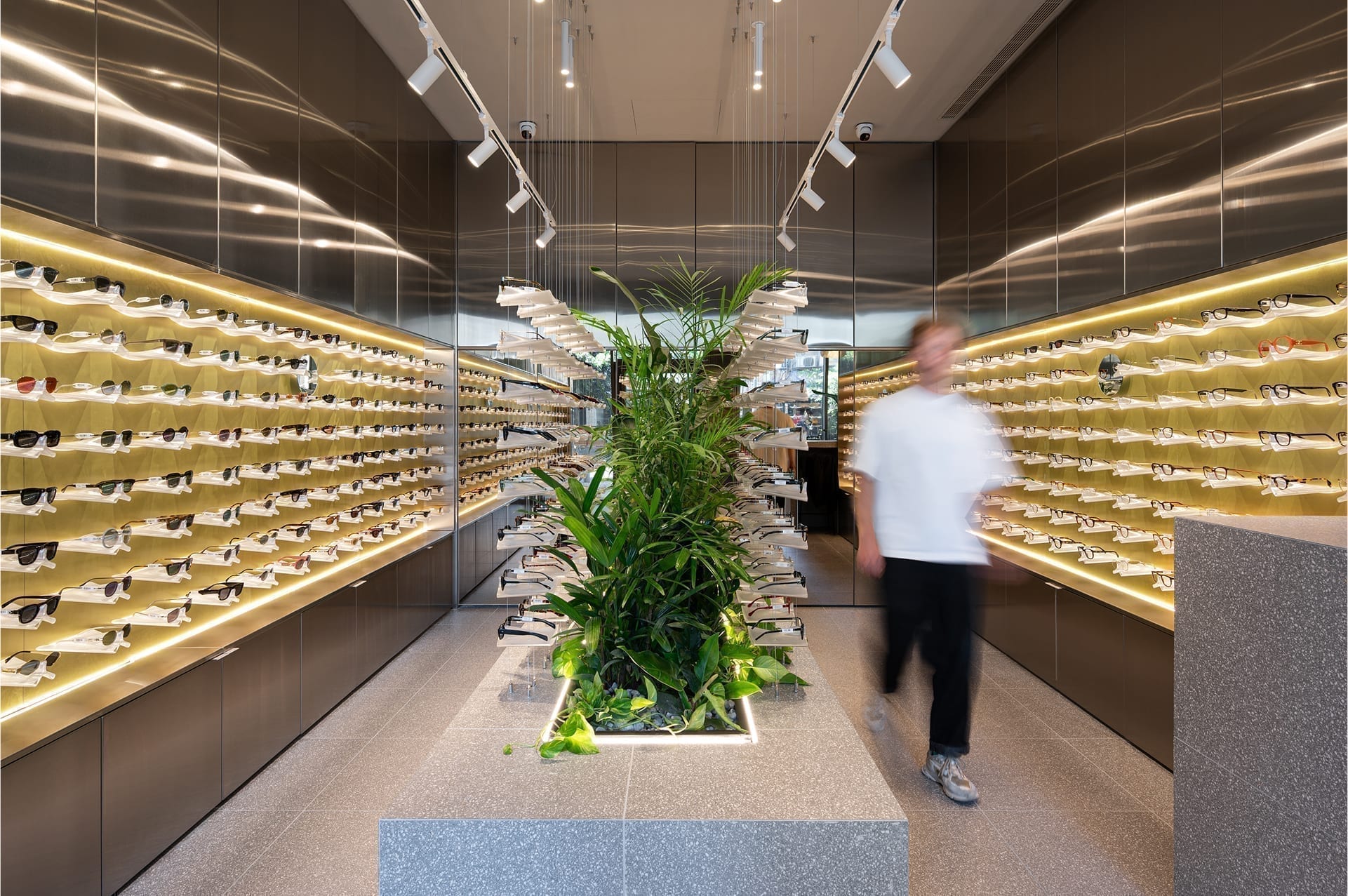
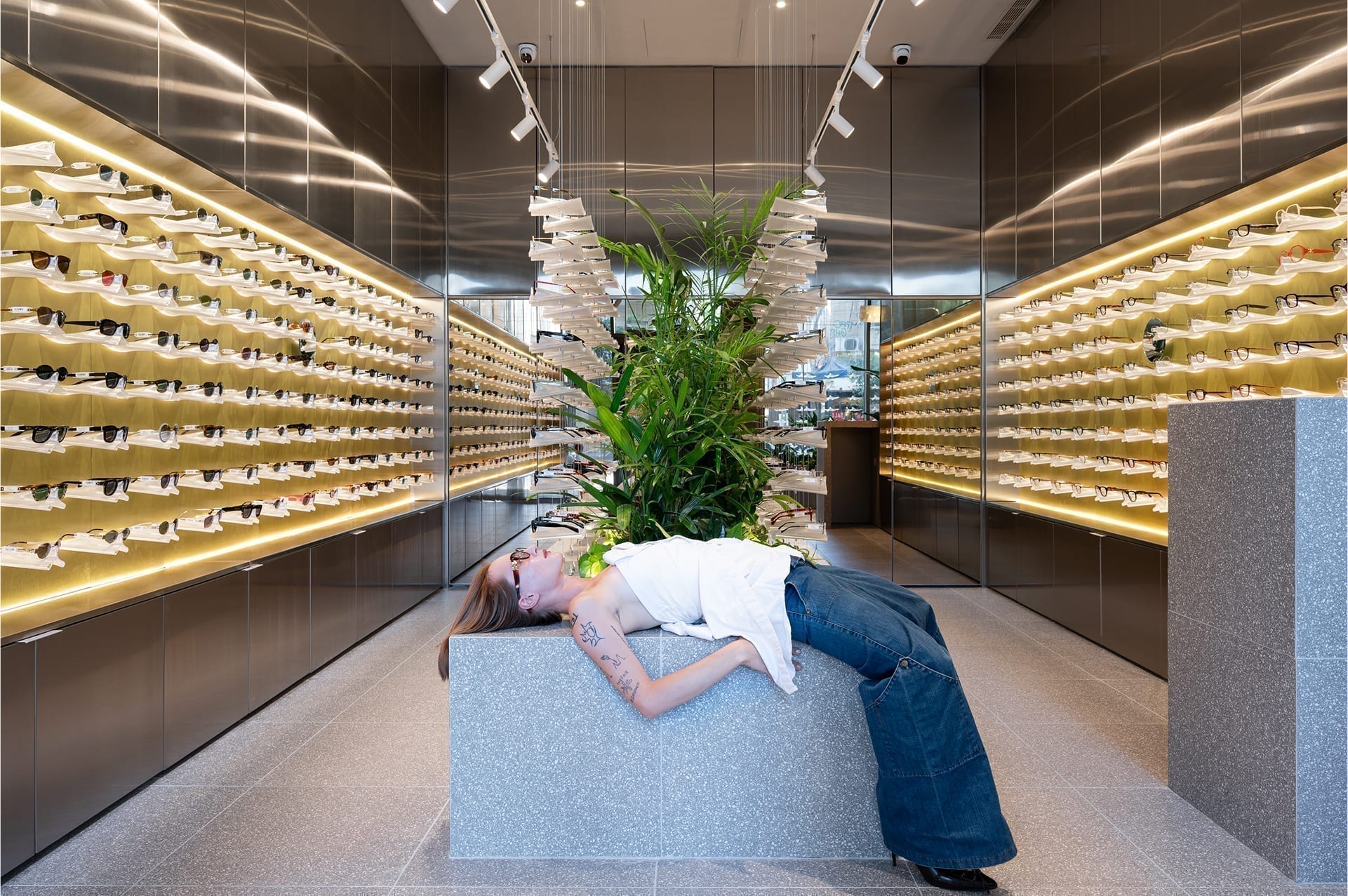
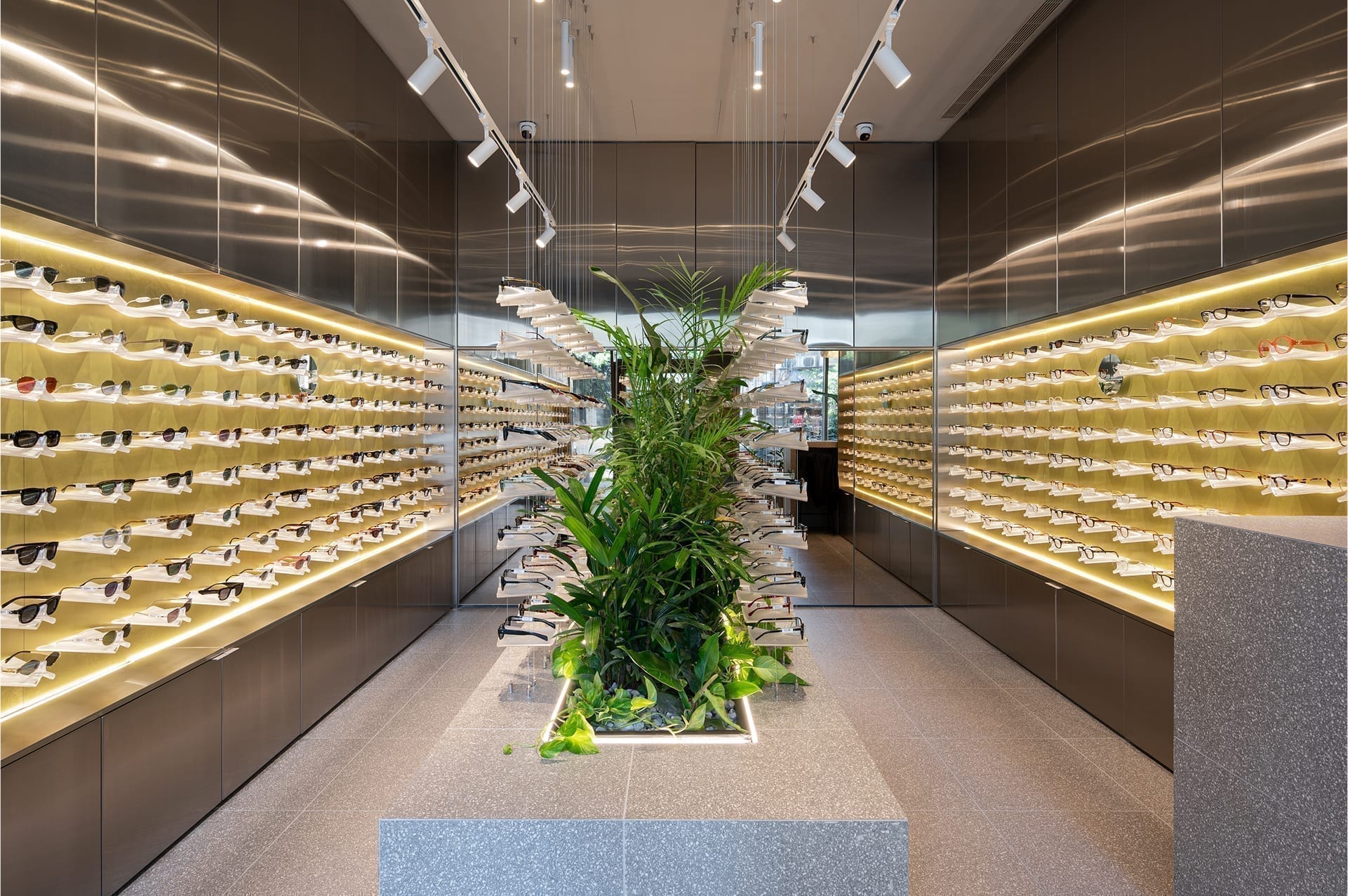
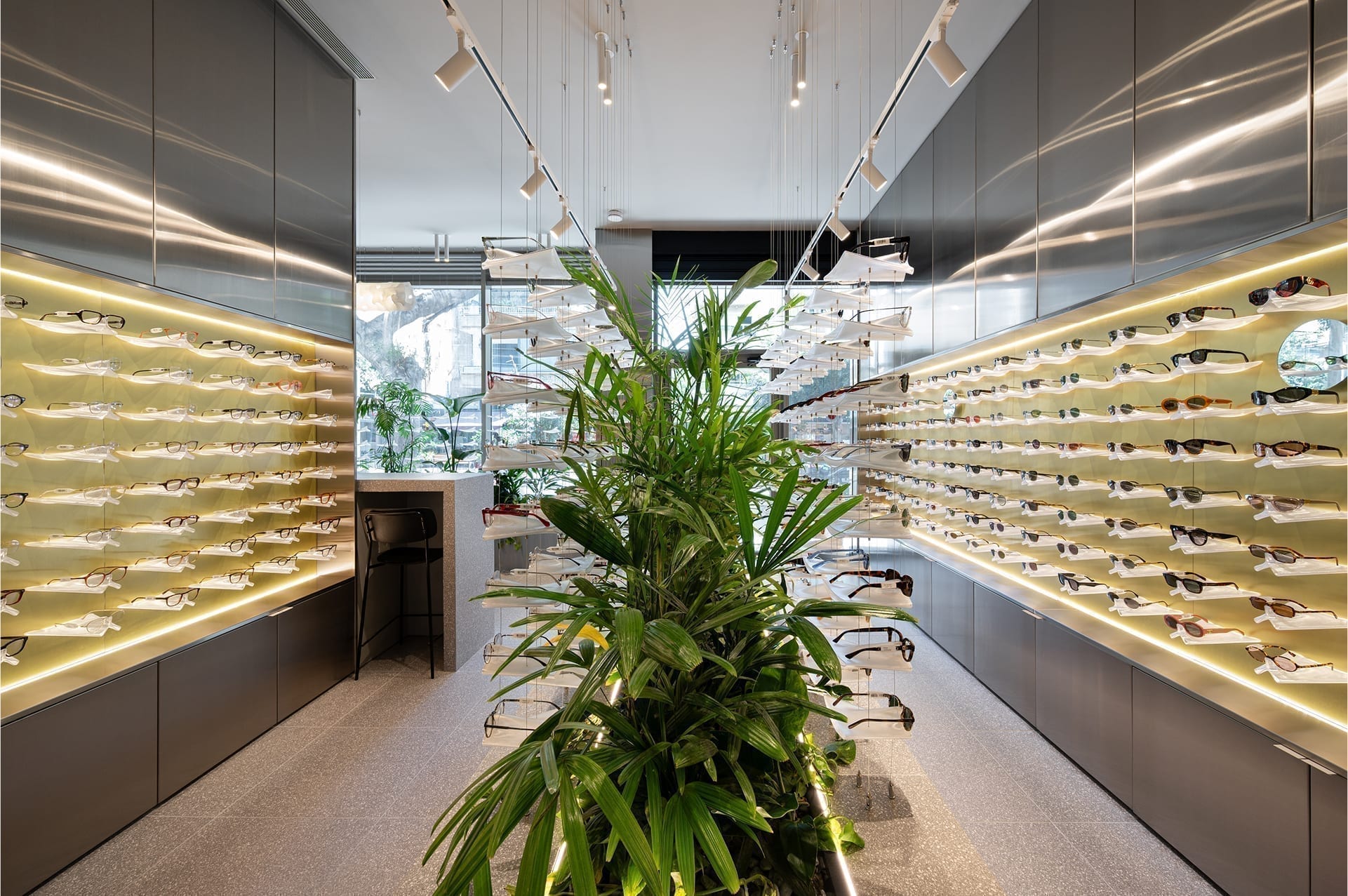
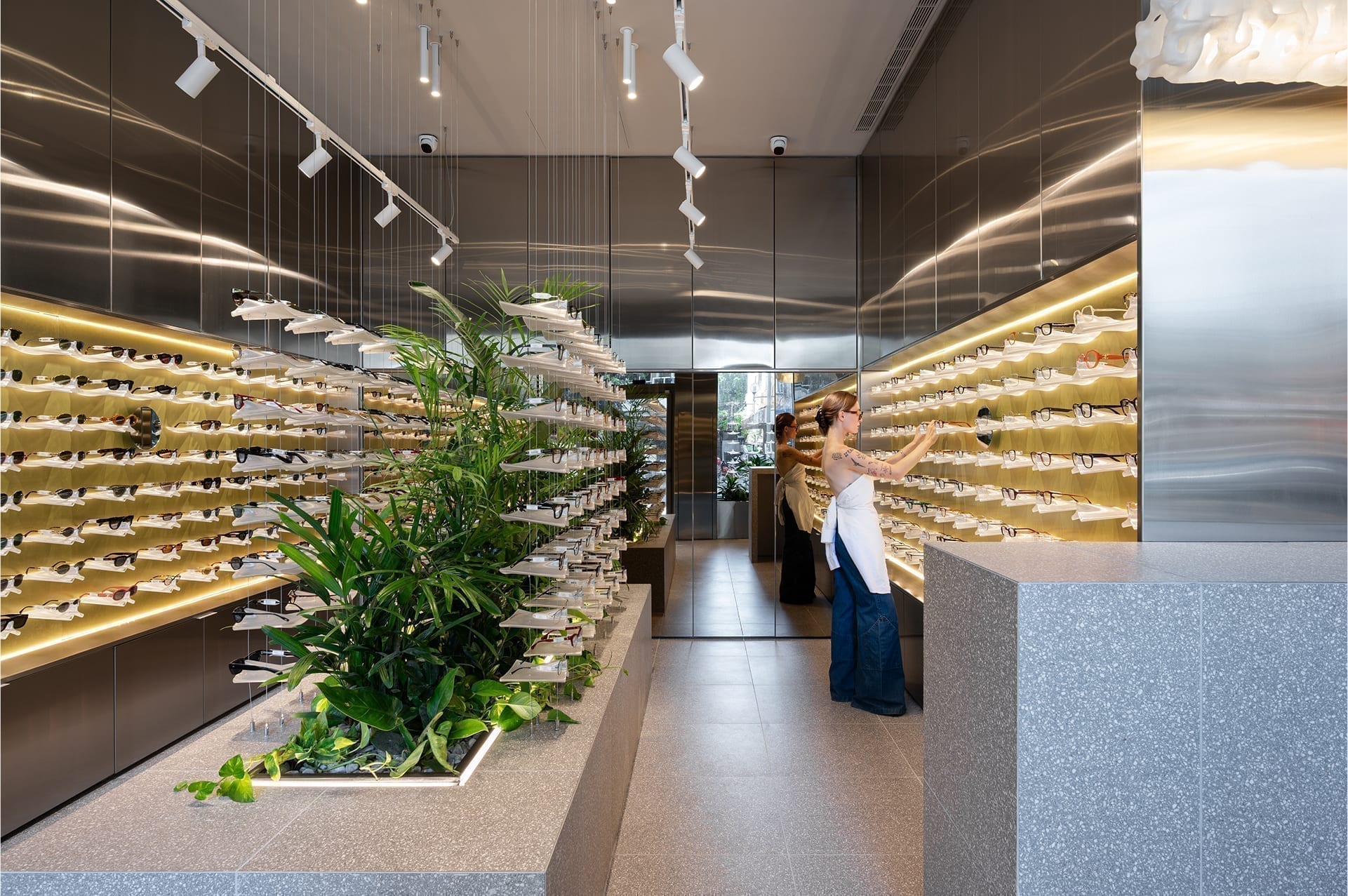
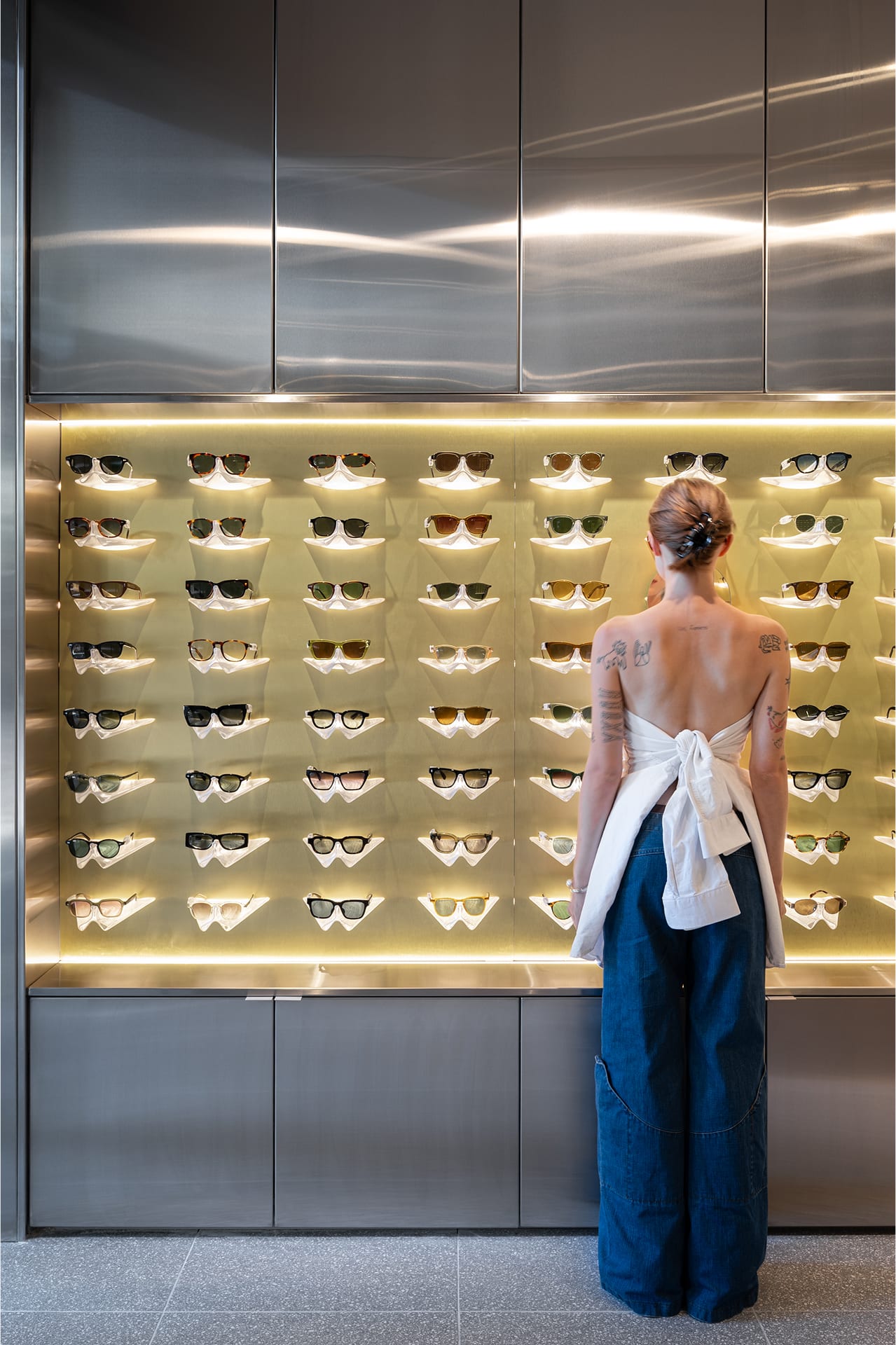
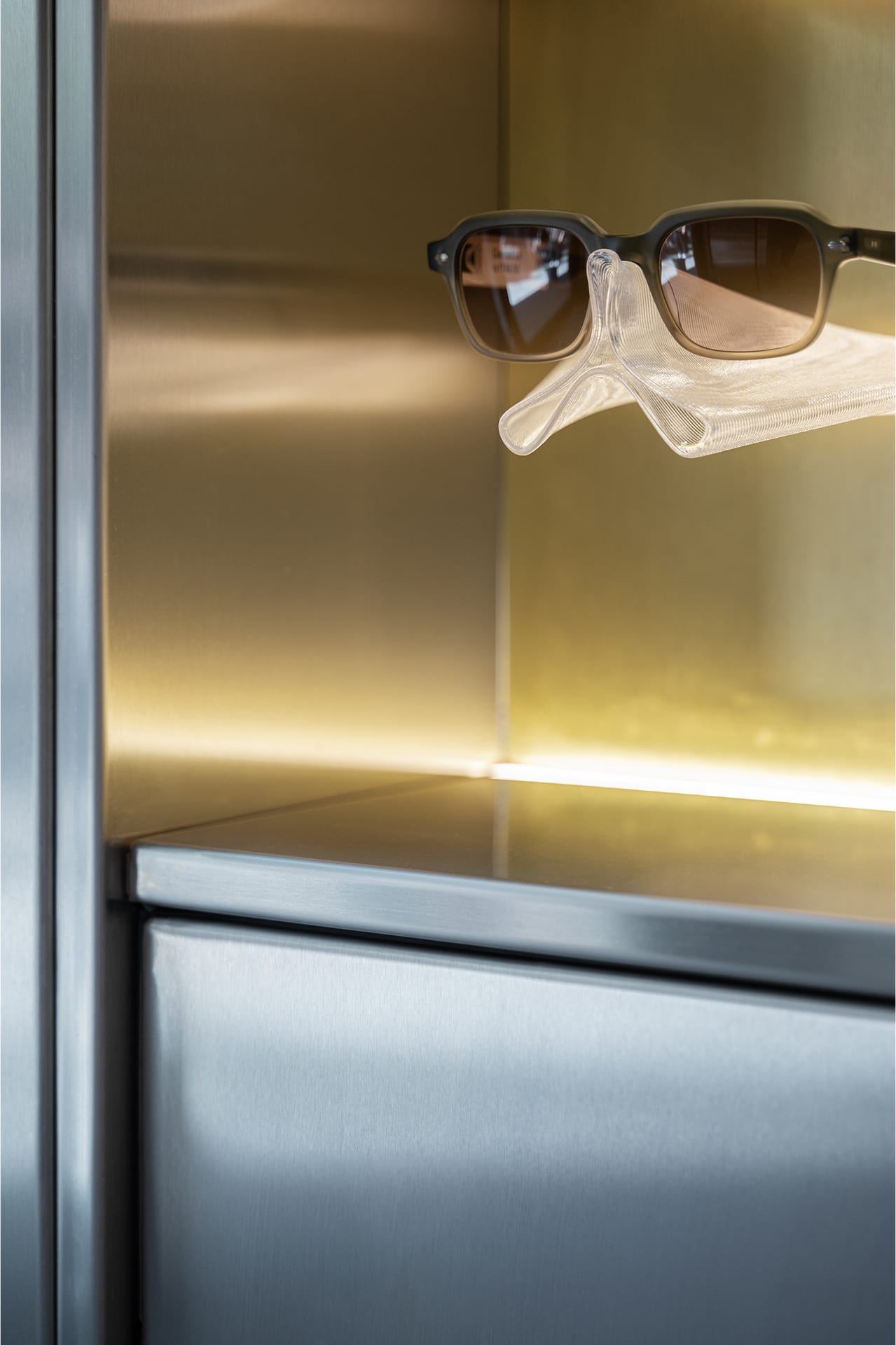
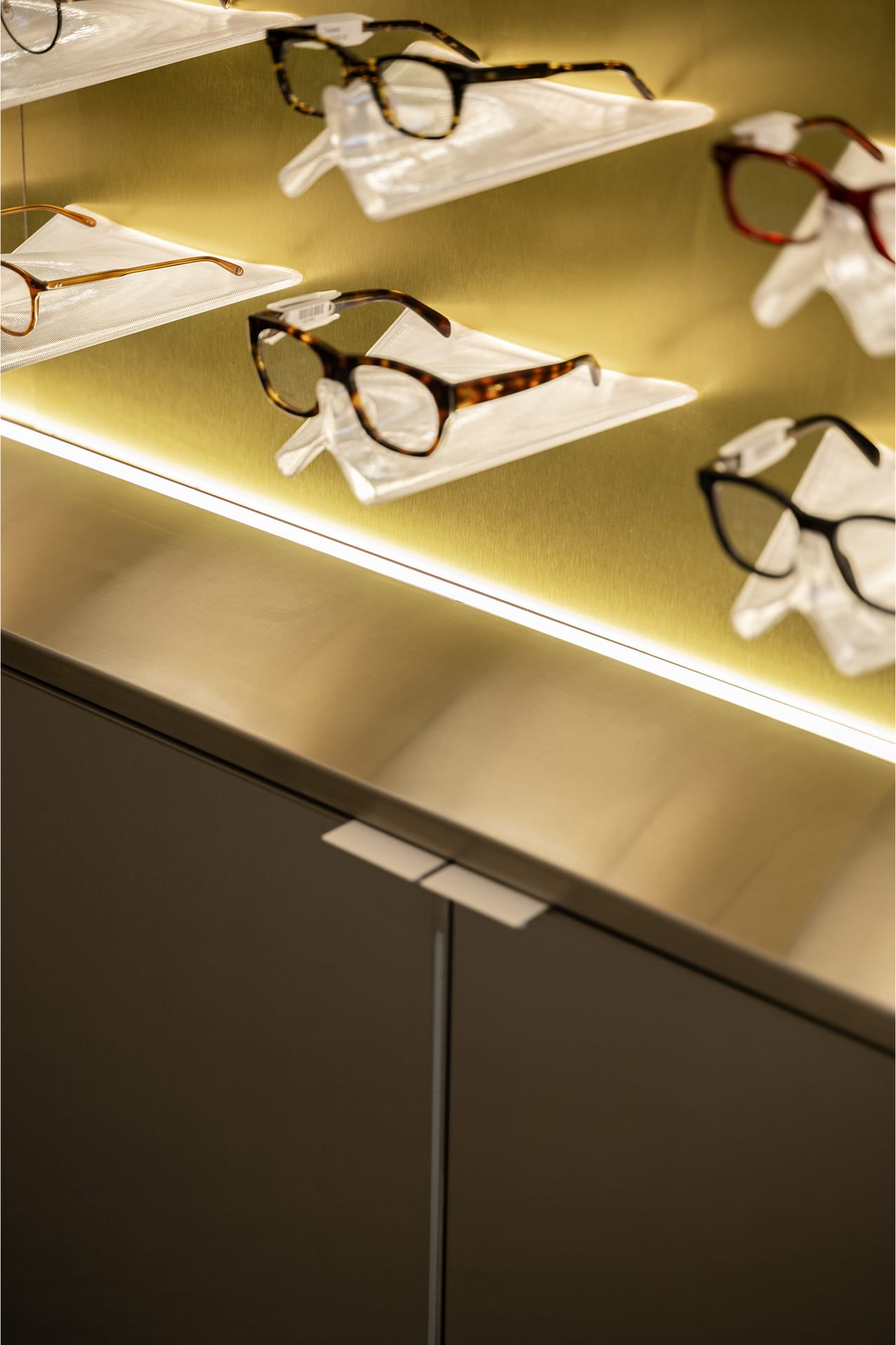
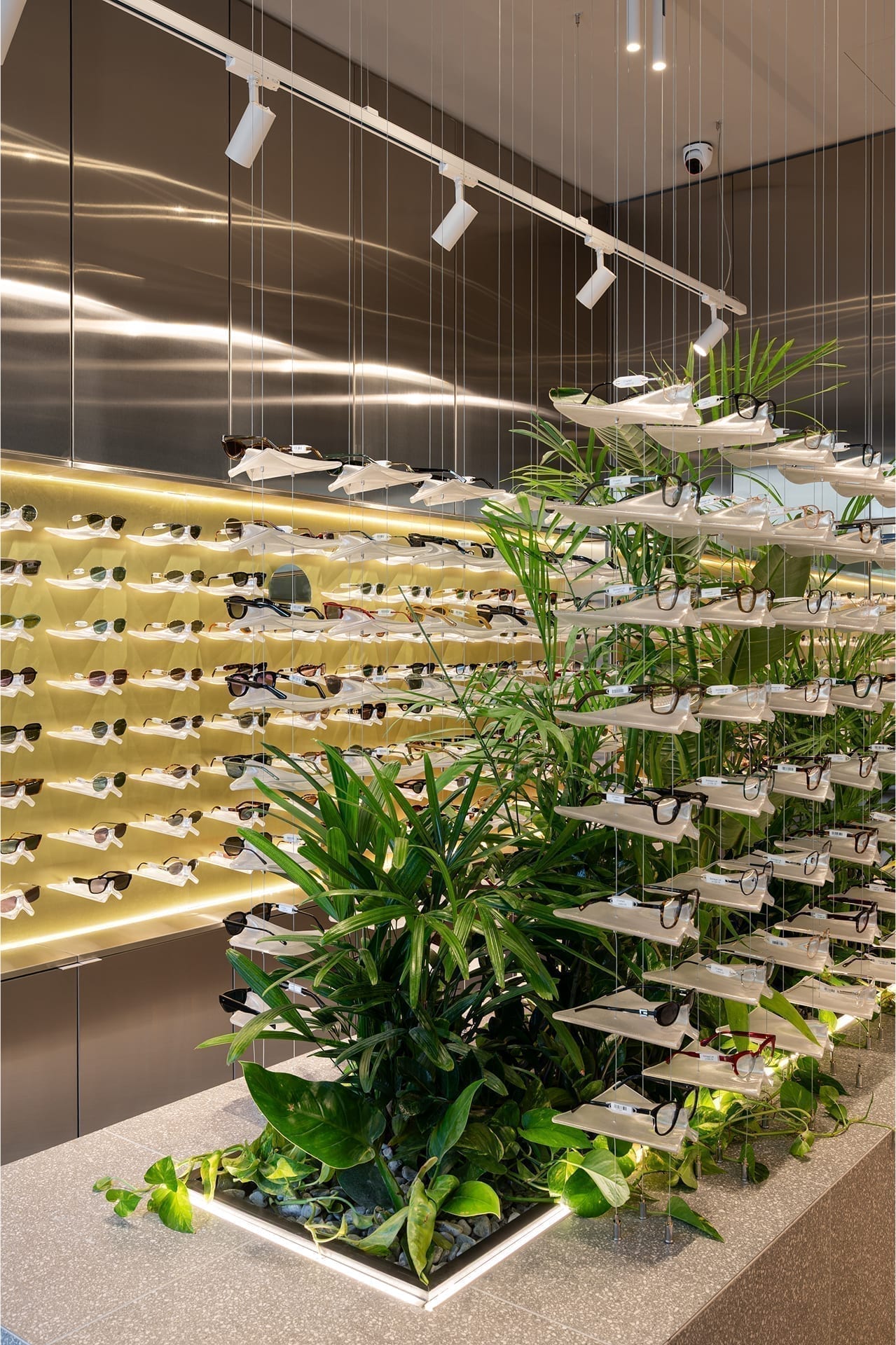
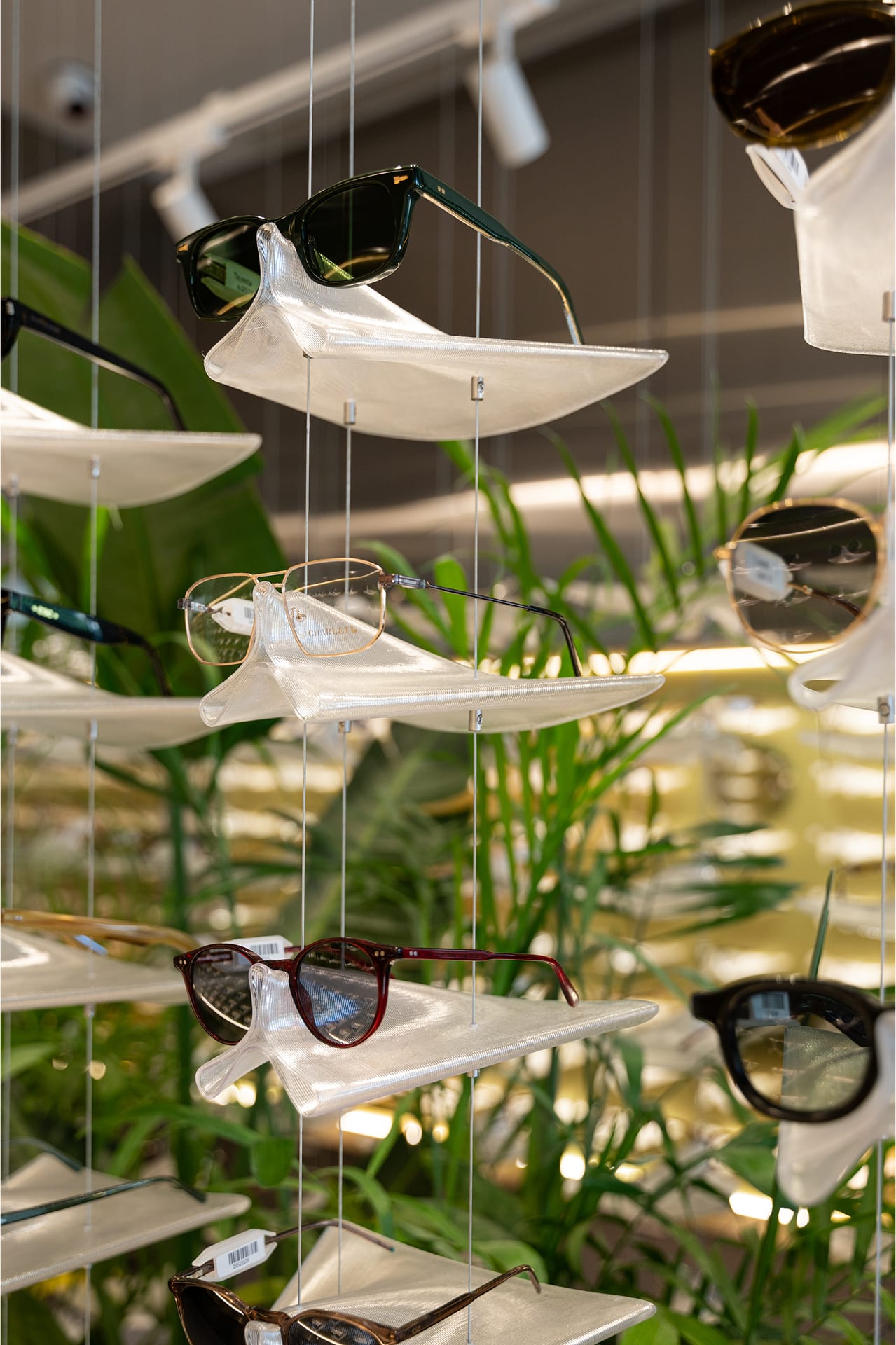
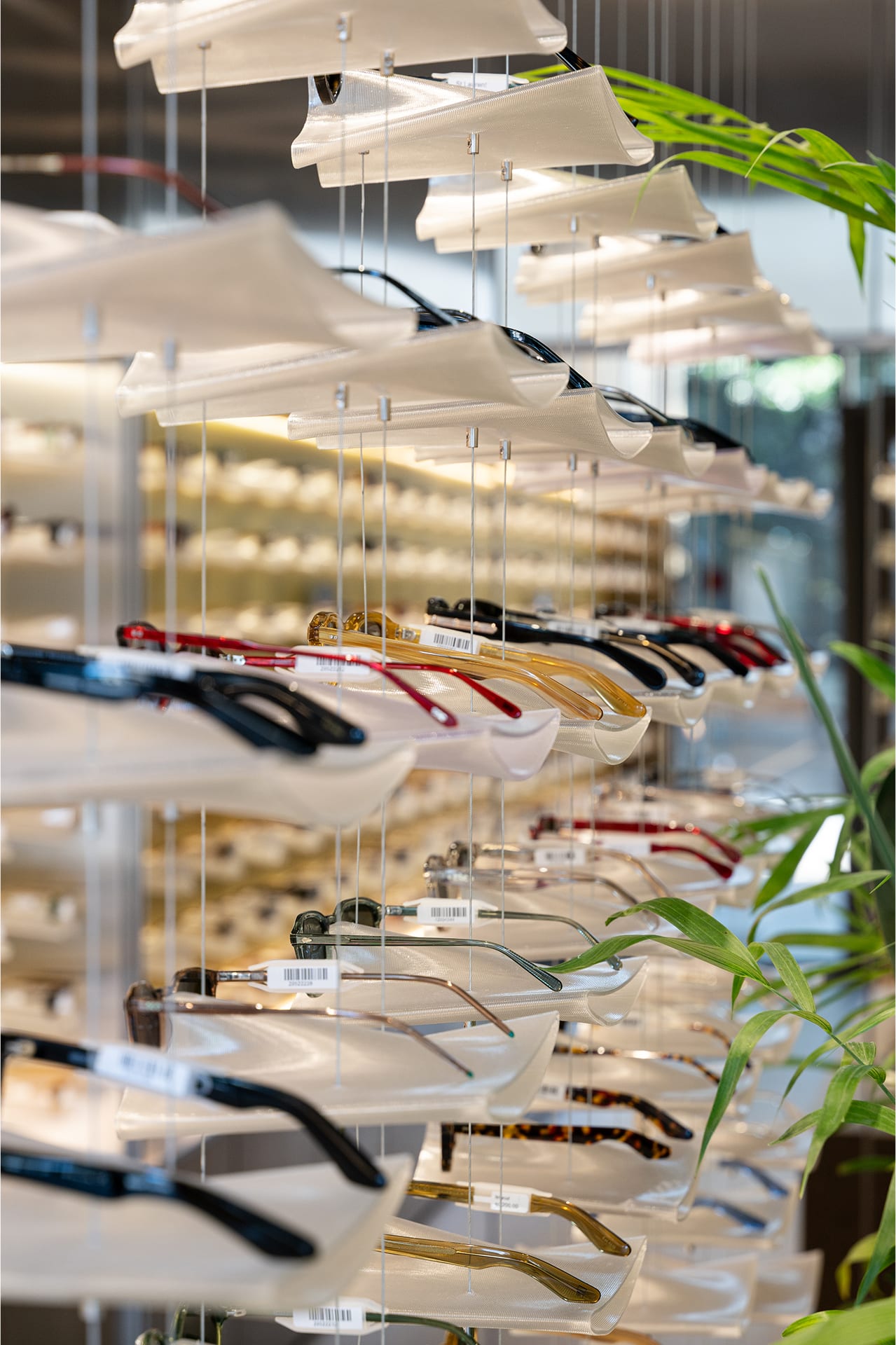
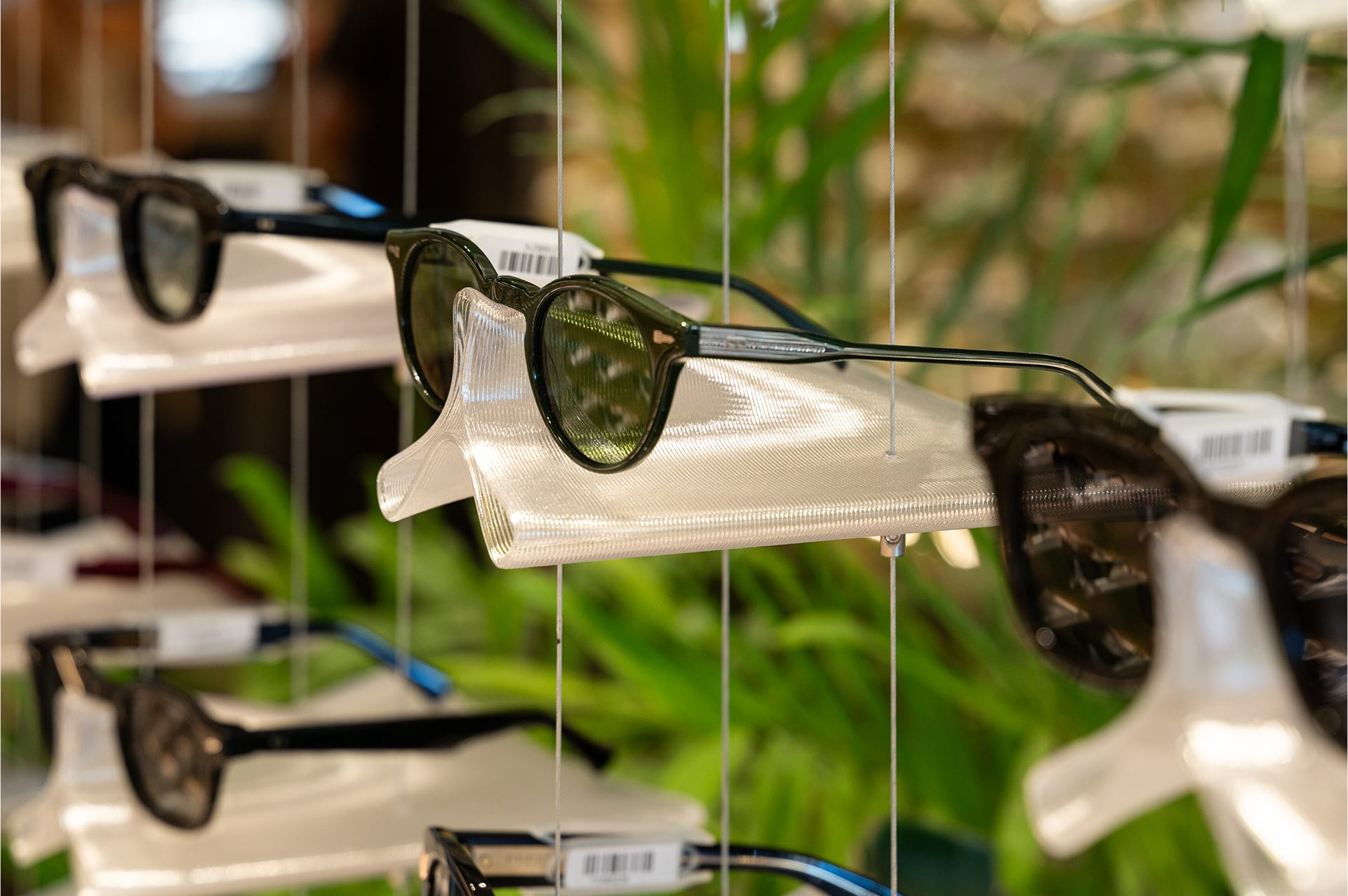
Each eyewear piece is displayed using a custom-developed 3D-printed holder, designed specifically for this project.
Between Object and Space
The result is a space where technical precision and natural elements coexist — an interior that feels both structured and alive, calm and dynamic.
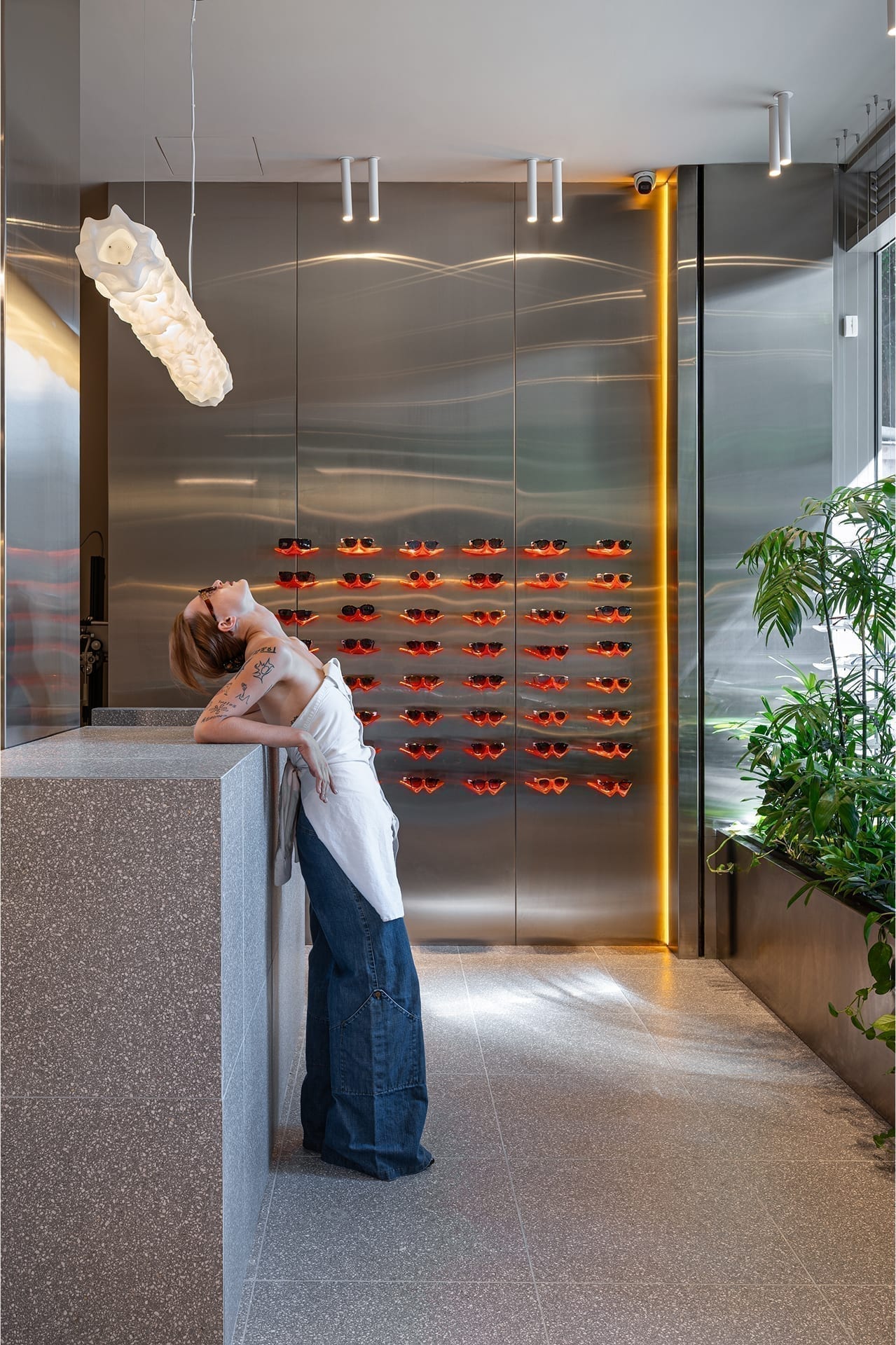
Visitors are invited to take their time, browse through the collection, and experience the environment as part of the product itself.
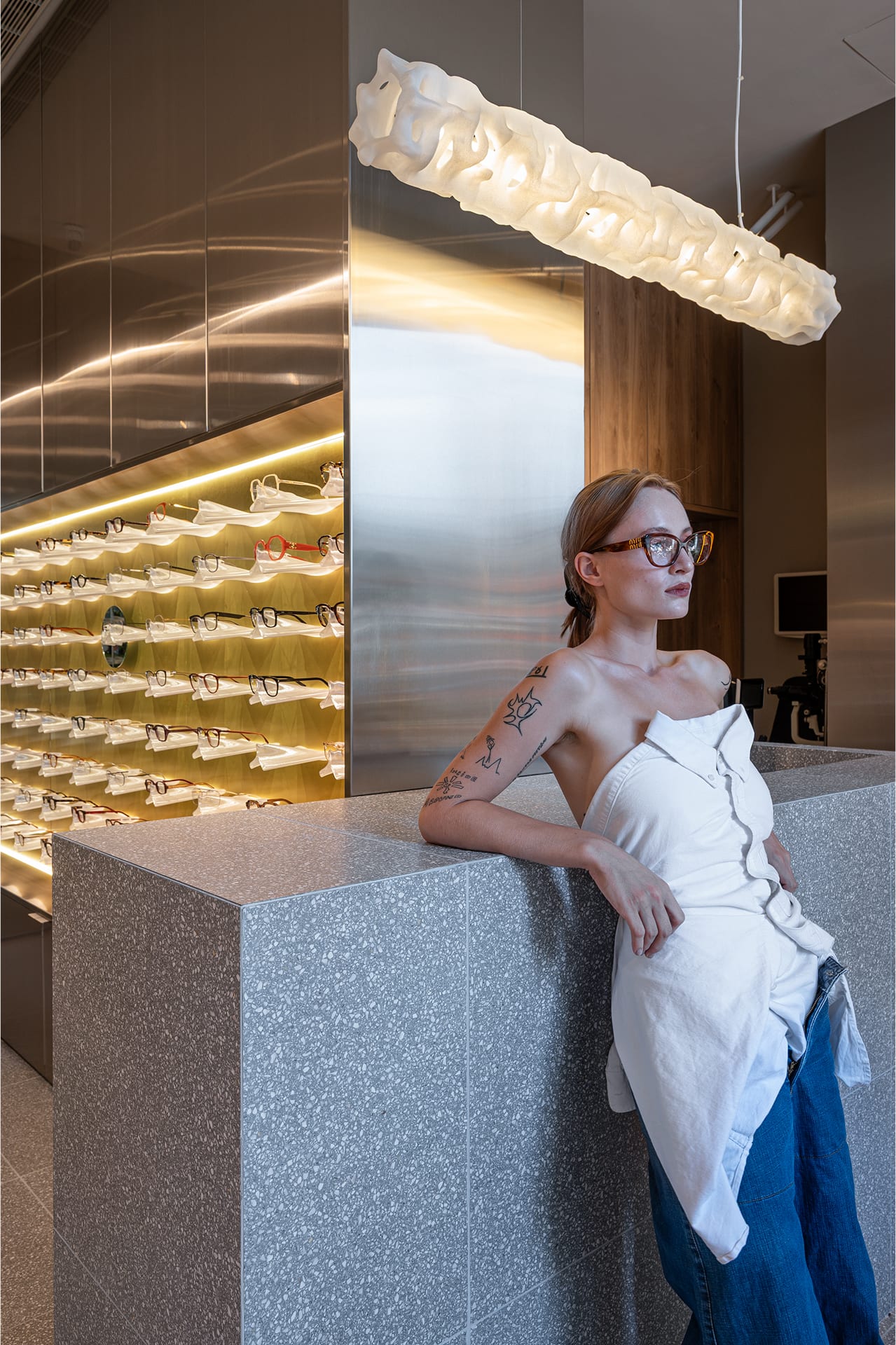
[Material & Spatial Language]
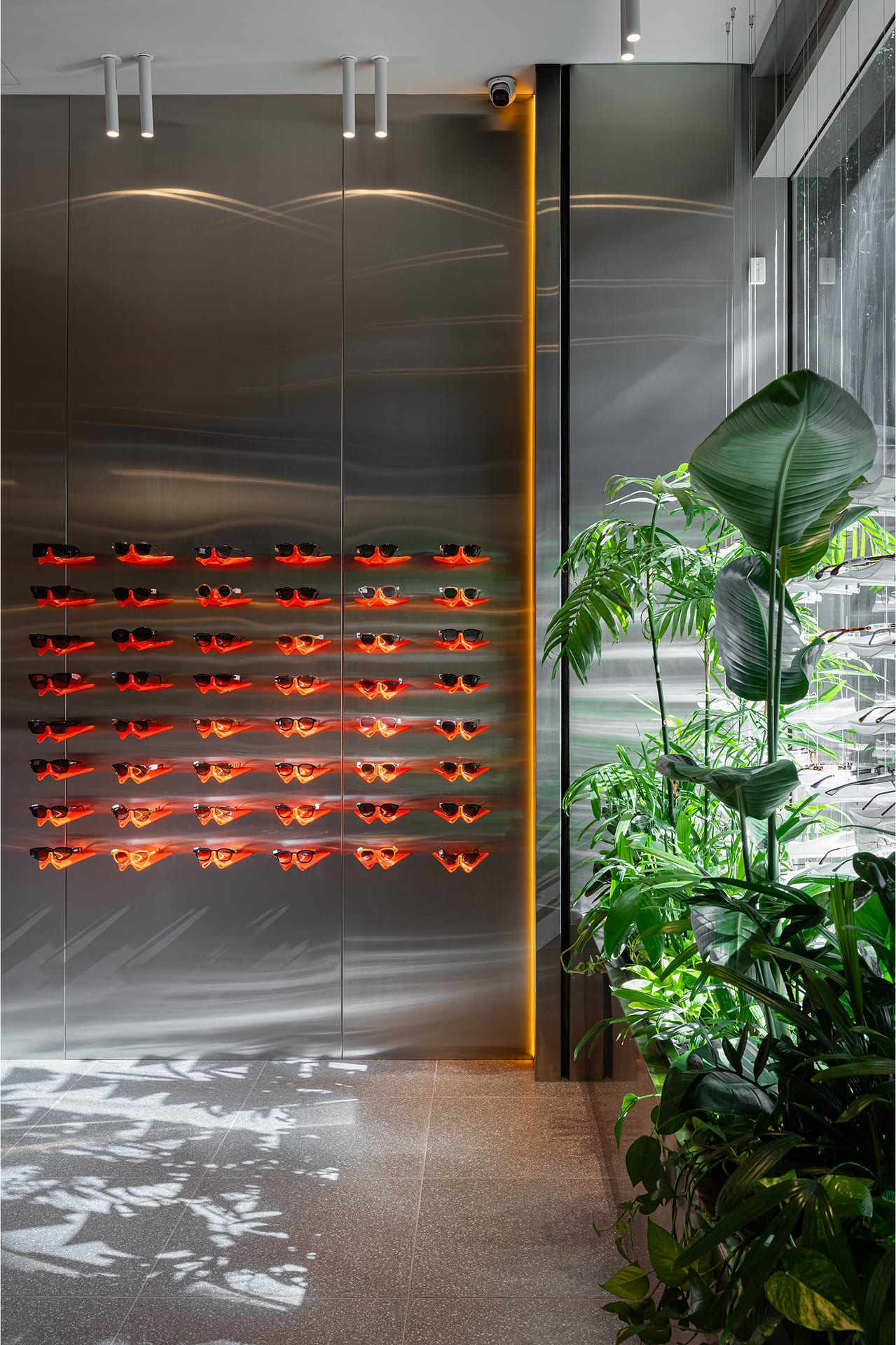
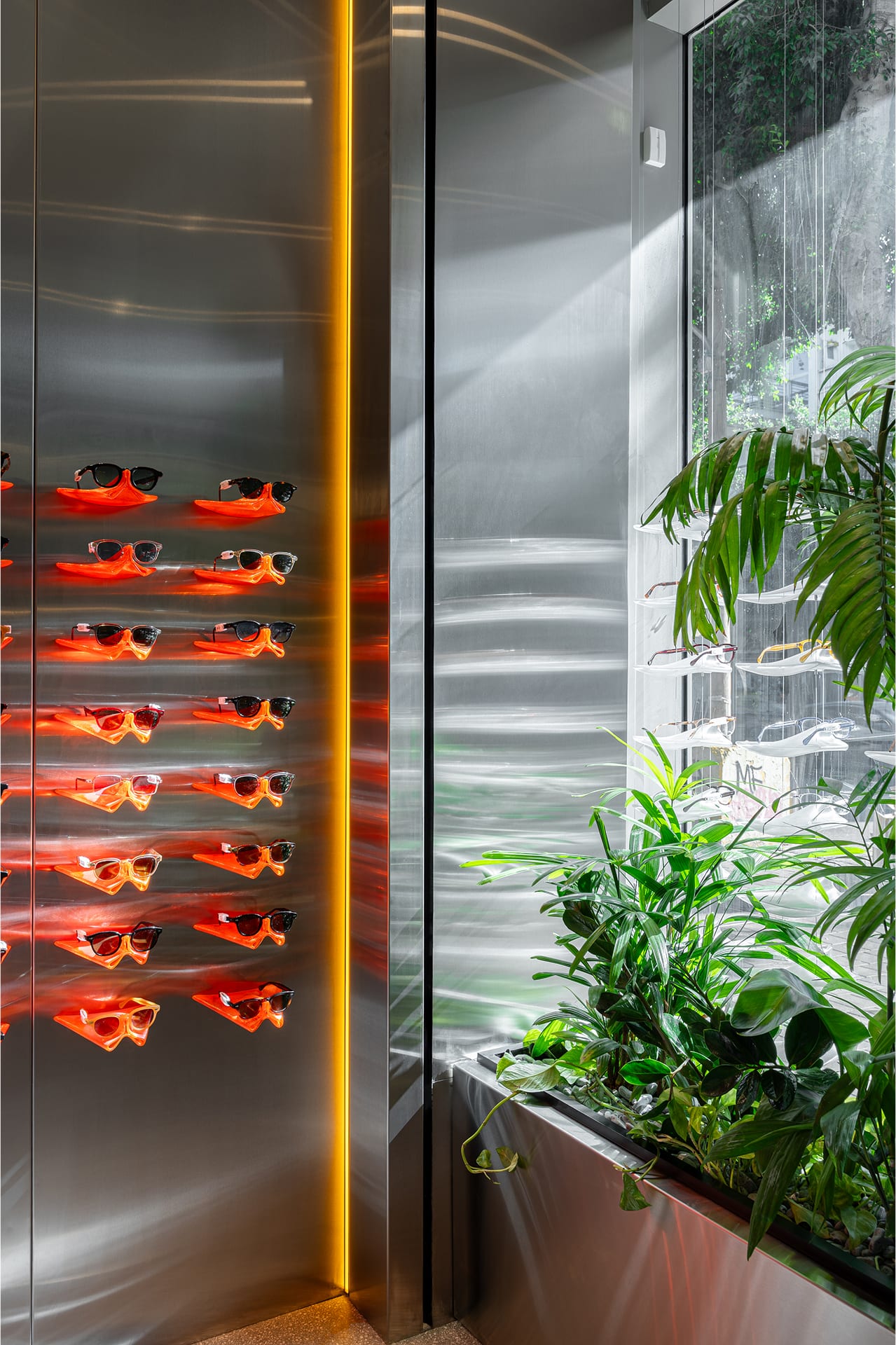
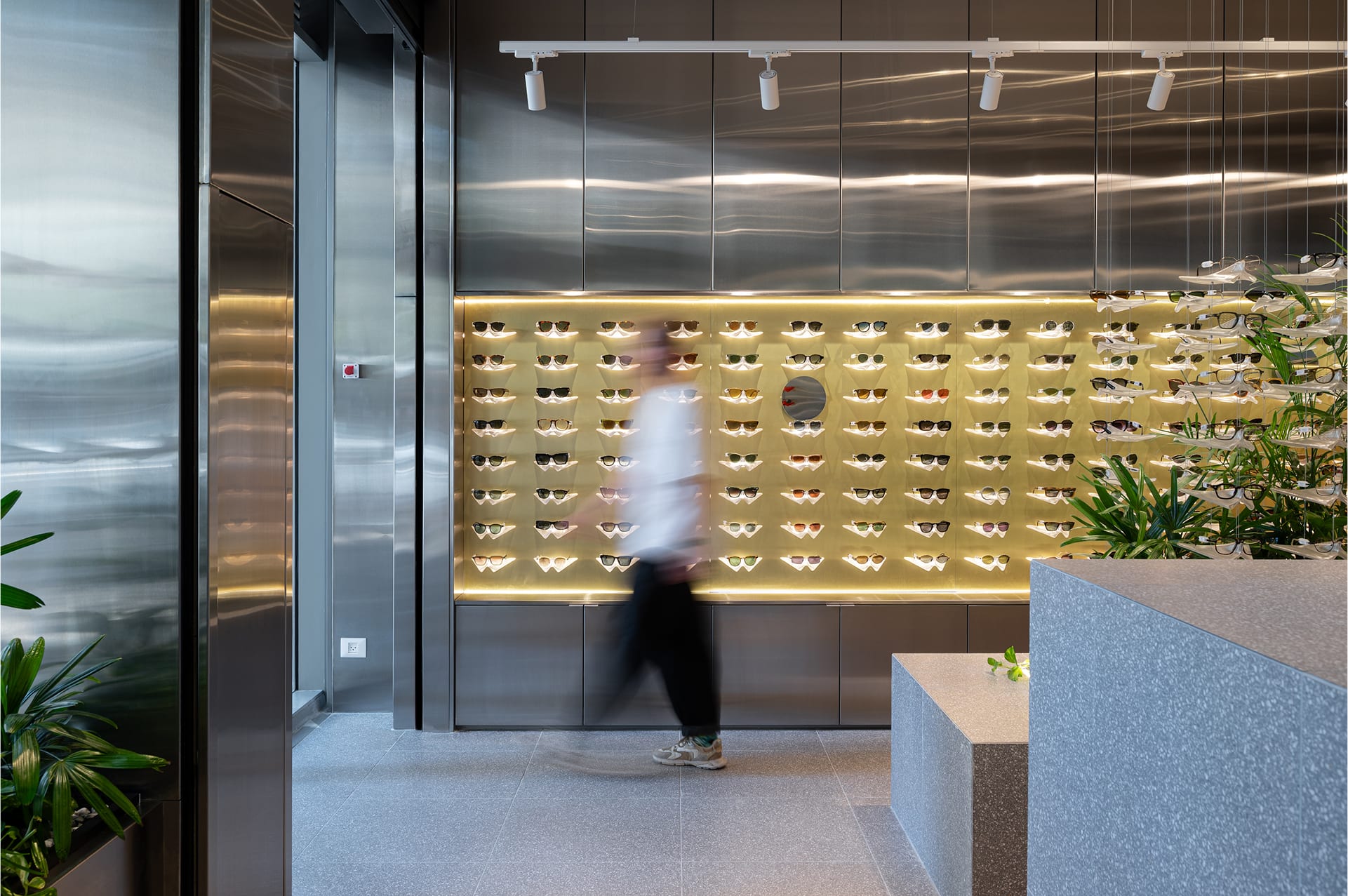
Materials were selected not for decoration, but for their capacity to register light and time. Terrazzo absorbs light with a muted texture; stainless steel reflects and diffuses it across changing surfaces. A mirrored wall doubles the space and introduces a moment of friction — both revealing and hiding at once. The holders themselves are printed in translucent PETG, produced in-house by the architects. Their semi-opacity gives each frame a sense of lightness, almost like it's hovering.
Between Nature and Display
Plants form the central element of the spatial composition.
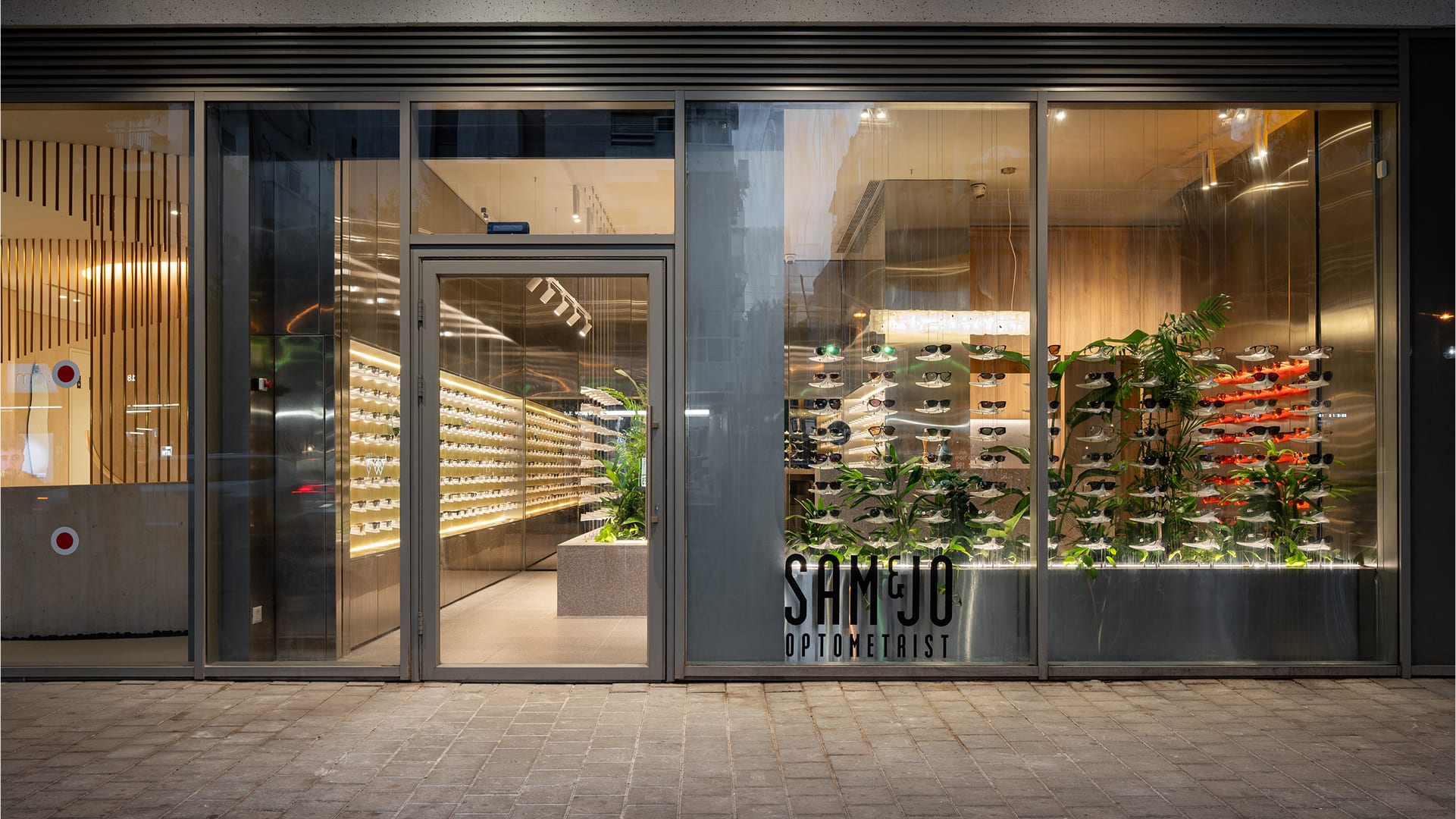
Instead of being an afterthought, greenery is positioned as part of the display structure — growing from terrazzo islands and window niches. The plants are intentionally placed to create the sensation of being outdoors: sunlight filtering through the leaves, reflections on polished surfaces, and the presence of natural textures contrast with the precise, industrial materials of terrazzo and stainless steel.
Shop Window
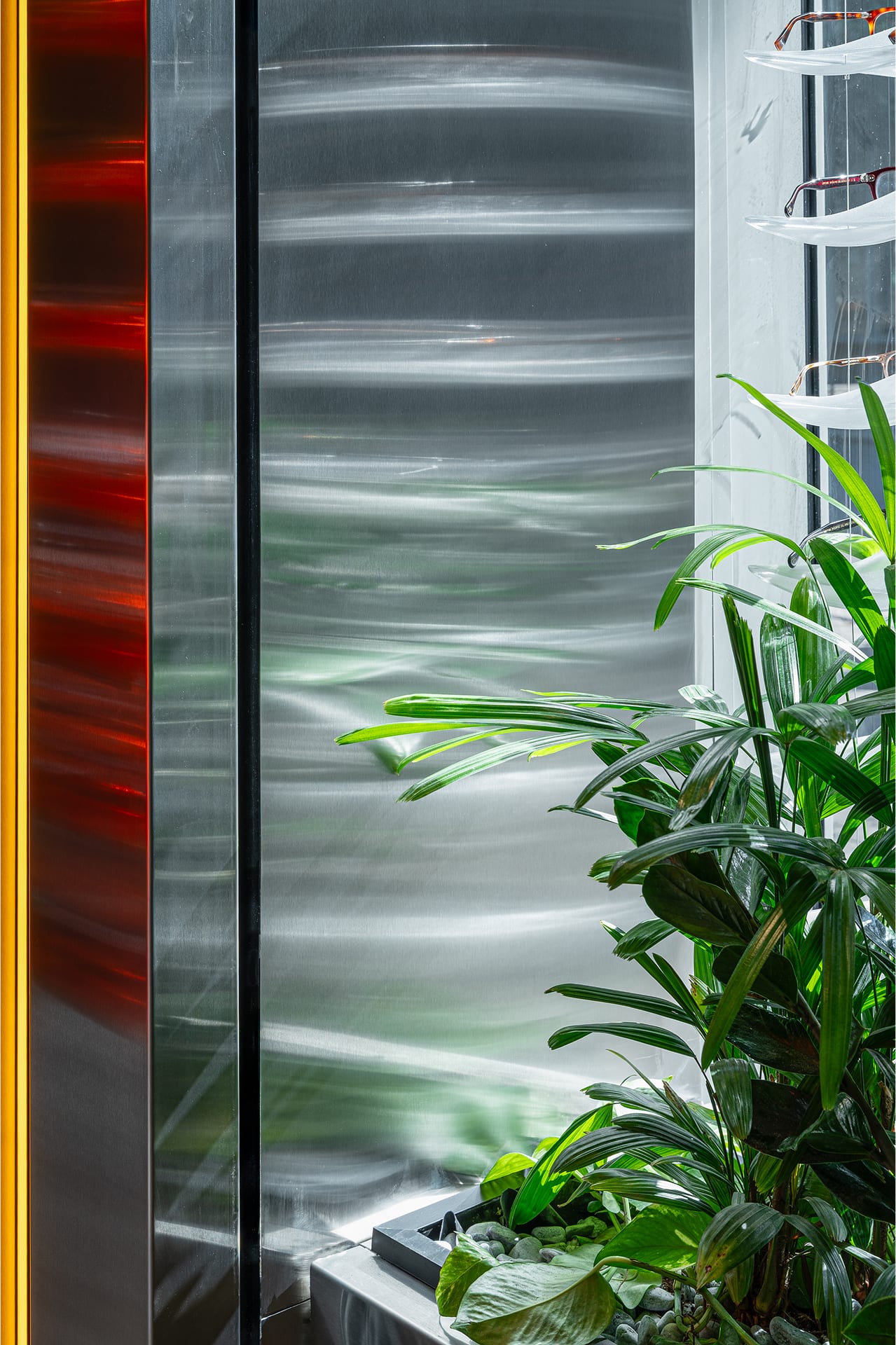
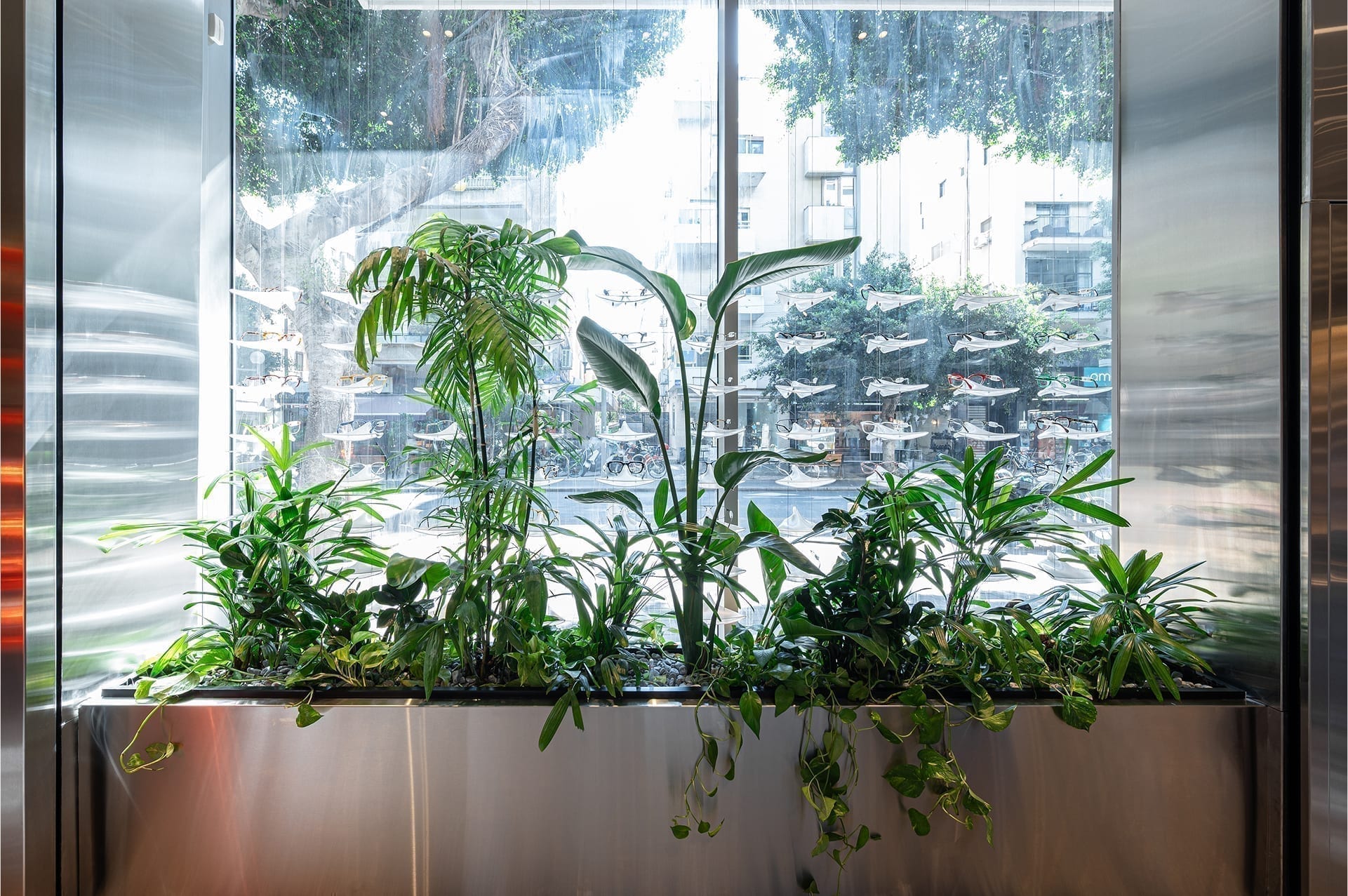
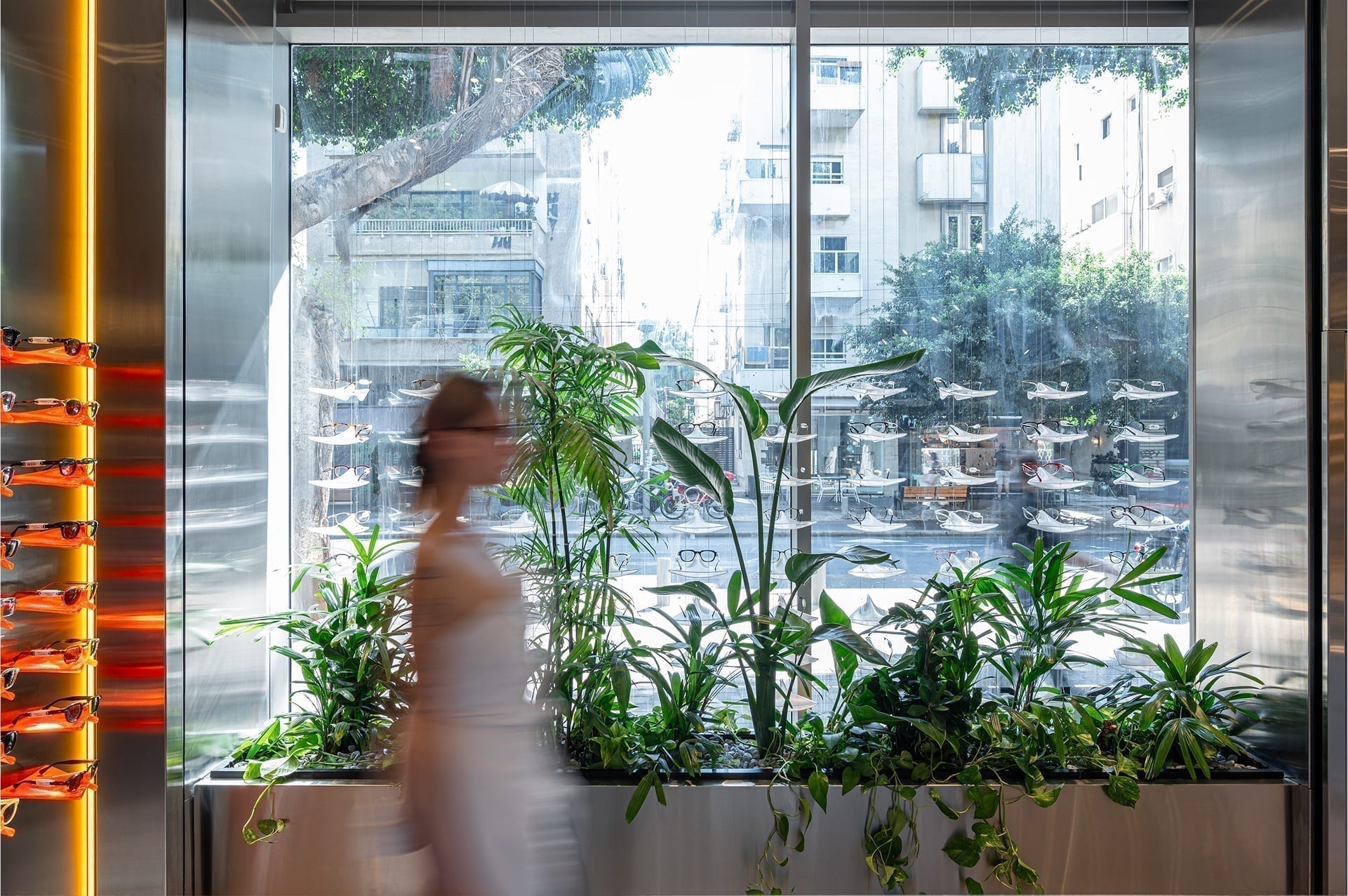
The vitrina does not function as a flat commercial showcase. Instead, it becomes a layered threshold between the street and the interior. A long stainless-steel planter occupies the window line, combining vegetation with suspended glasses displays. The plants partially obscure and reveal the space, creating depth and slowing the visual encounter from outside. Rather than exposing all products at once, the window offers fragments: glasses, reflections, leaves, stainless steel, and movement.
Index