YET Architecture
Washi 2.0
Installation — Tel Aviv, 2025
Washi 2.0 — Pavilion / Material Research
Data
Credits
About the Project
Paper is commonly seen as a disposable and overlooked material — rarely considered capable of defining space. Like many lightweight and fragile substances, it is typically excluded from architectural applications, dismissed as temporary or decorative. Washi Paper 2.0 challenges this assumption, proposing handmade paper as a medium for constructing atmosphere, structure, and spatial perception.
Originally initiated through the making of a pavilion for an architecture festival in France, the project continues as an exploration into material contingencies — reusing and transforming existing modules salvaged from the original pavilion to investigate how geometry and morphology can shape a light-responsive structure.
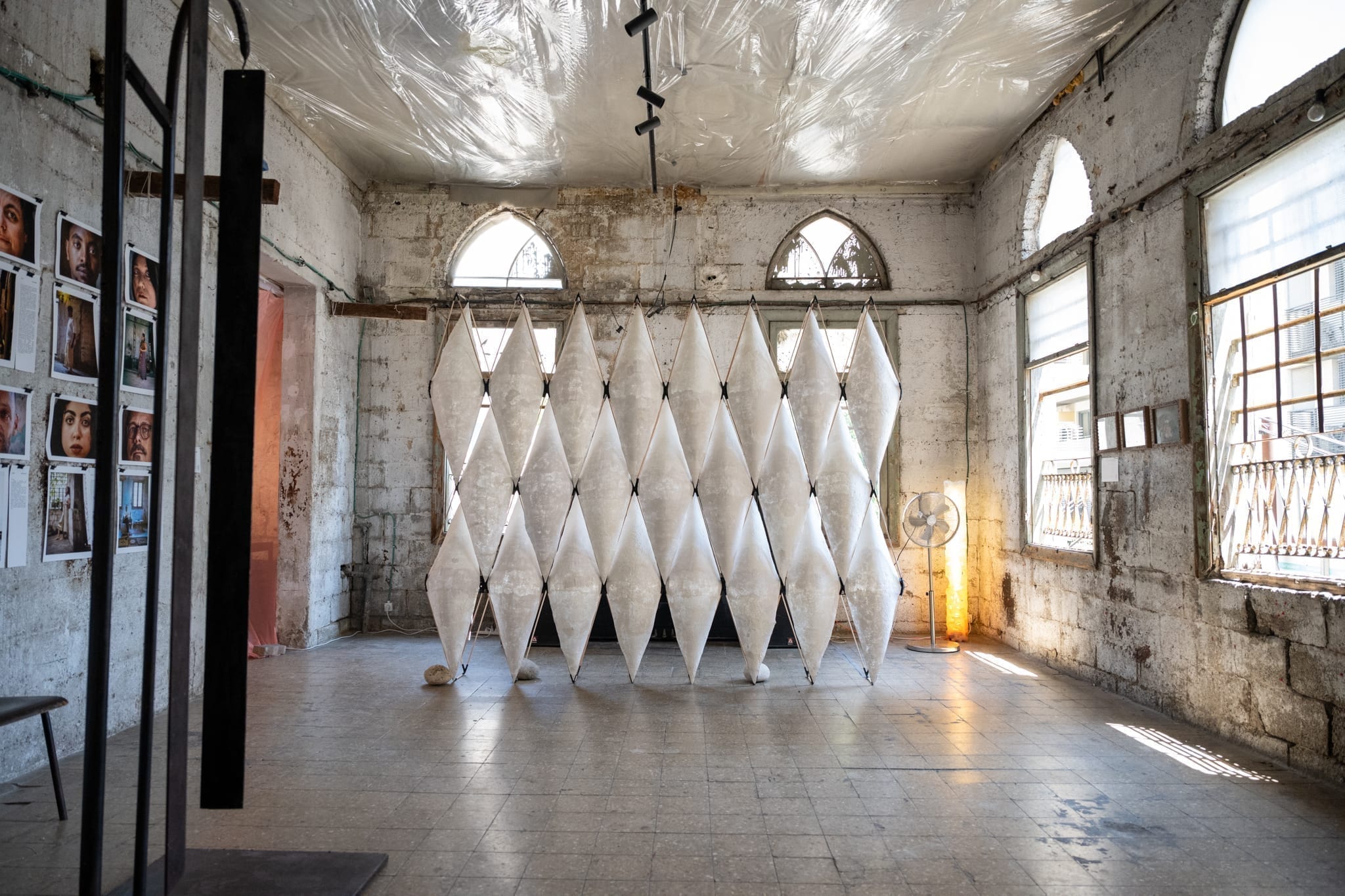
Handmade paper as a medium for constructing atmosphere, structure, and spatial perception.
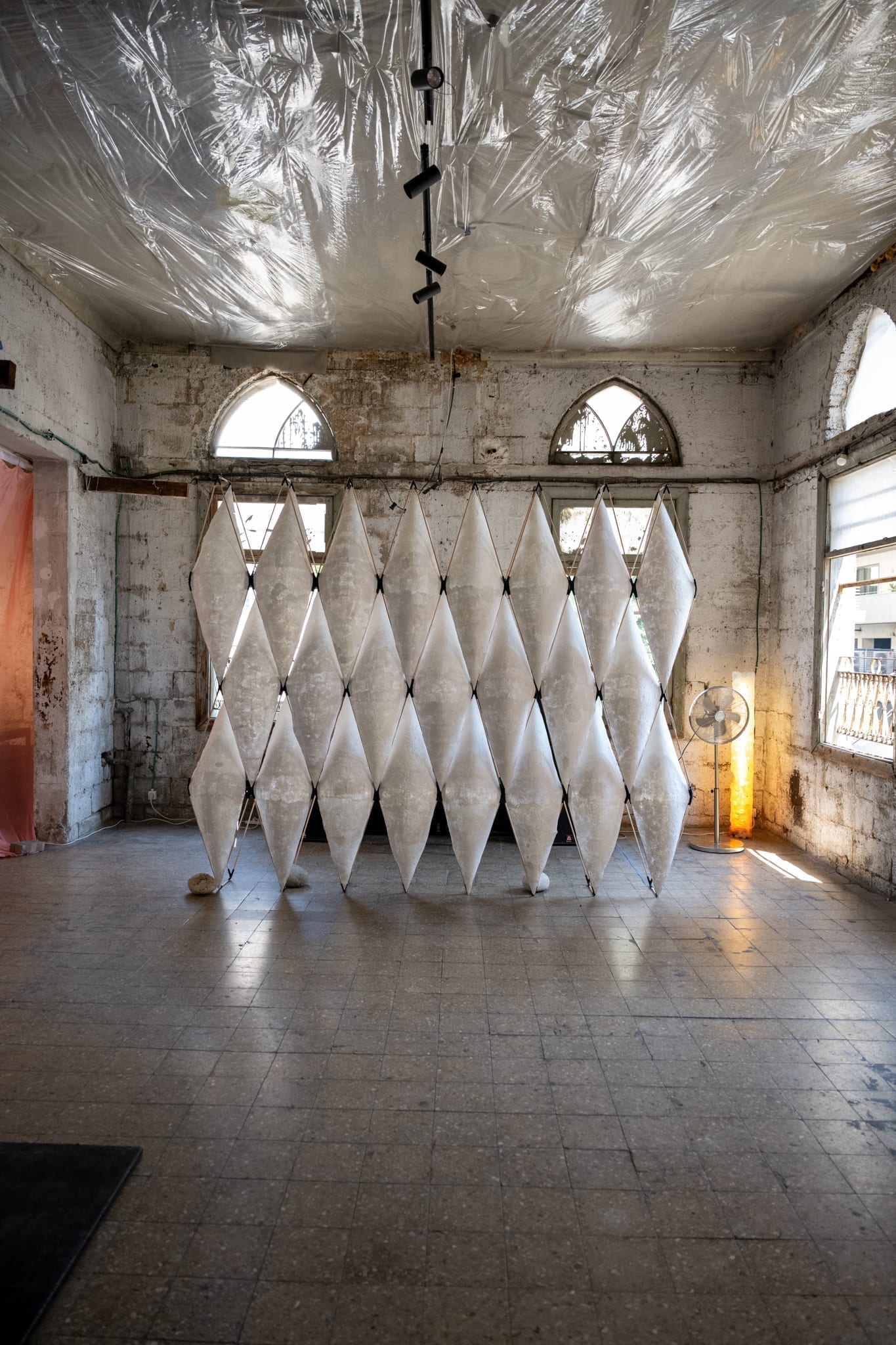
Reusing and transforming existing modules salvaged from the original pavilion, the new iteration investigates how geometry and morphology can shape a light-responsive structure that blurs the boundary between enclosure and openness. The installation occupies a threshold — neither wall nor void — activating the space through translucency, shadow, and movement.
[ Systemic Composition ]
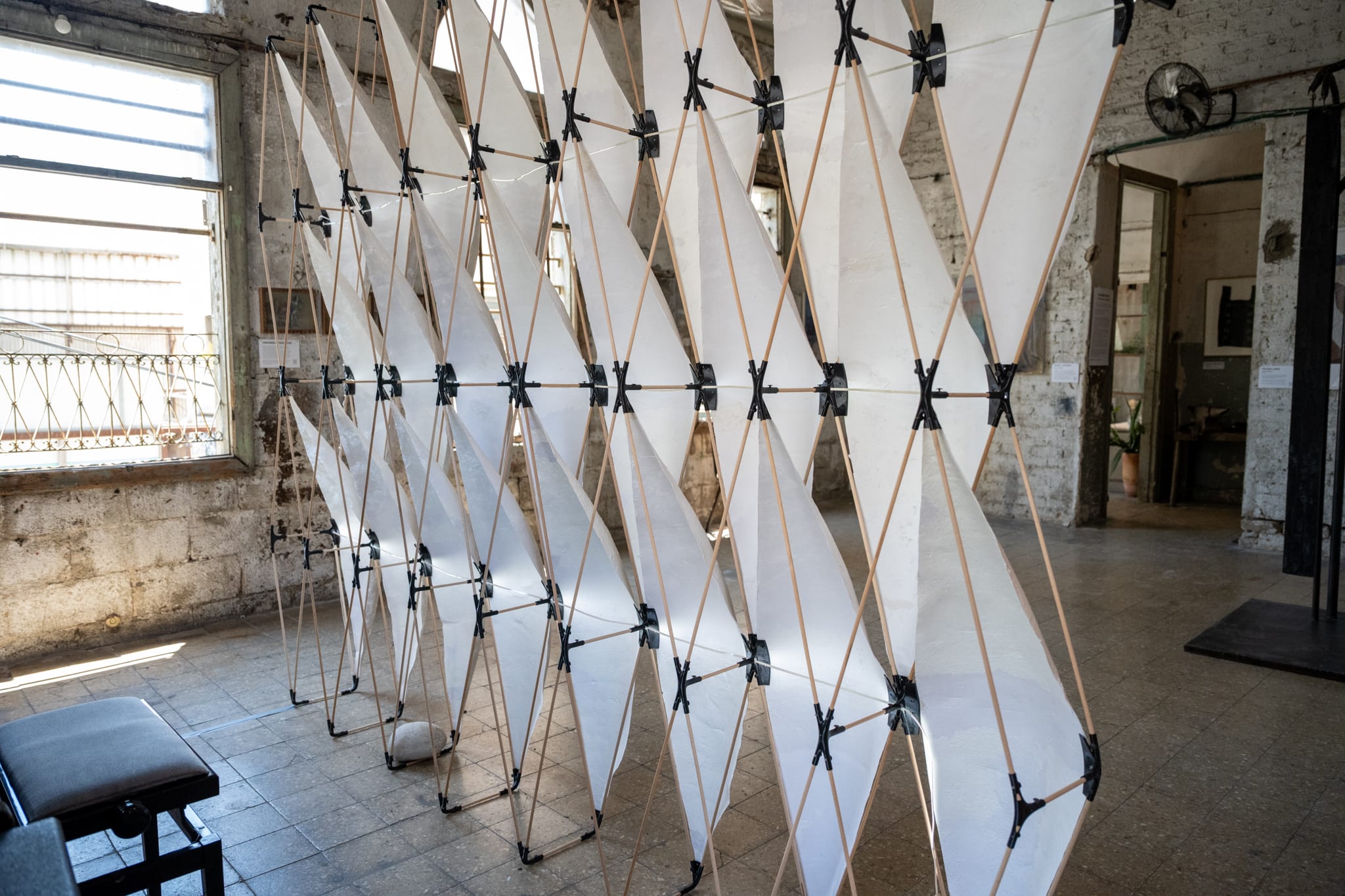
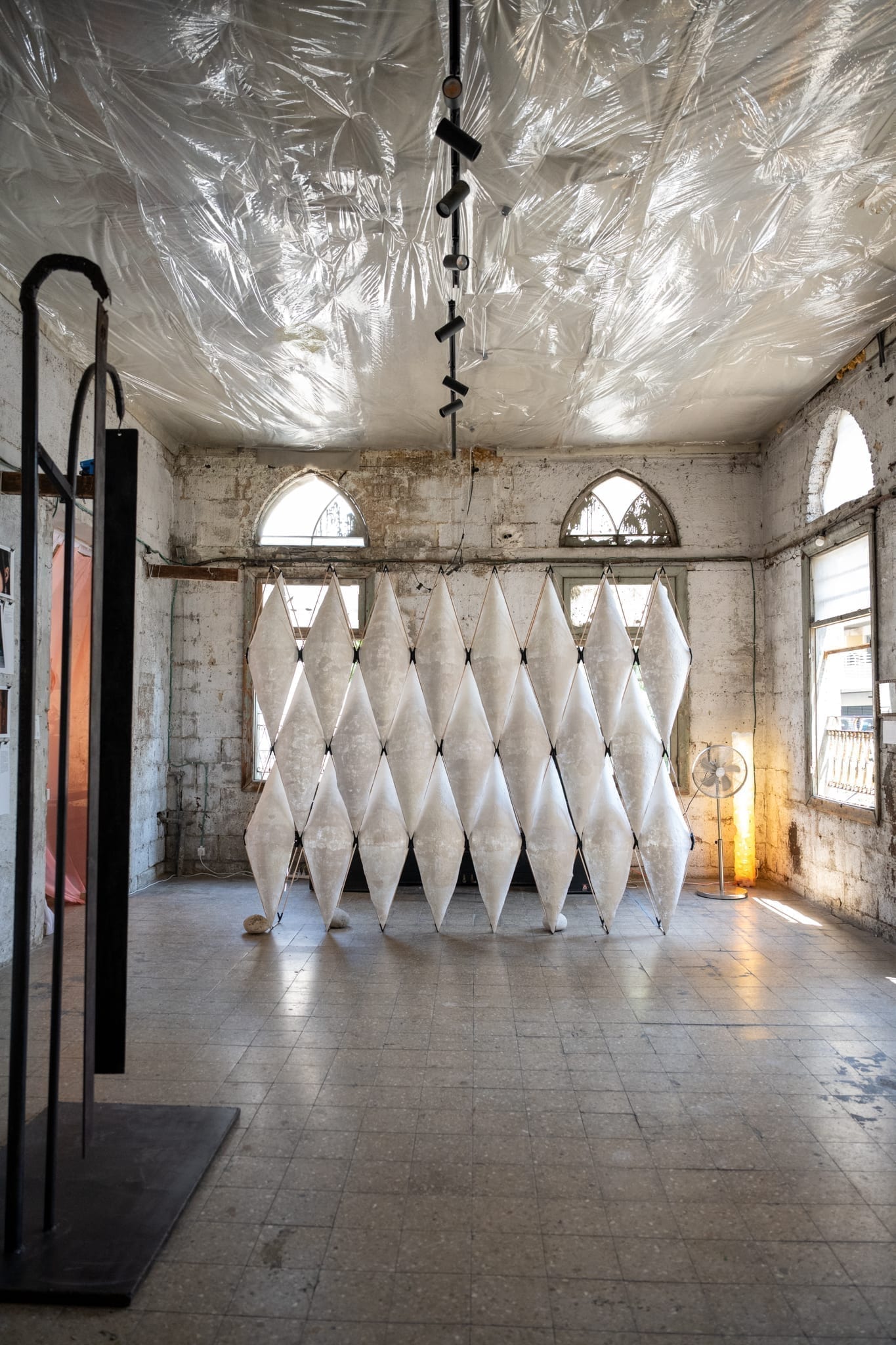
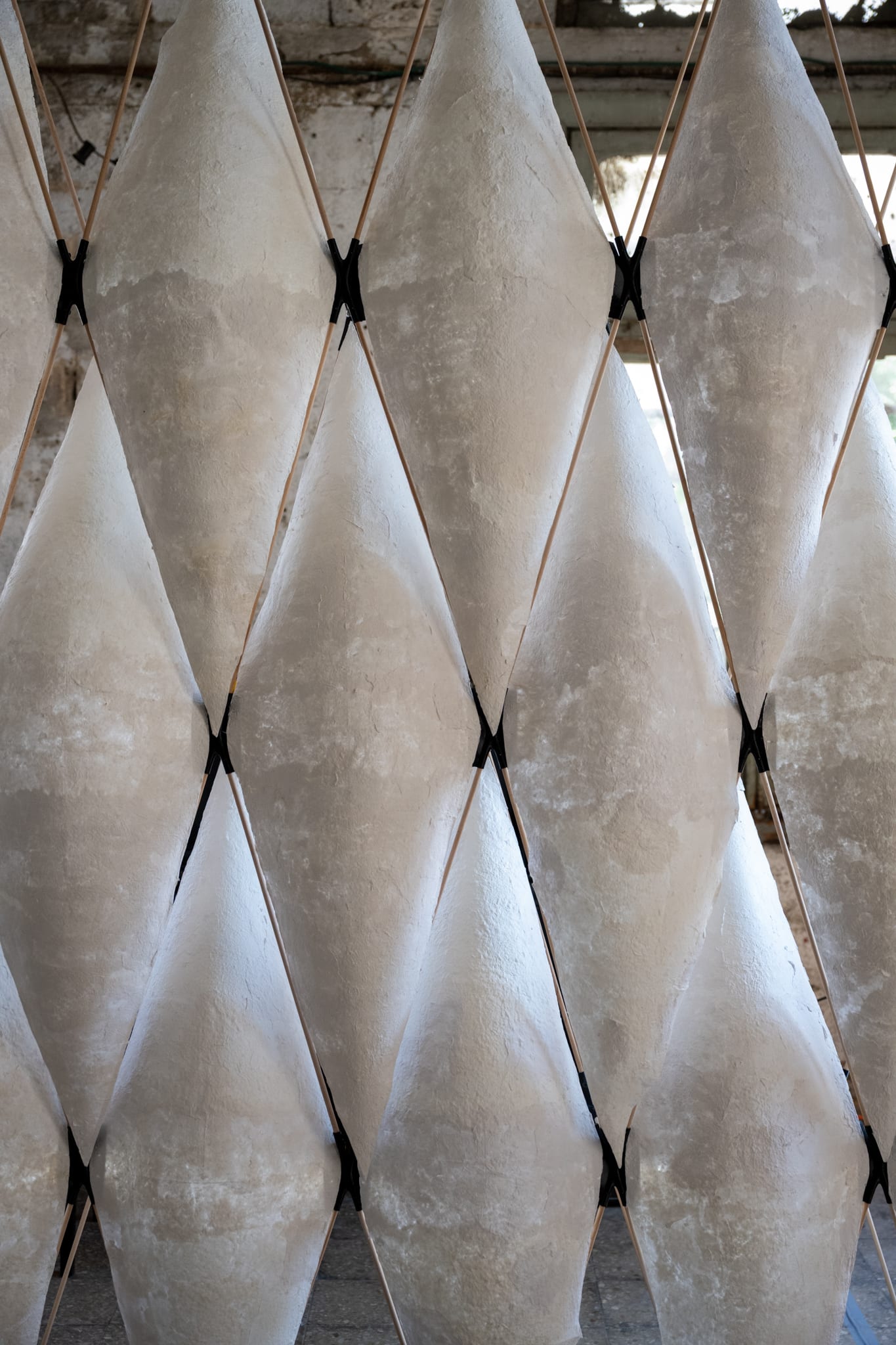
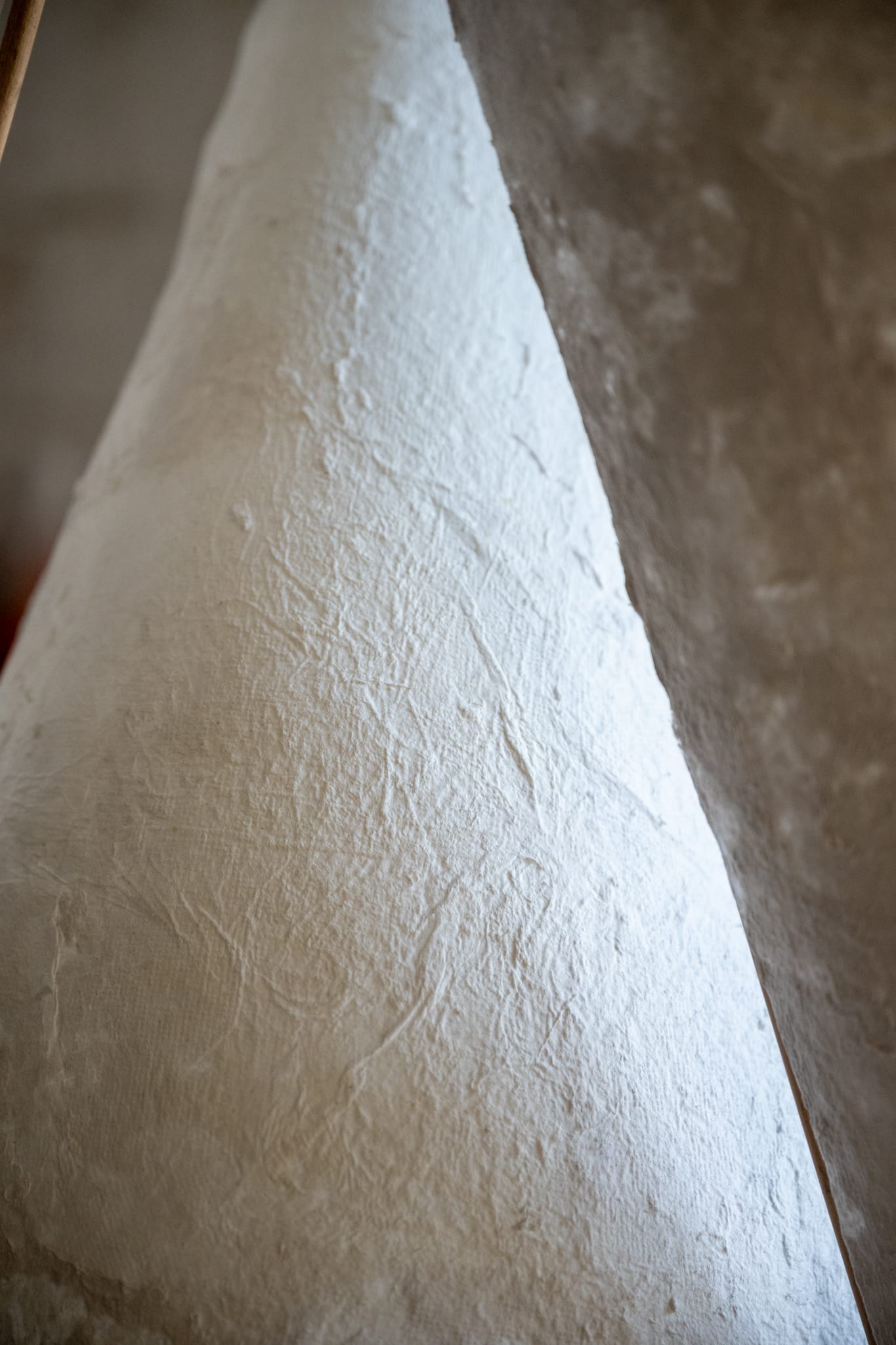
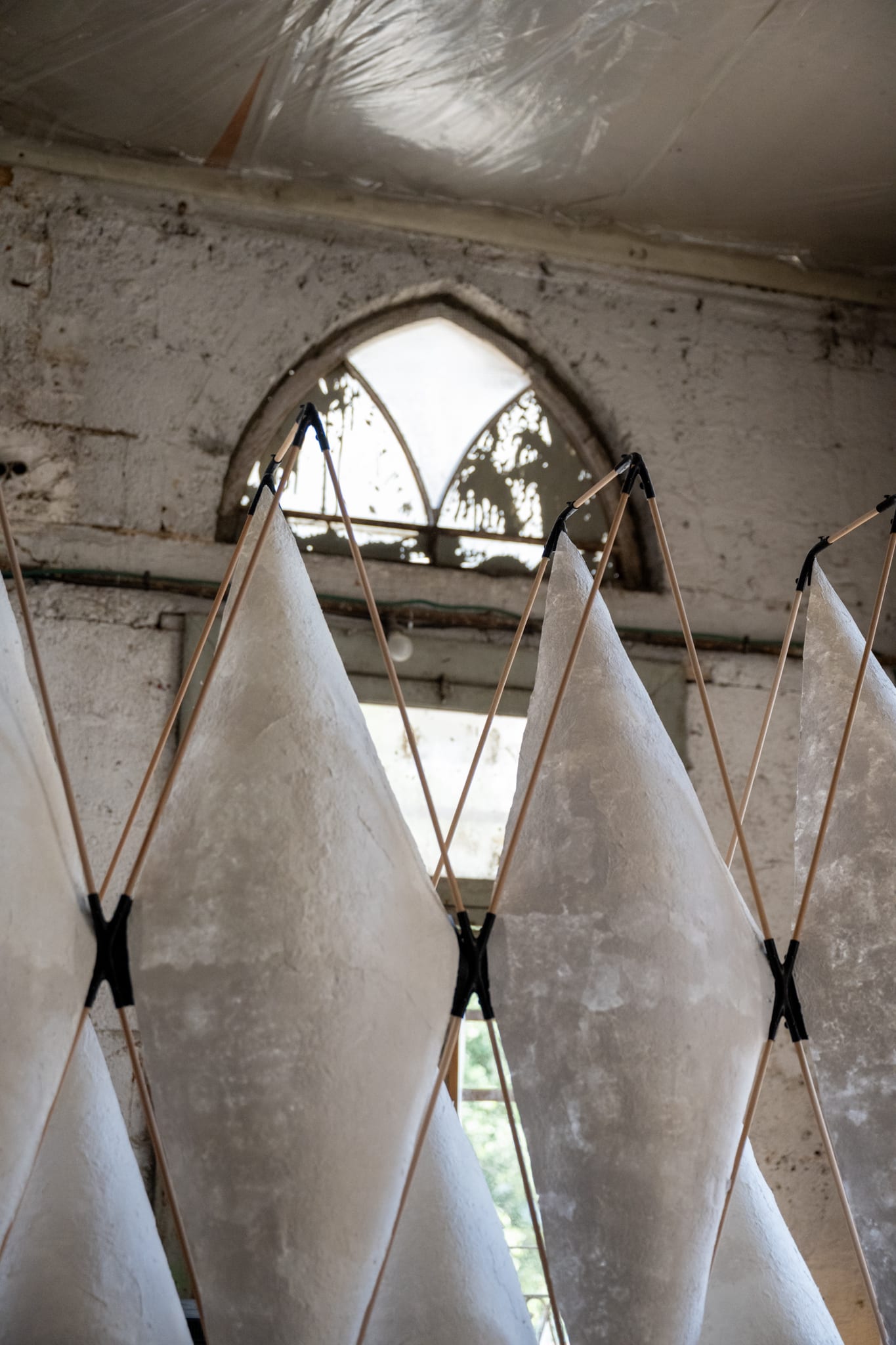
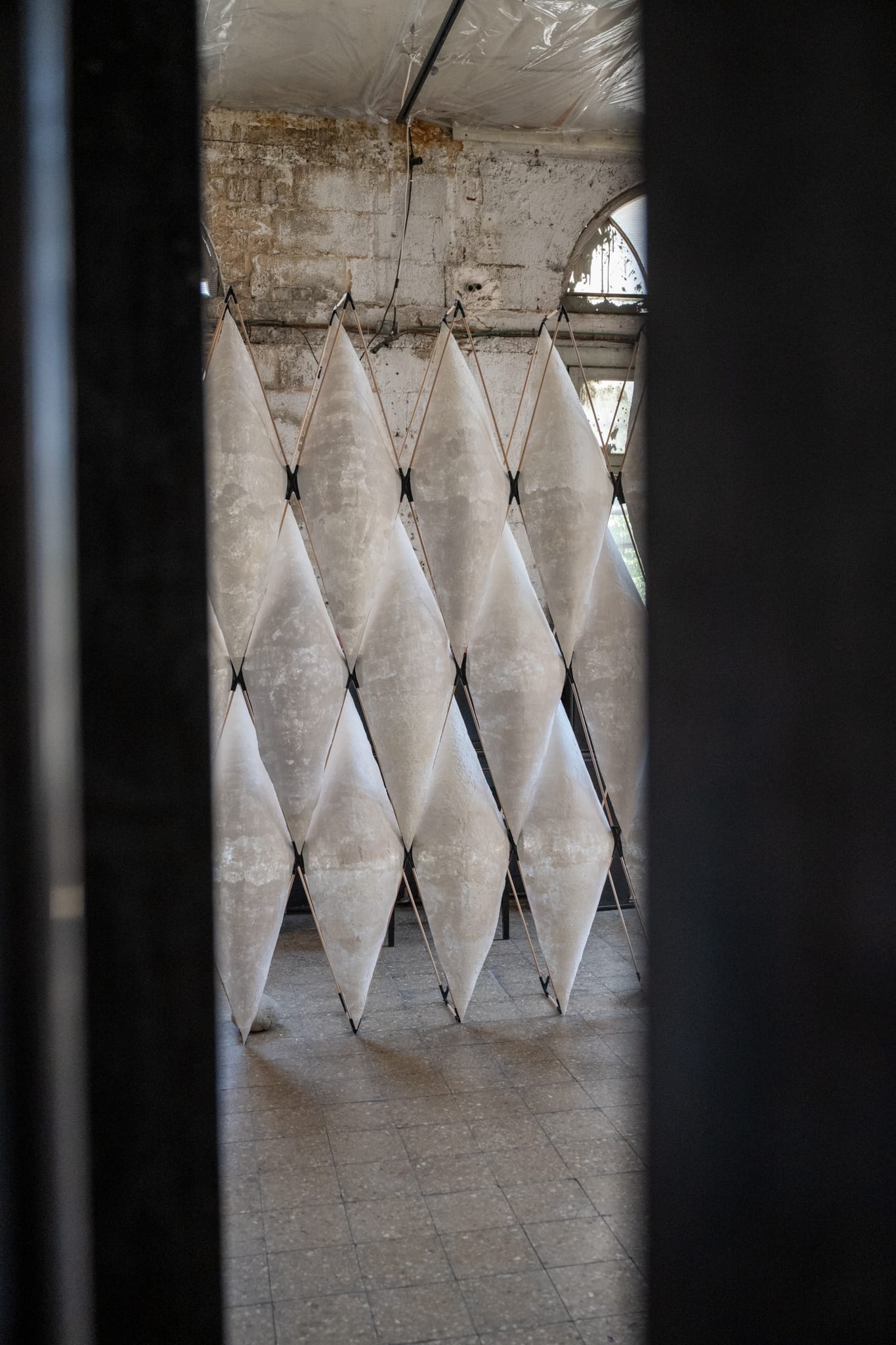
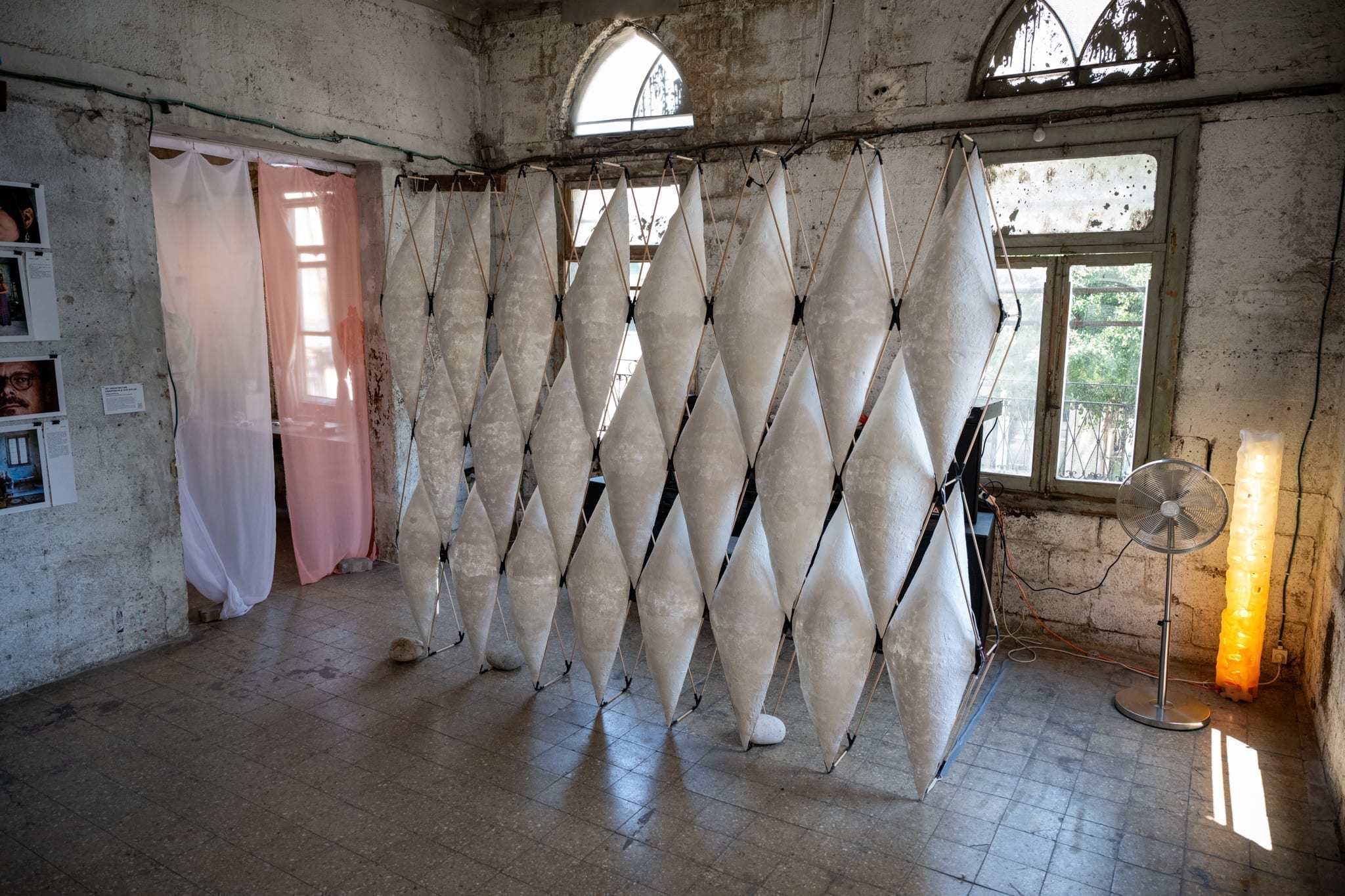
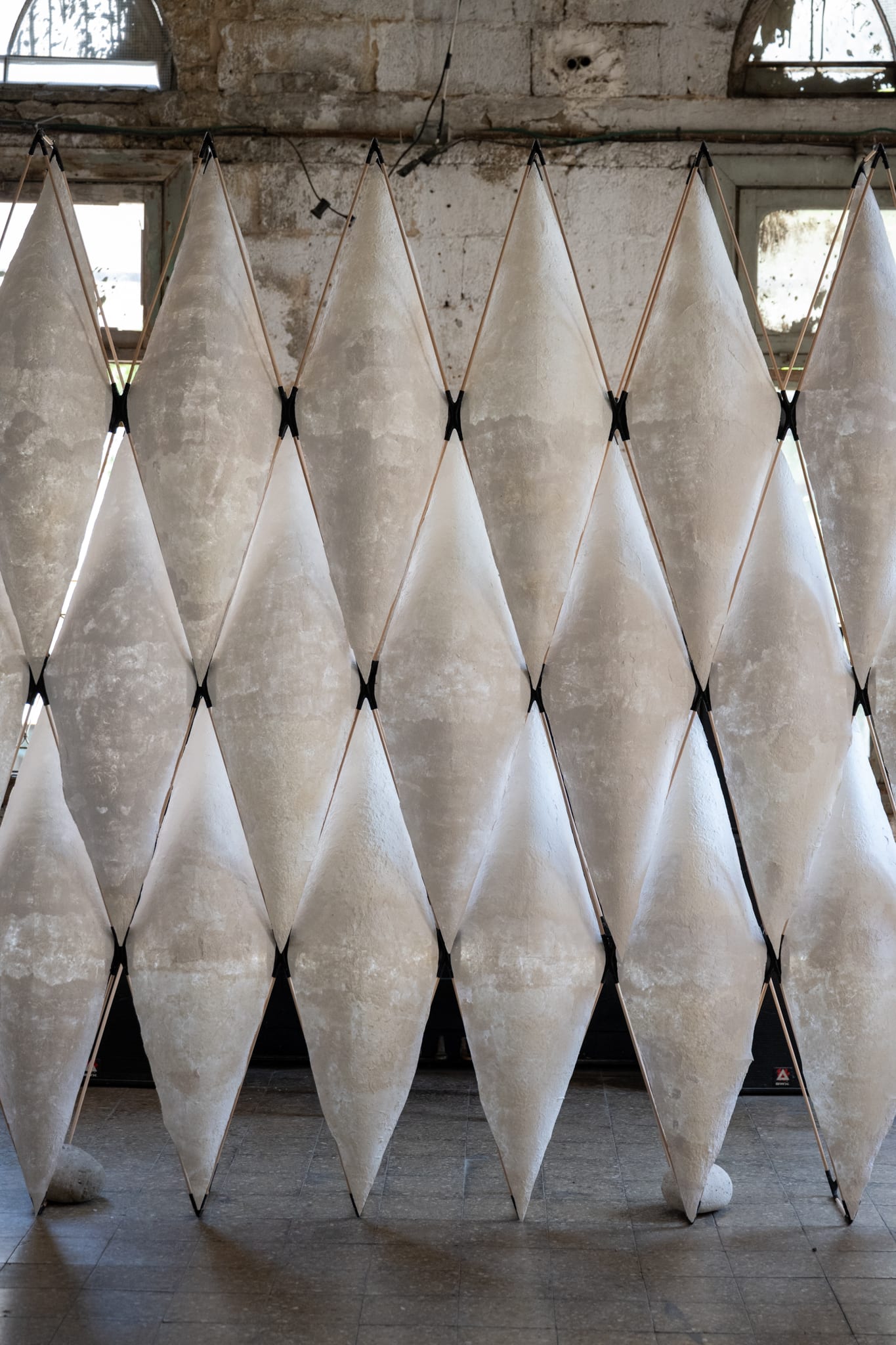
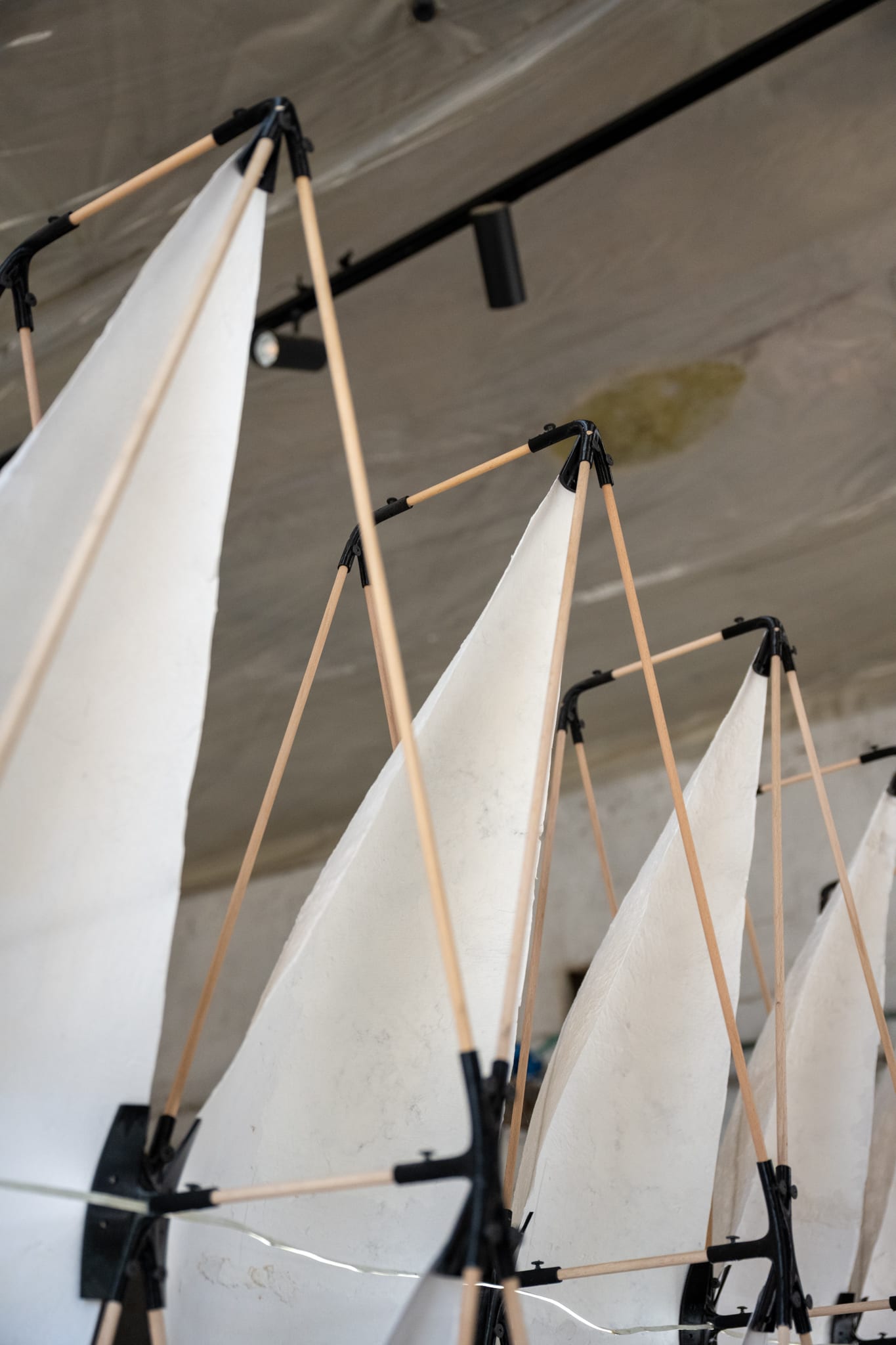
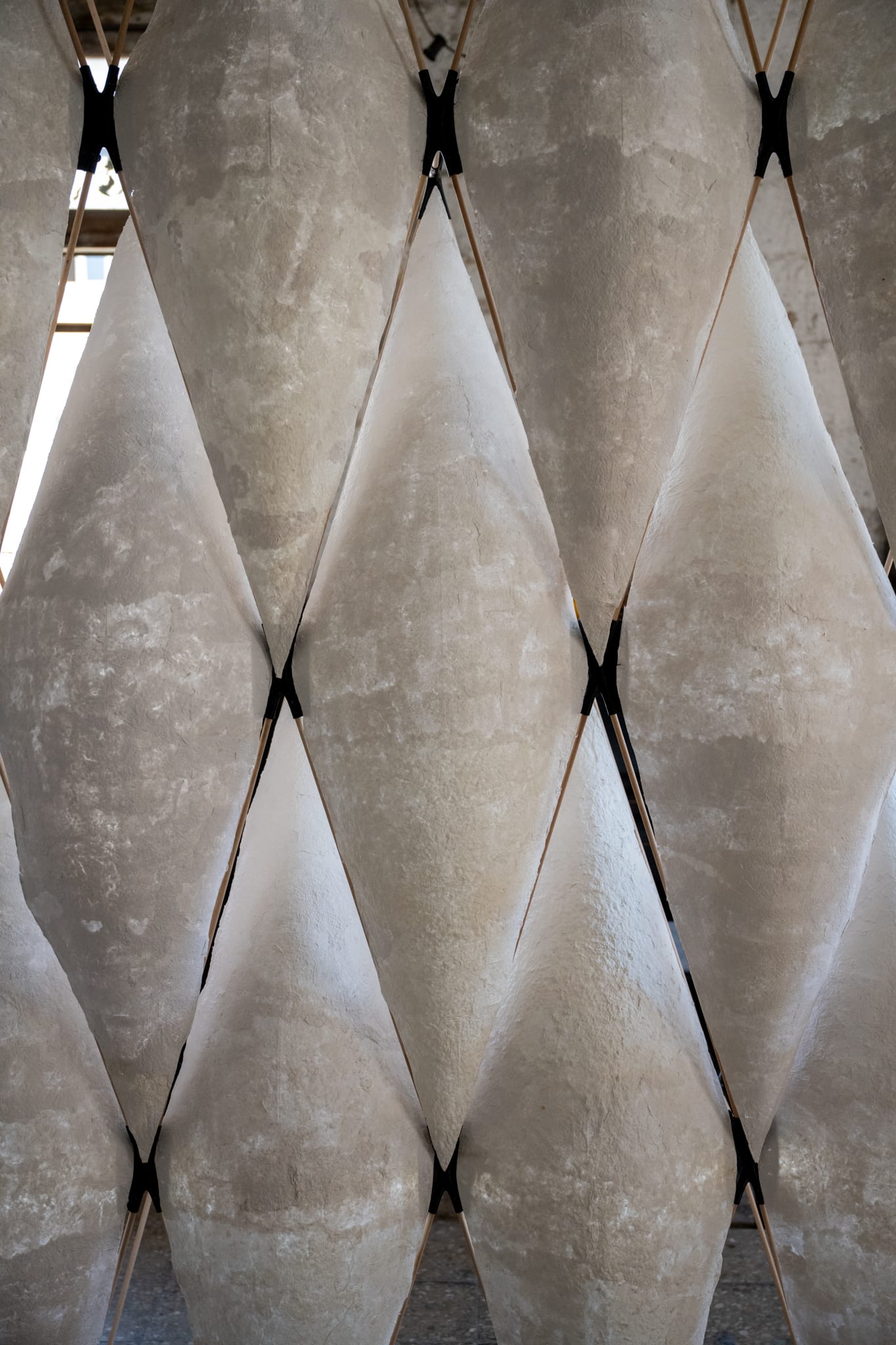
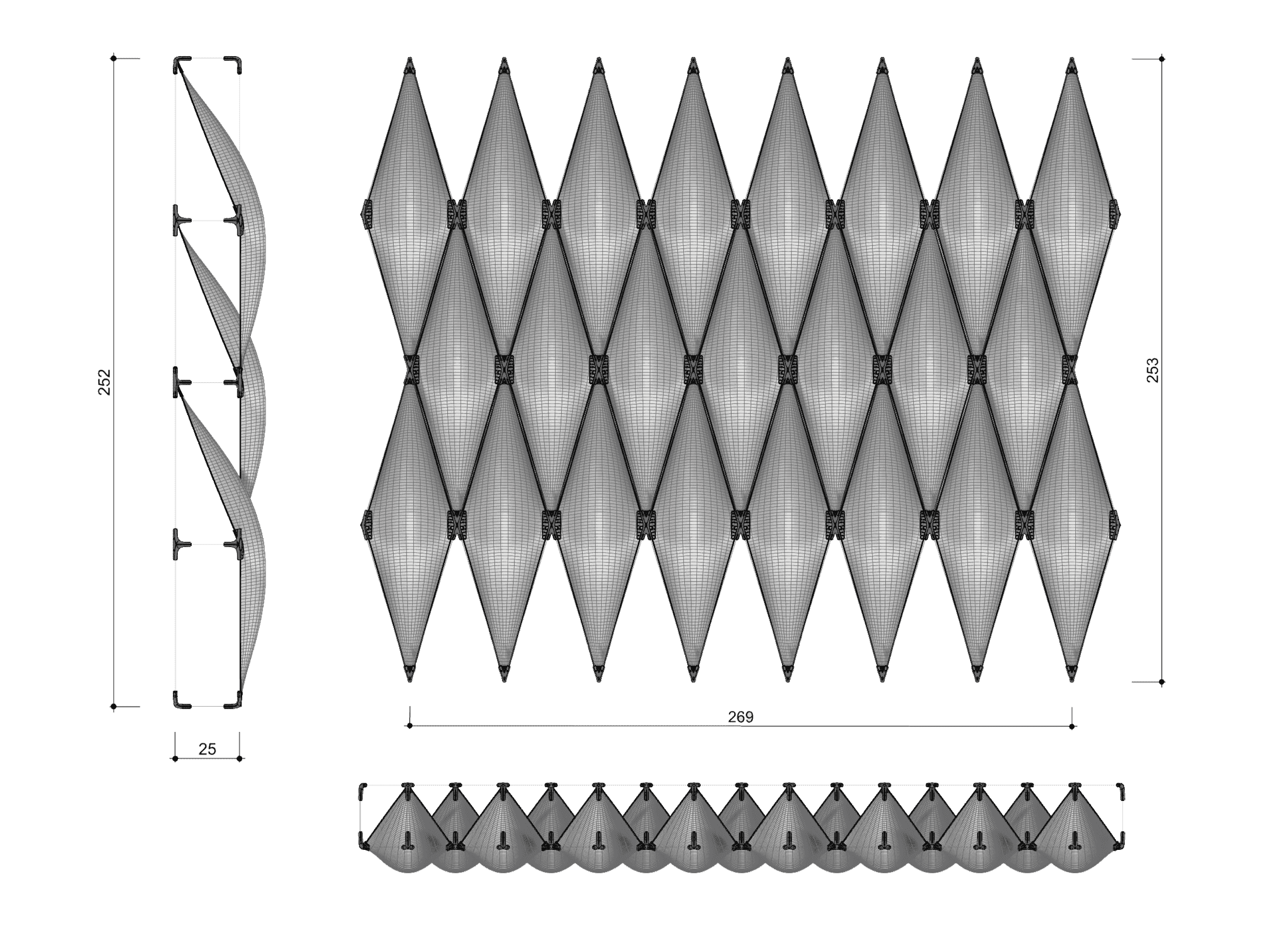
The composition of Washi Paper 2.0 is based on a diamond-grid framework, where conical handmade paper modules are tensioned within a lightweight wooden and 3D-printed joint system. Each paper element is suspended between intersecting diagonals, creating a field of alternating convex and concave volumes.
[ Volumetric Structure ]
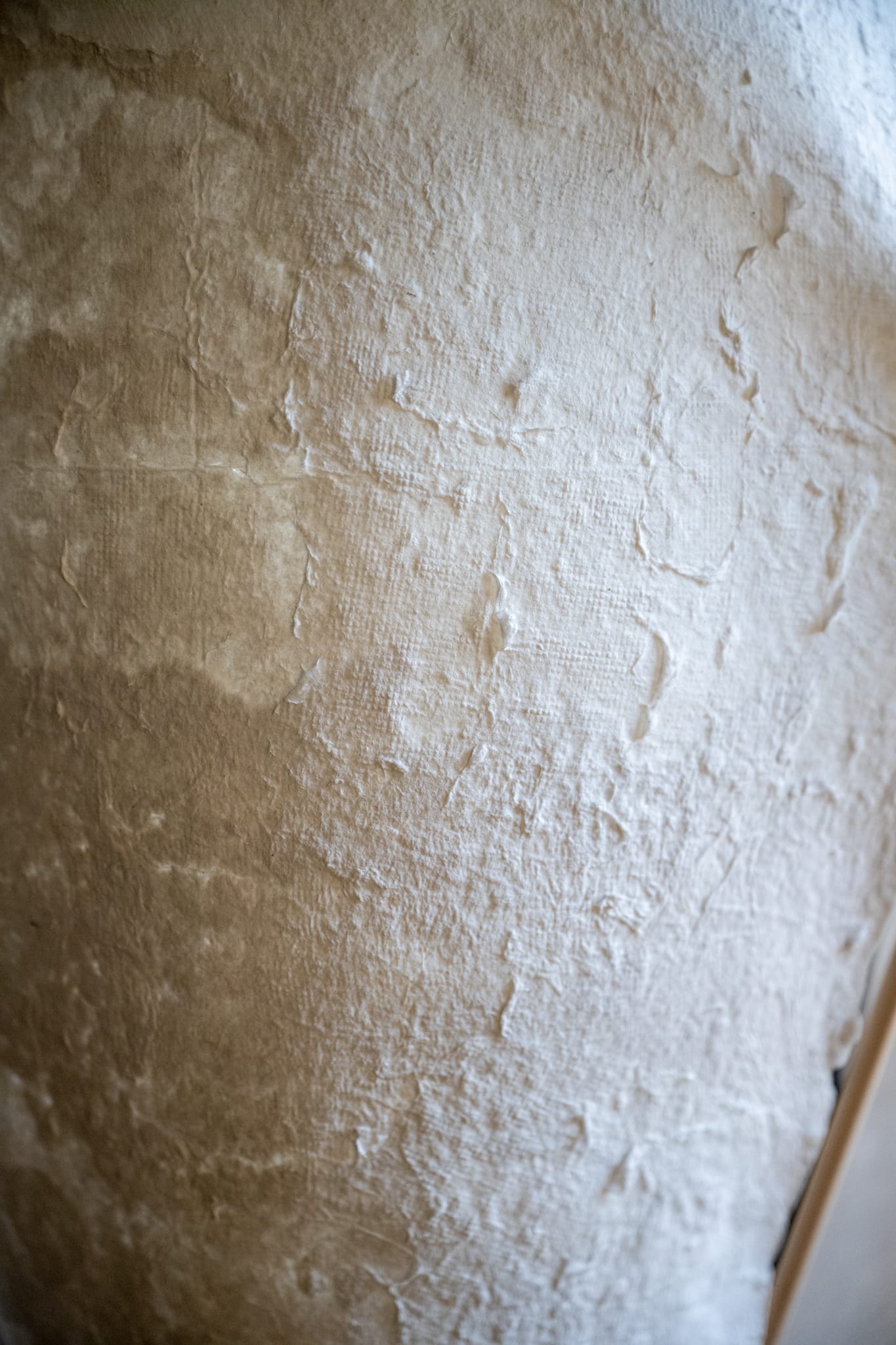
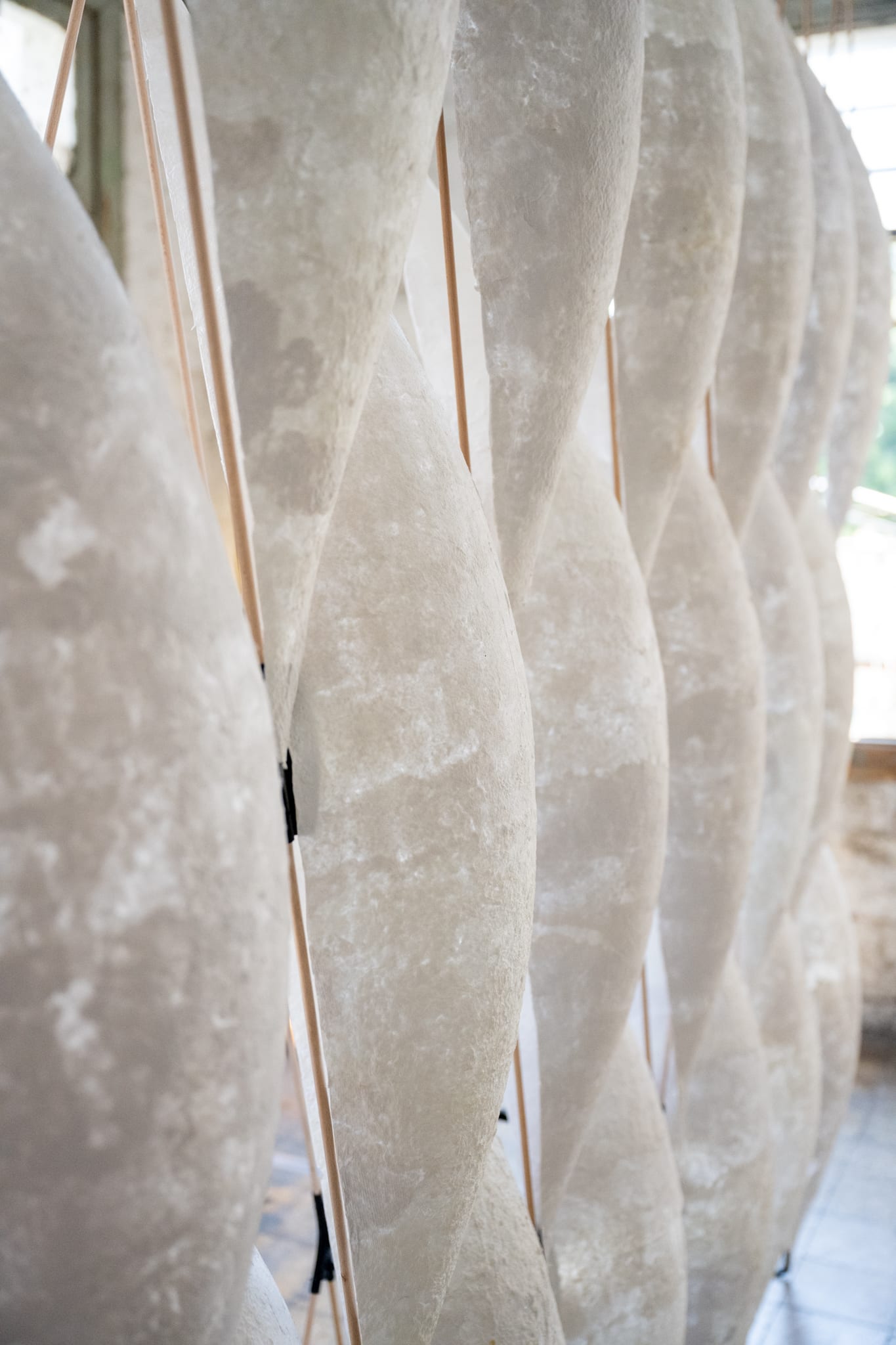
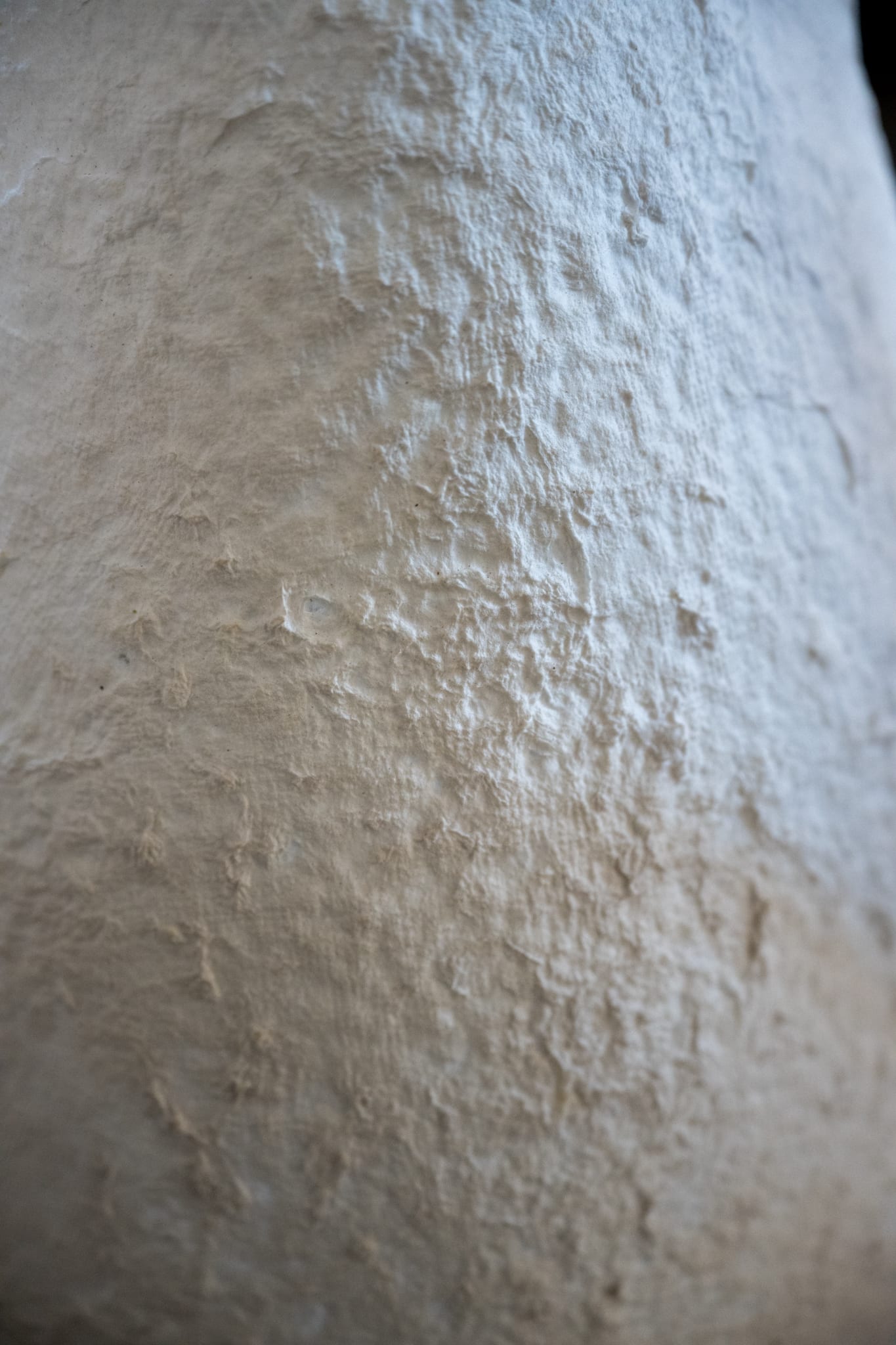
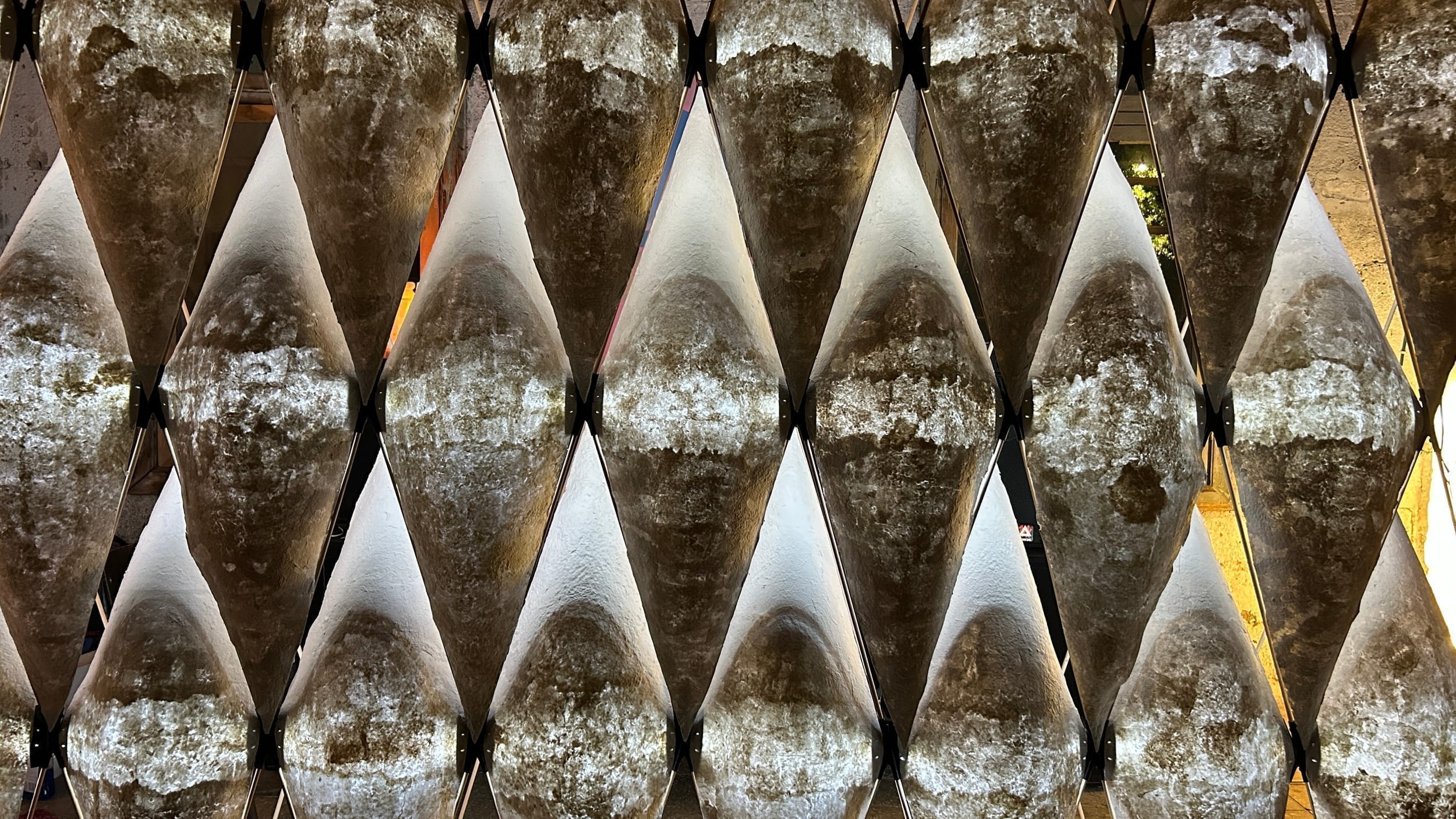
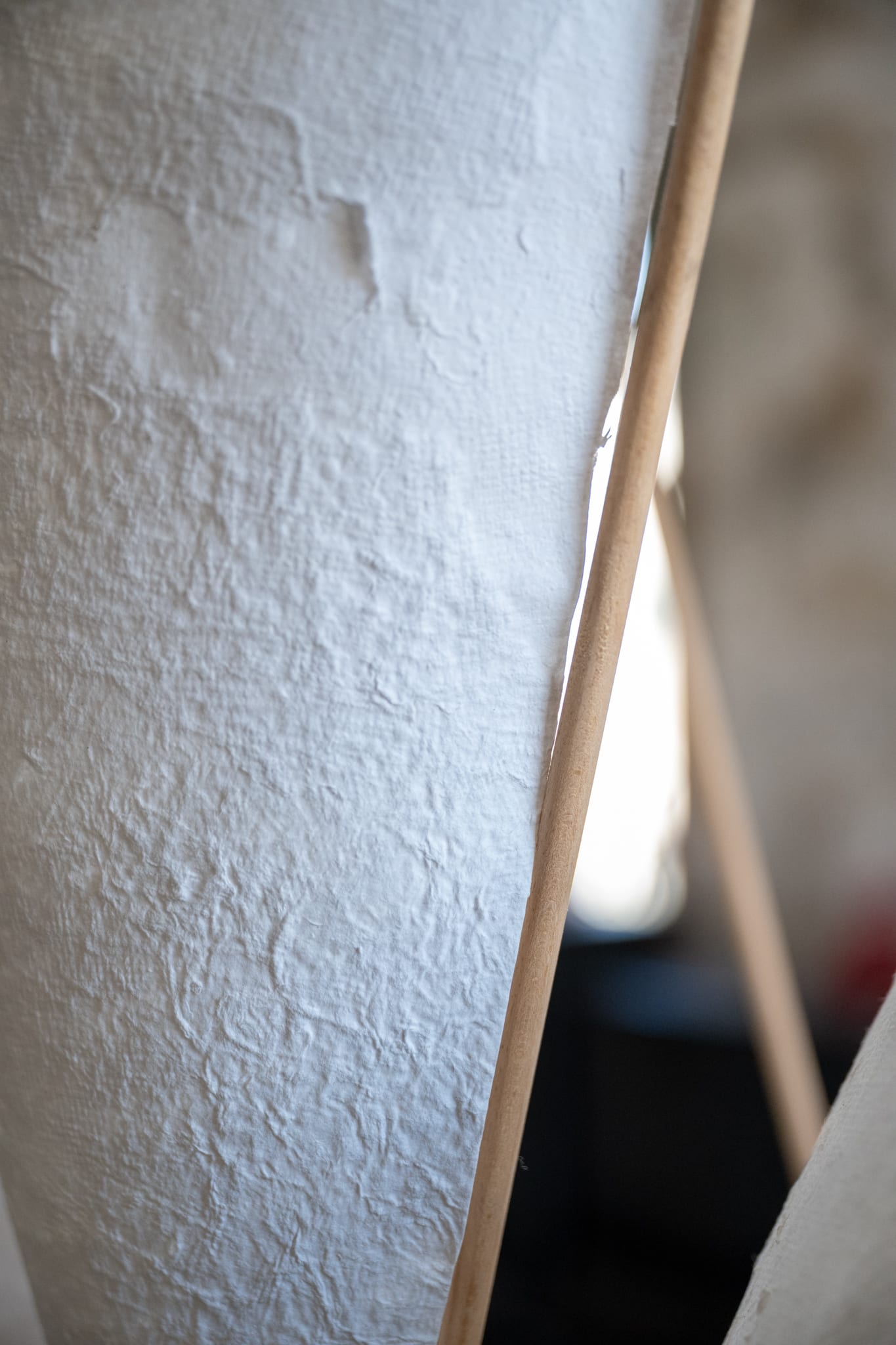
The repetition of the modules produces a rhythmic, semi-permeable surface that behaves as both a screen and a spatial divider. Light filters through the layered paper, activating its varying thicknesses and revealing subtle textures. The overall structure hovers between a wall and a cloud-like spatial condition — defined not by solidity, but by gradient translucency, porosity, and tension.
The logic of the grid allows for flexibility in scale and configuration, enabling the system to grow, adapt, and reshape depending on the environment. Seen from different angles, the composition shifts — appearing soft and billowing from the front, razor-thin and geometrically precise in profile.
[ Structural System ]
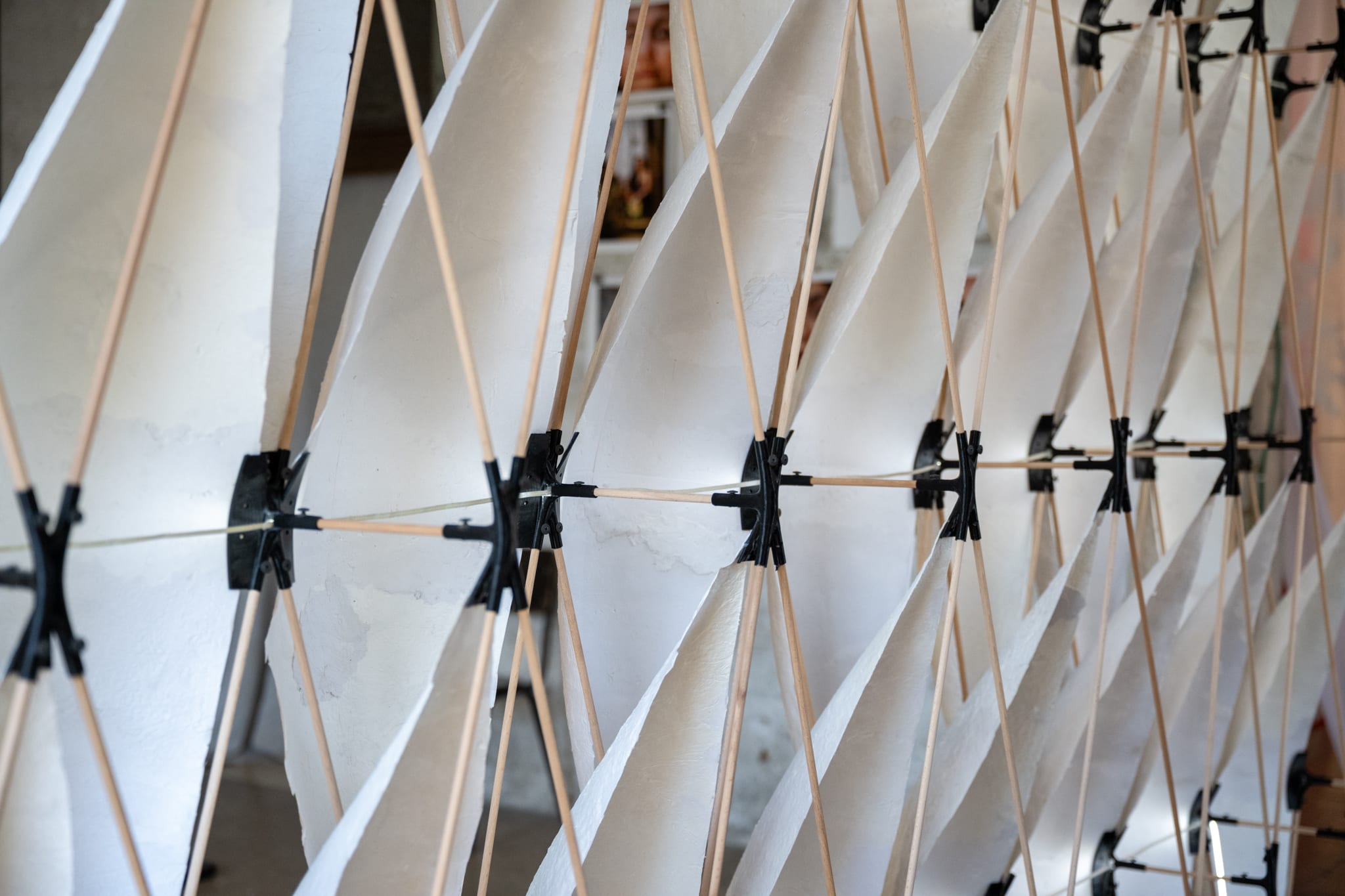
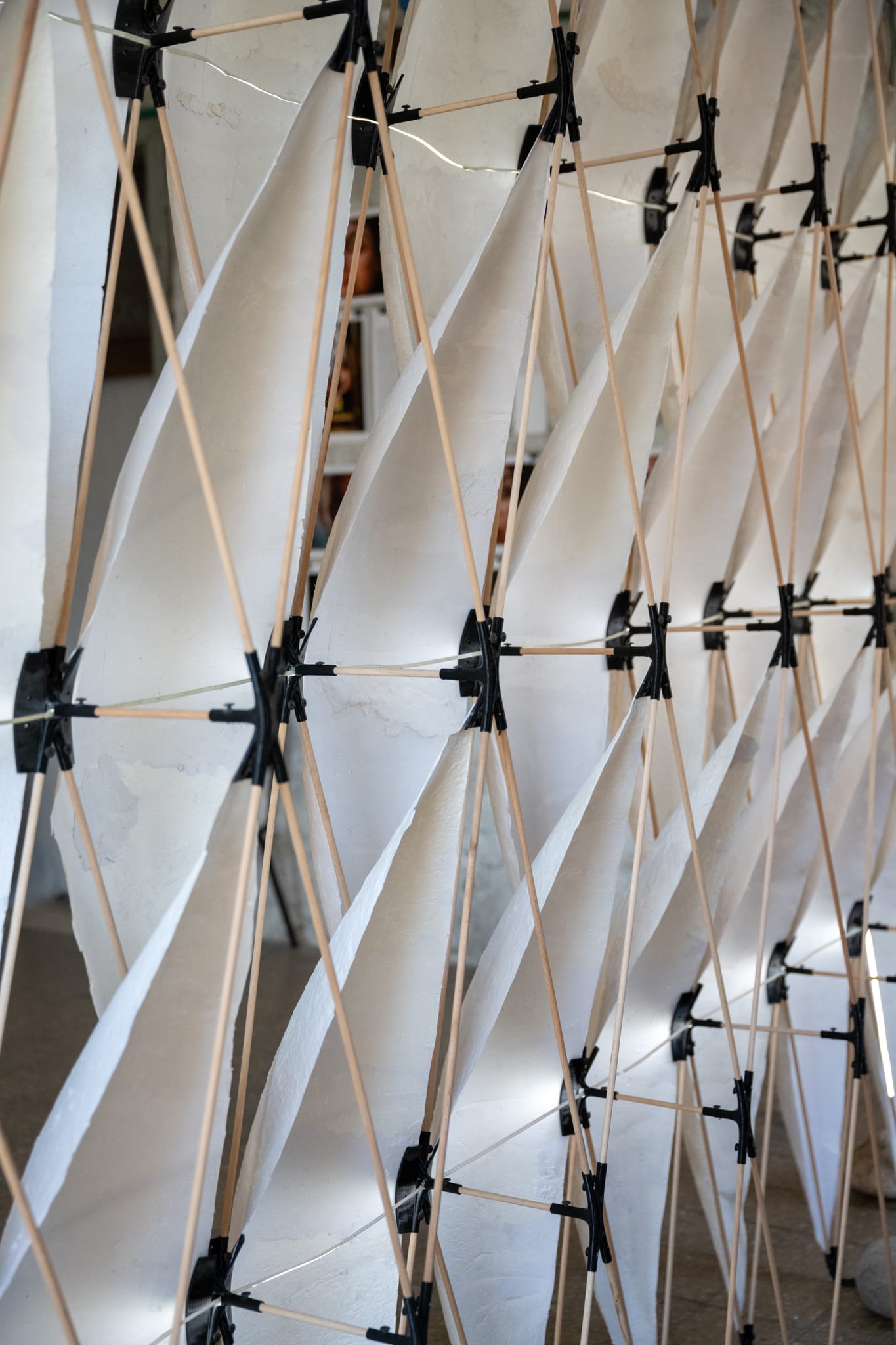
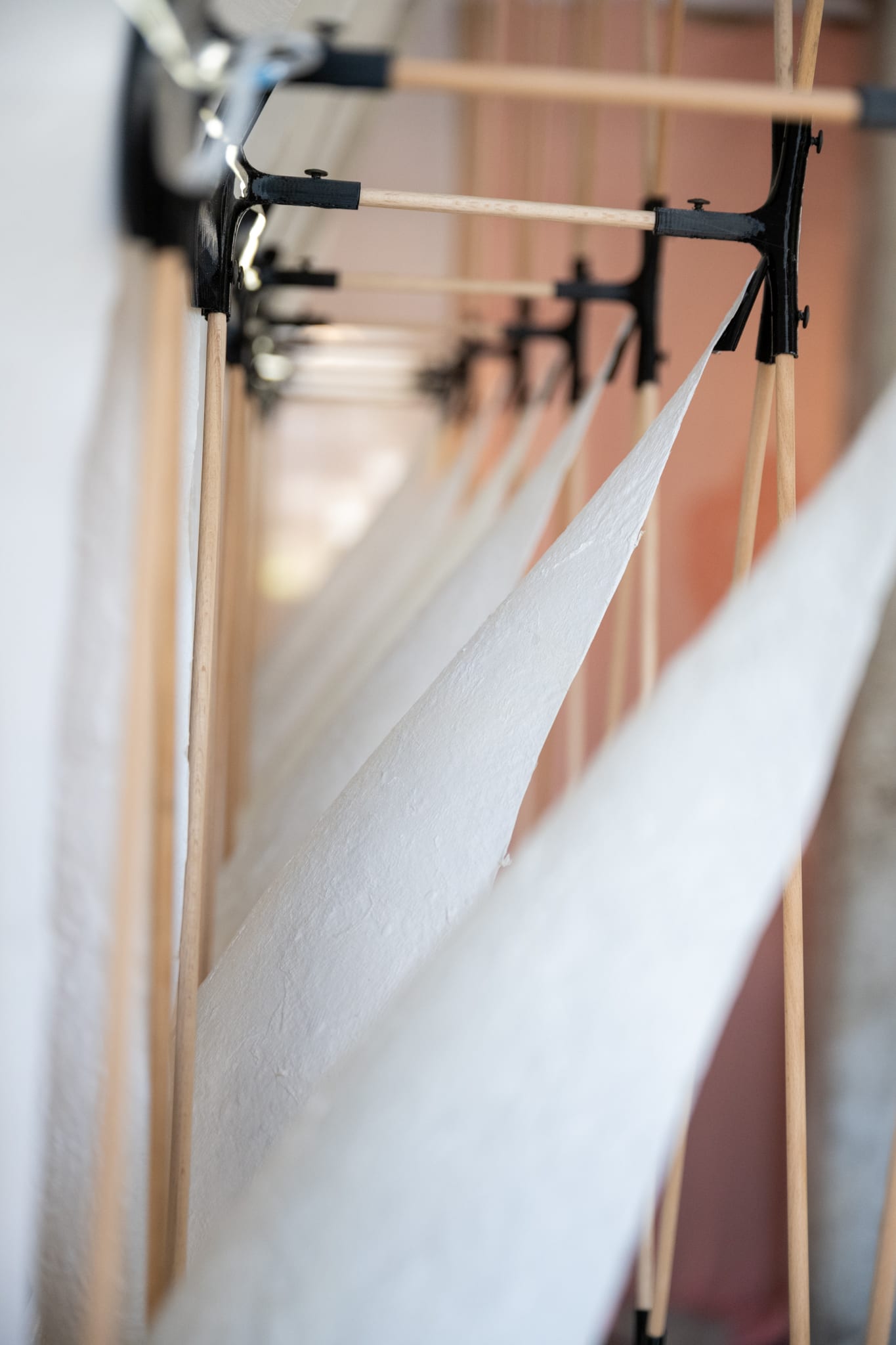
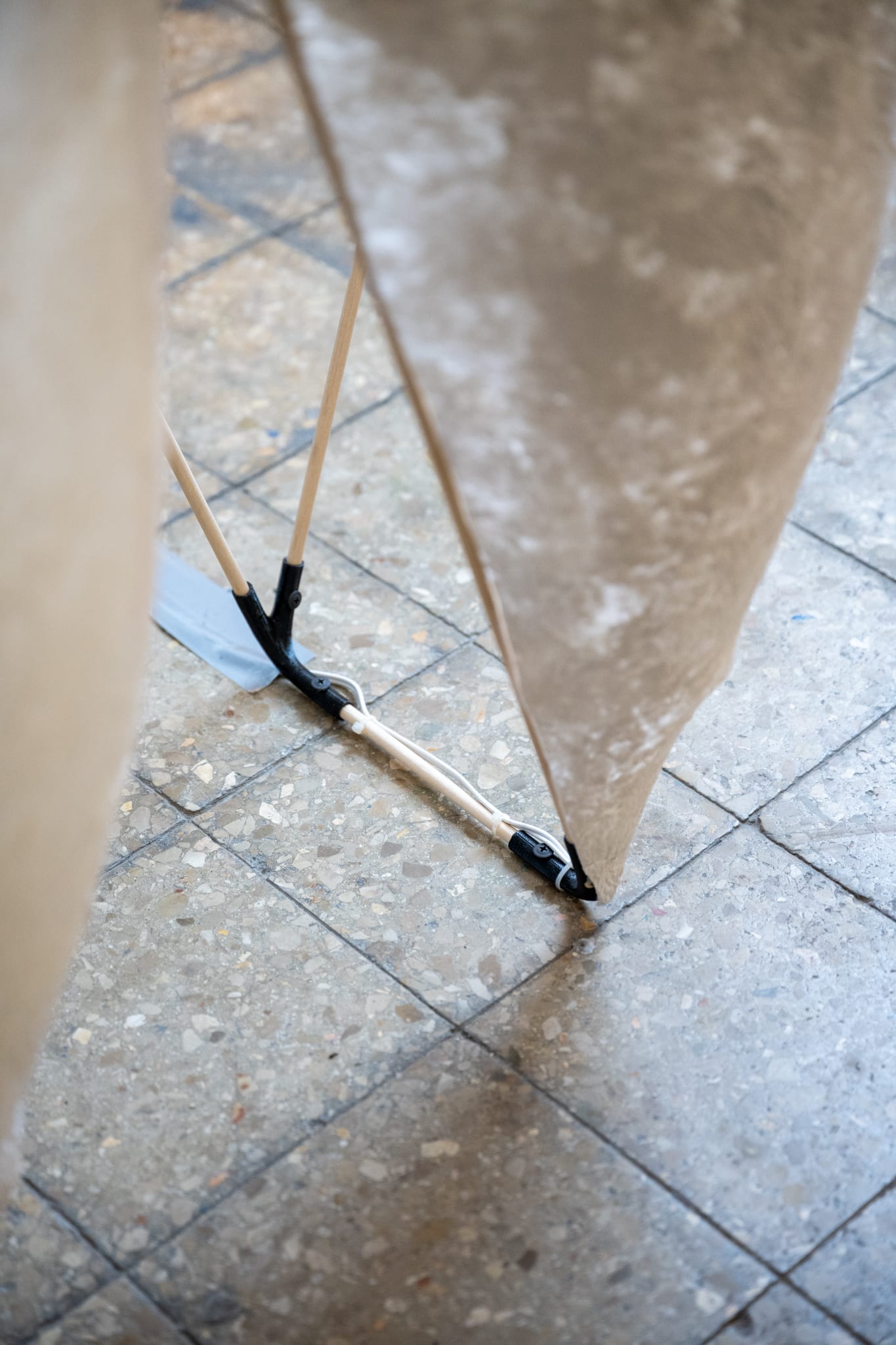
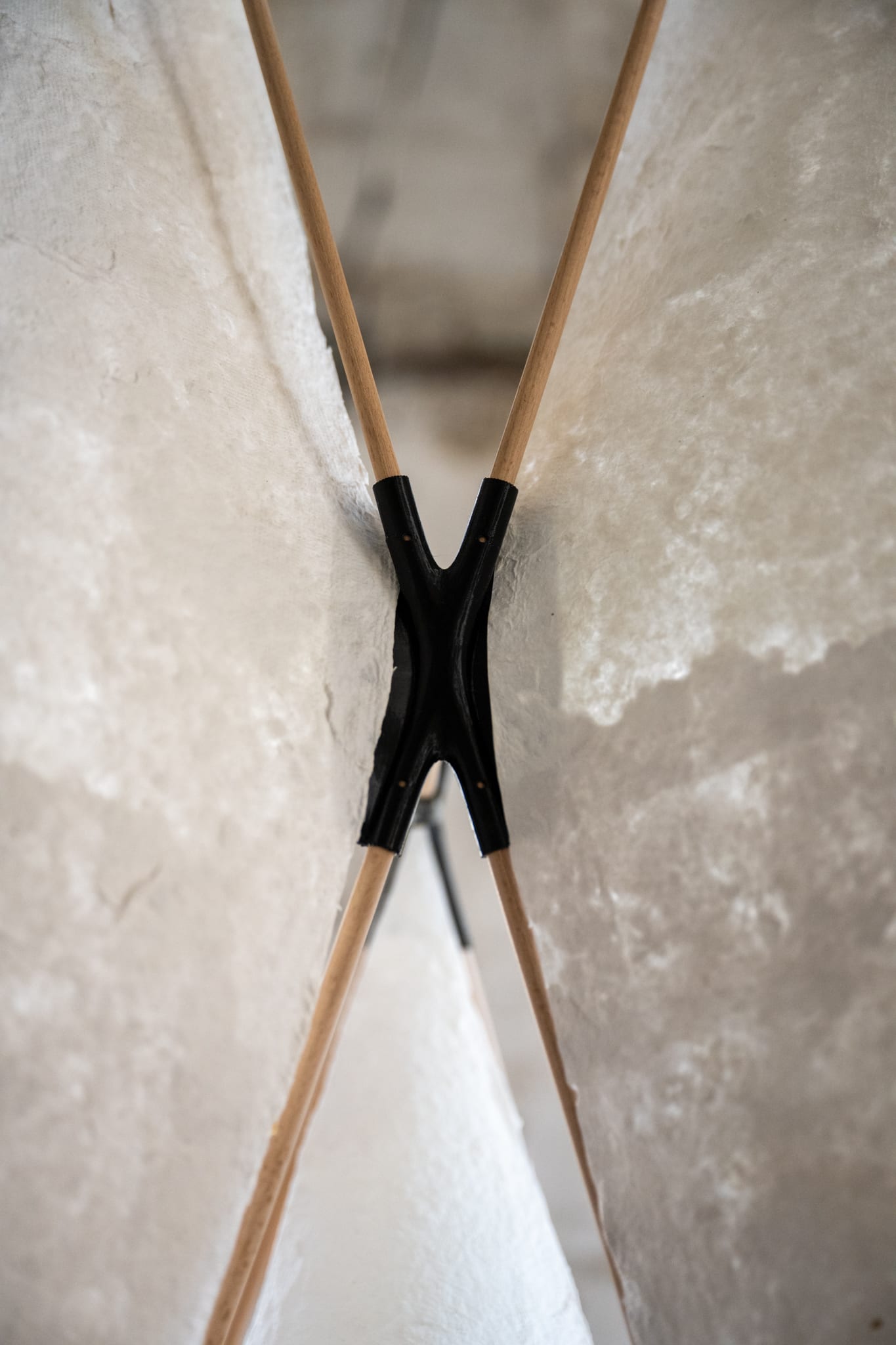
The Washi Paper 2.0 installation is built upon a lightweight modular system composed of wooden dowels and custom-designed 3D-printed joints. These joints are engineered not only for structural efficiency, but also to support and articulate the natural morphology of the paper modules.
[ Joints ]
Each joint features precise slots and grip points that gently hold the edges of the handmade washi paper, allowing it to stretch, fold, or curve as needed — without damaging or piercing the material. This subtle tensioning defines the overall geometry of the installation, balancing delicacy with structural clarity.
[ Lighting ]
Embedded within the joints is a system of concealed lighting, integrated to activate the paper's inherent translucency. As light passes through the layered surfaces, the structure glows from within, emphasizing the texture, grain, and subtle imperfections of the handmade paper. The result is a soft, atmospheric spatial experience that blurs the boundary between object, structure, and light.
Index