YET Architecture
Aeolian
AADRL Master Thesis — London, UK, 2021–2023
Aeolian — AADRL Master Thesis / Atmospheric Architectural System
Data
Credits
About the Project
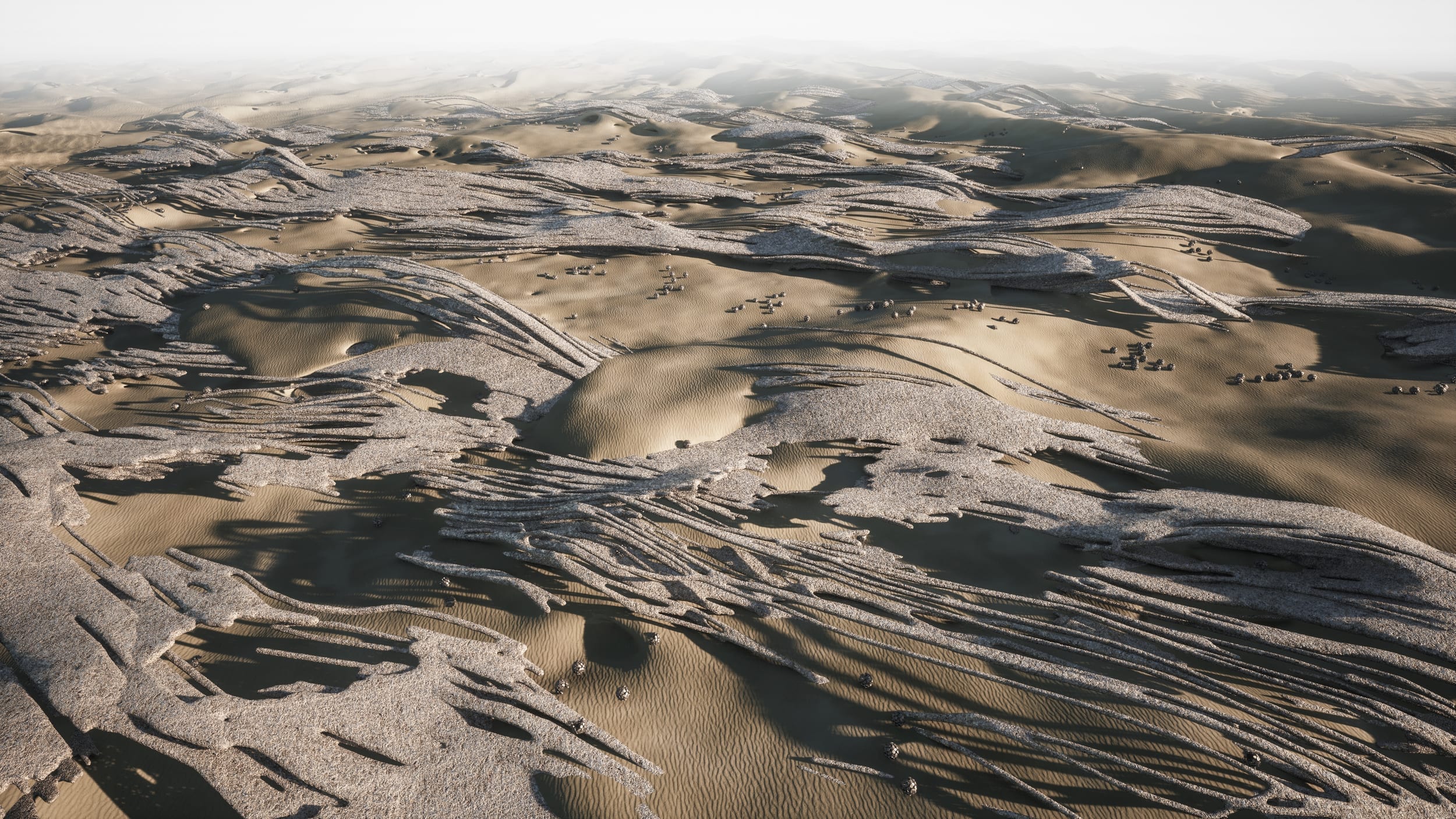
The research addresses the process of desertification by utilising the desert's onsite materiality and investigating its material contingency. The project focuses on the literal meaning of desertification, the physical spread of a desert over the living ecosystems, be it urban environment, rural vegetation or agricultural lands.
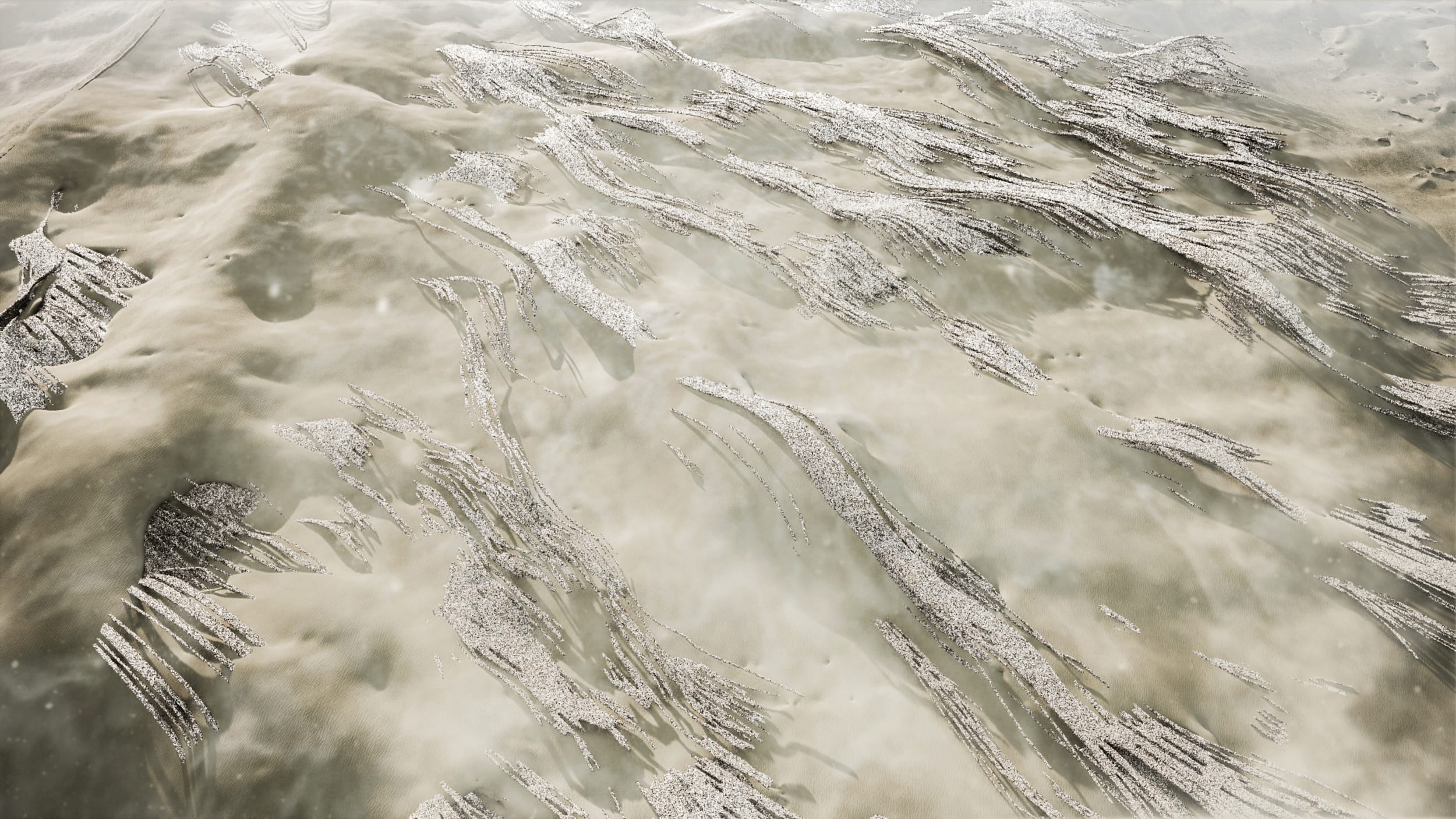
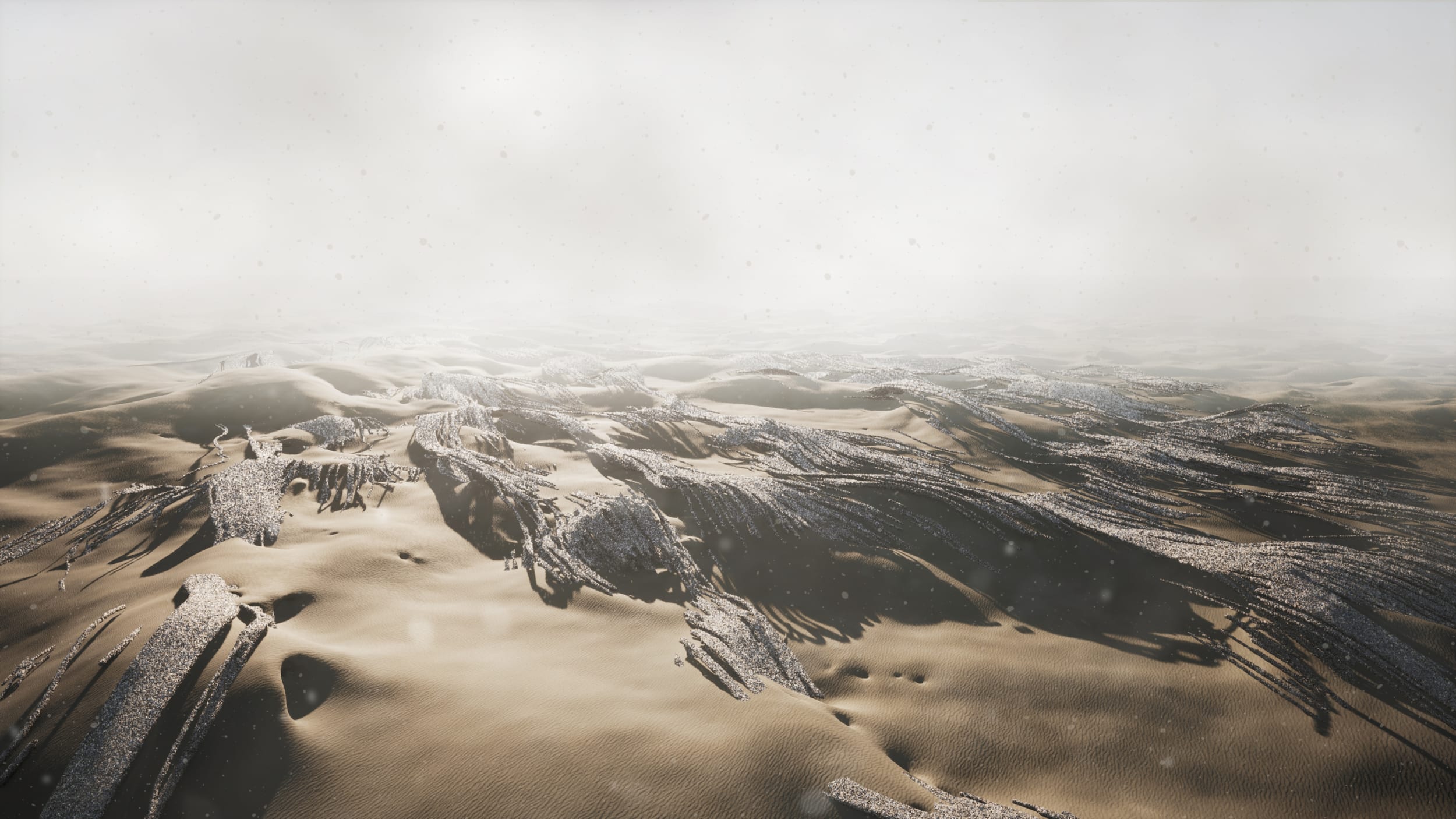
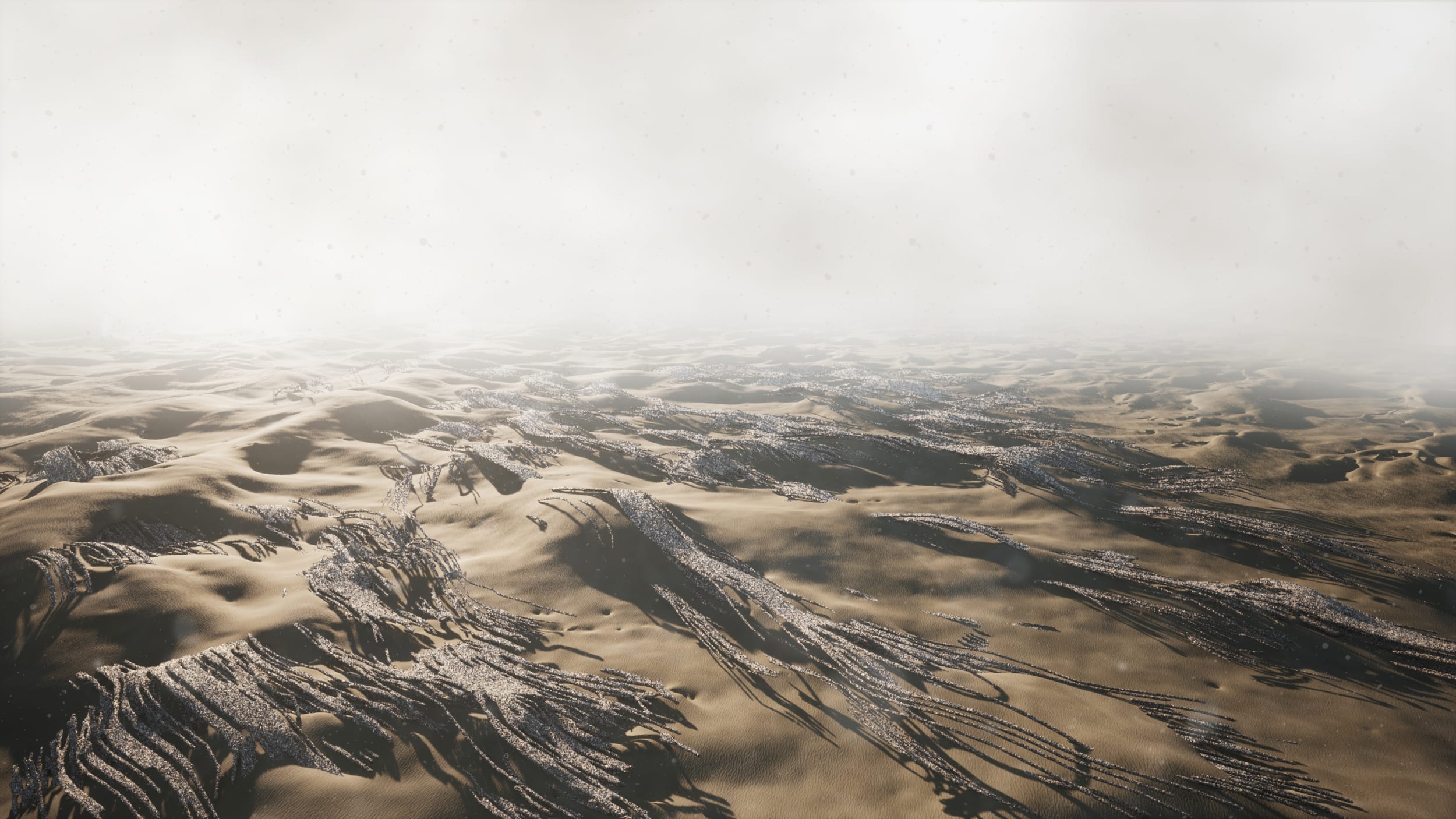
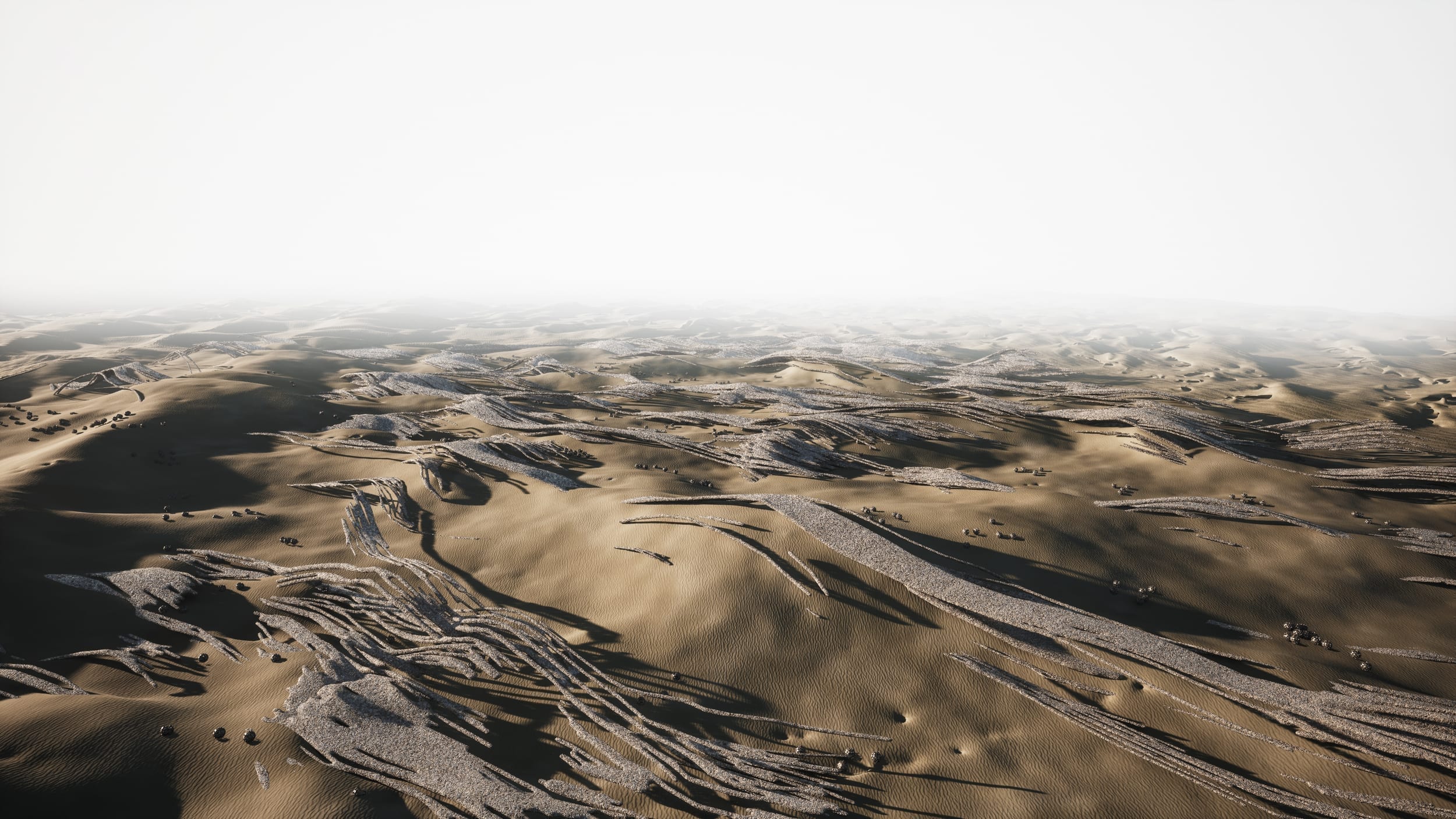
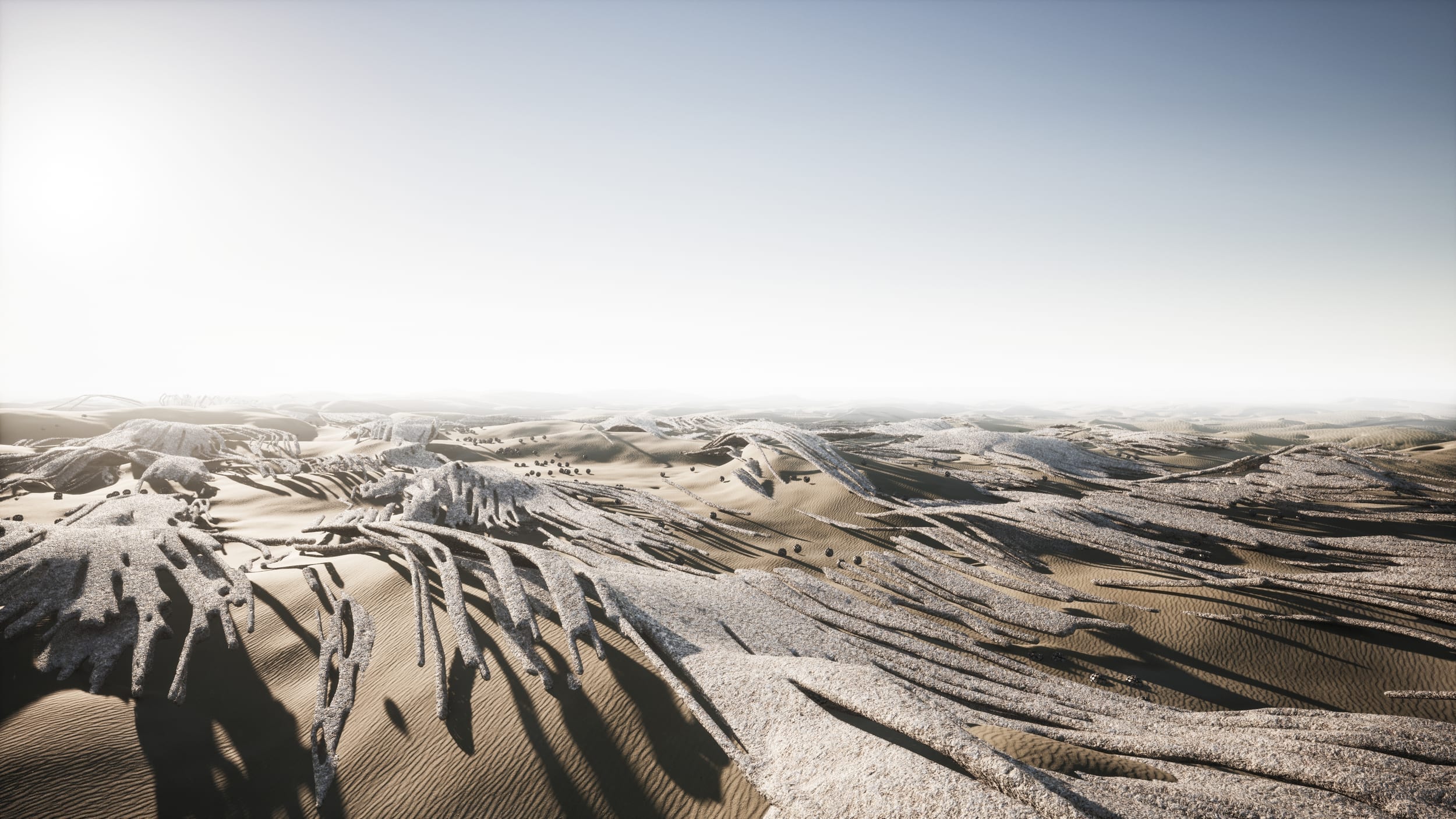
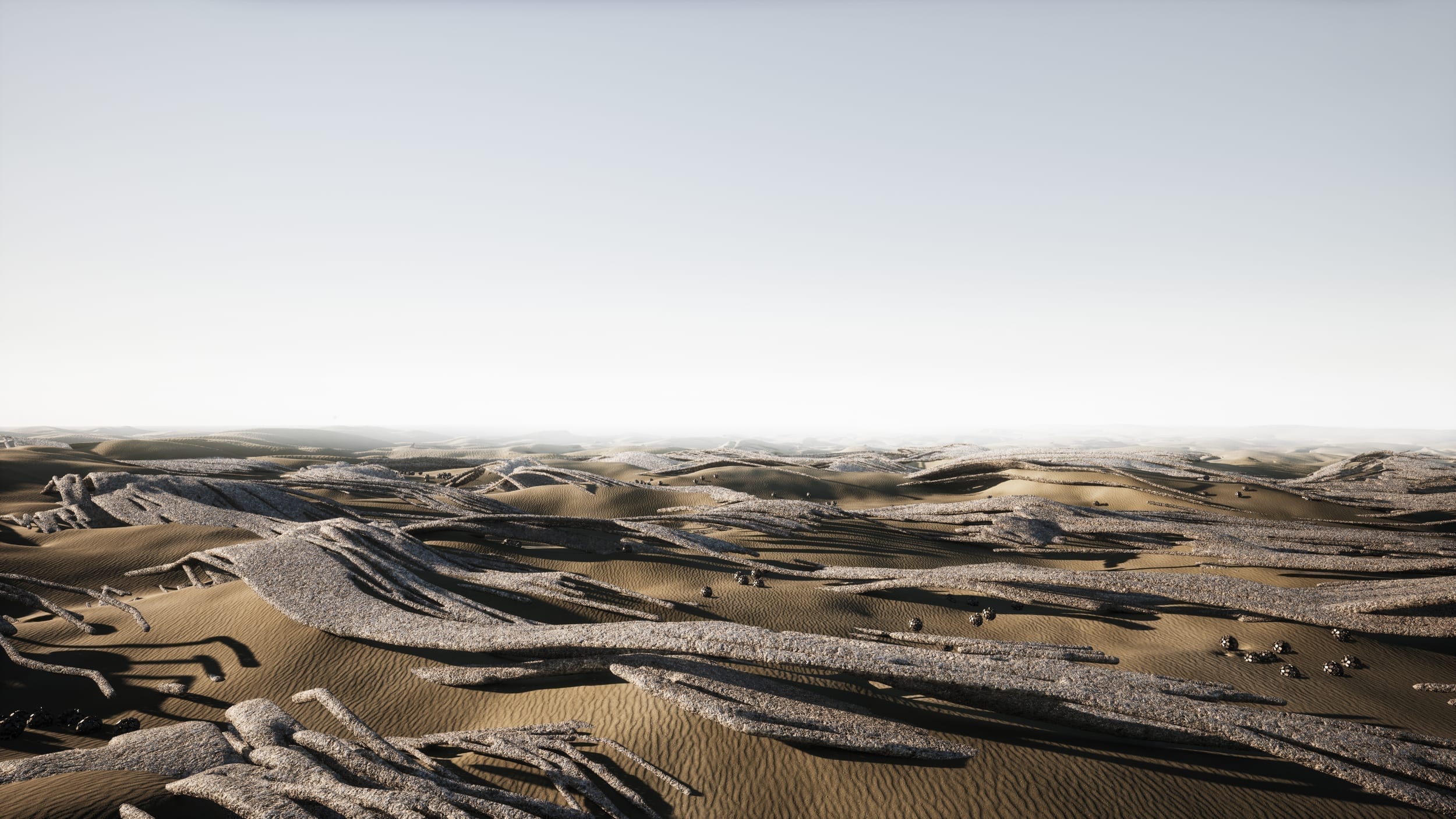
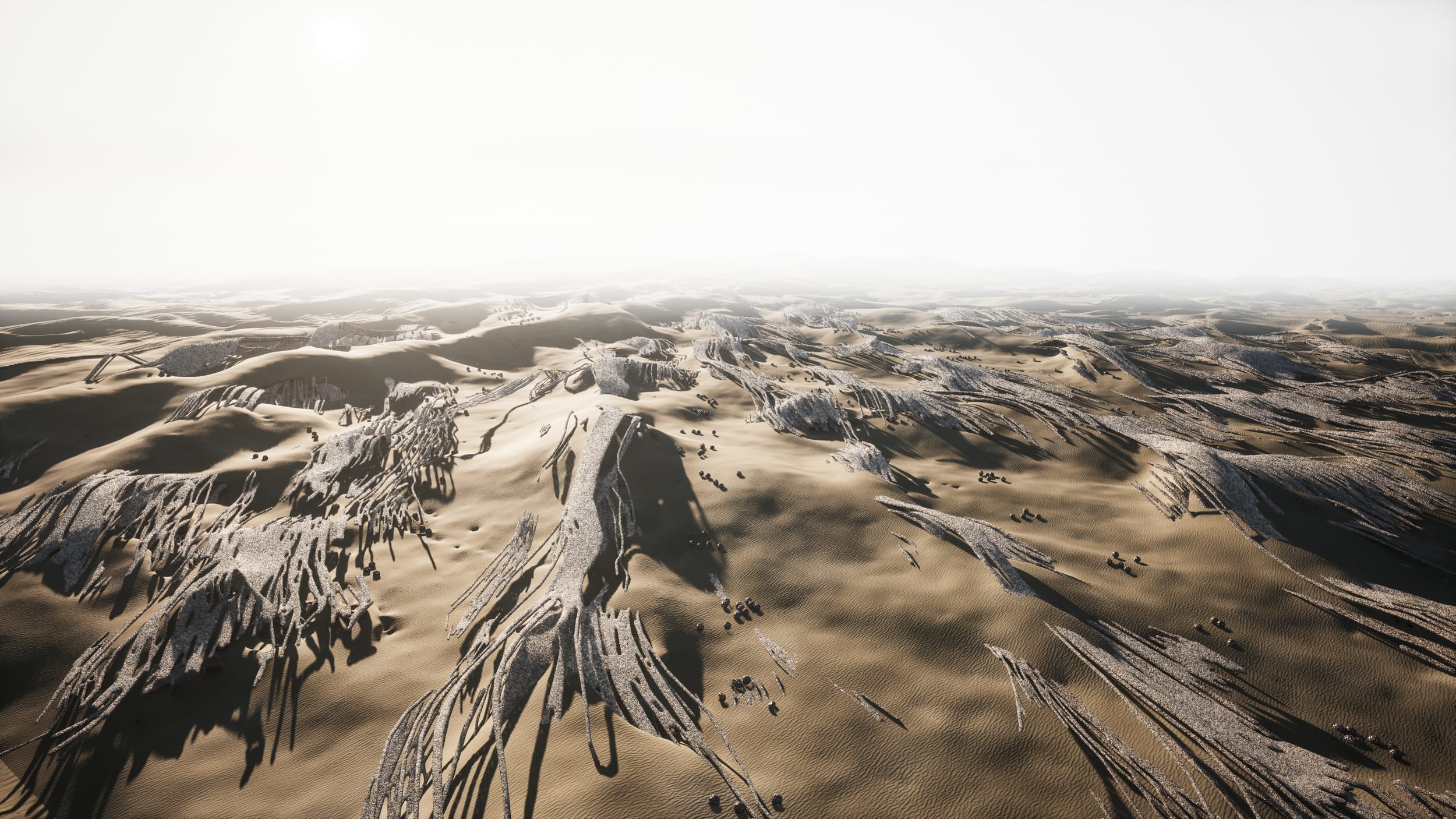
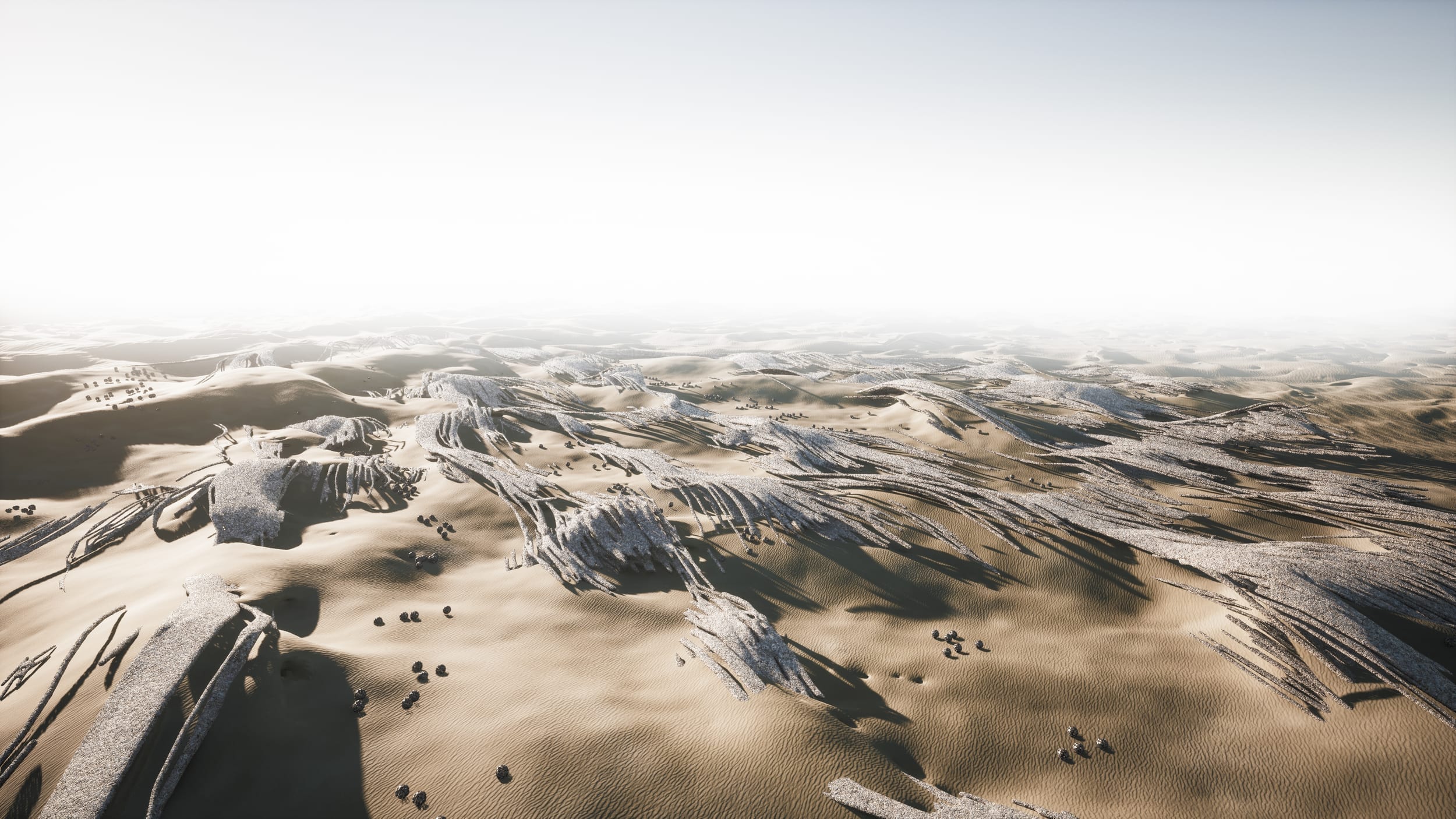
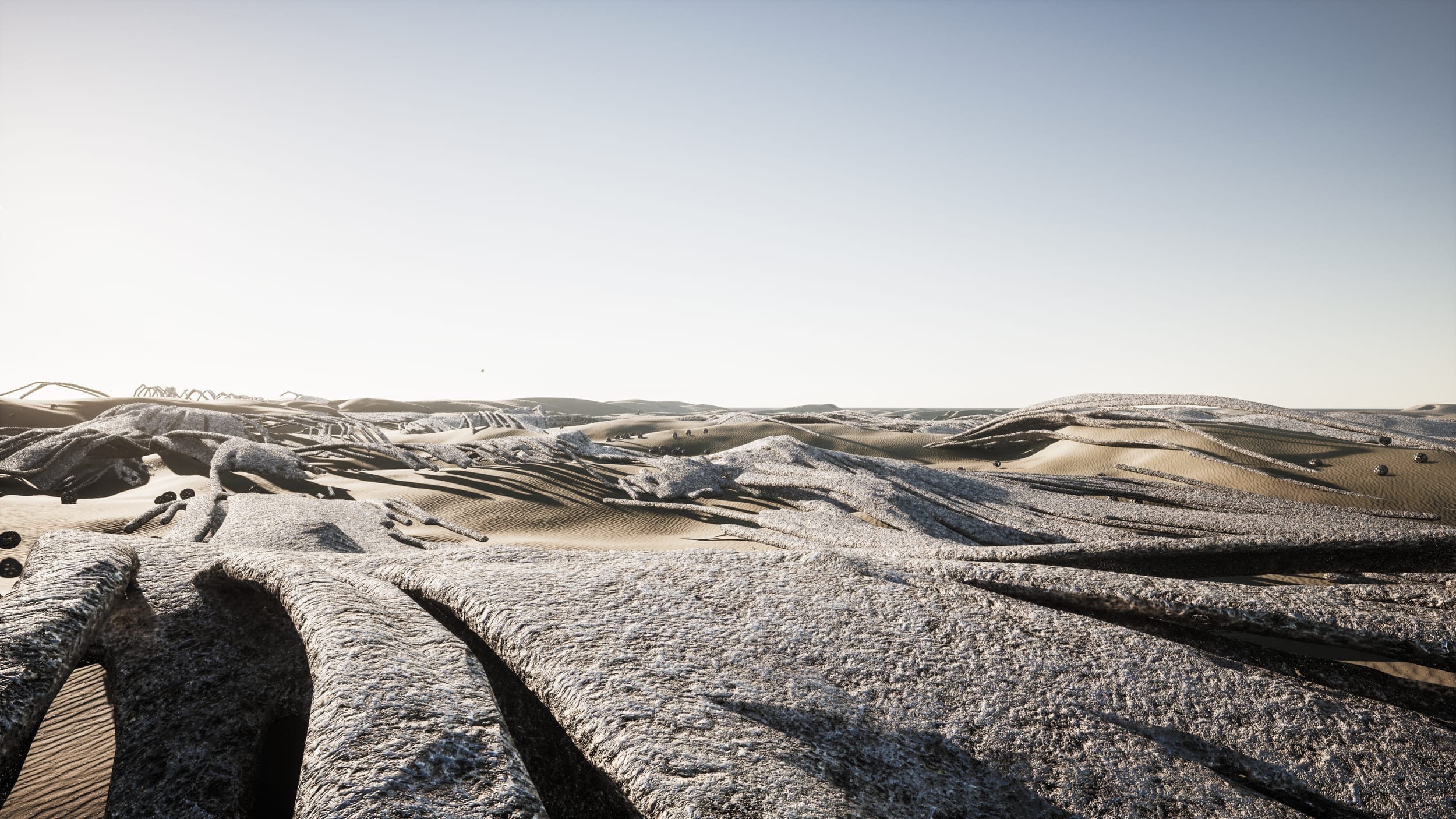
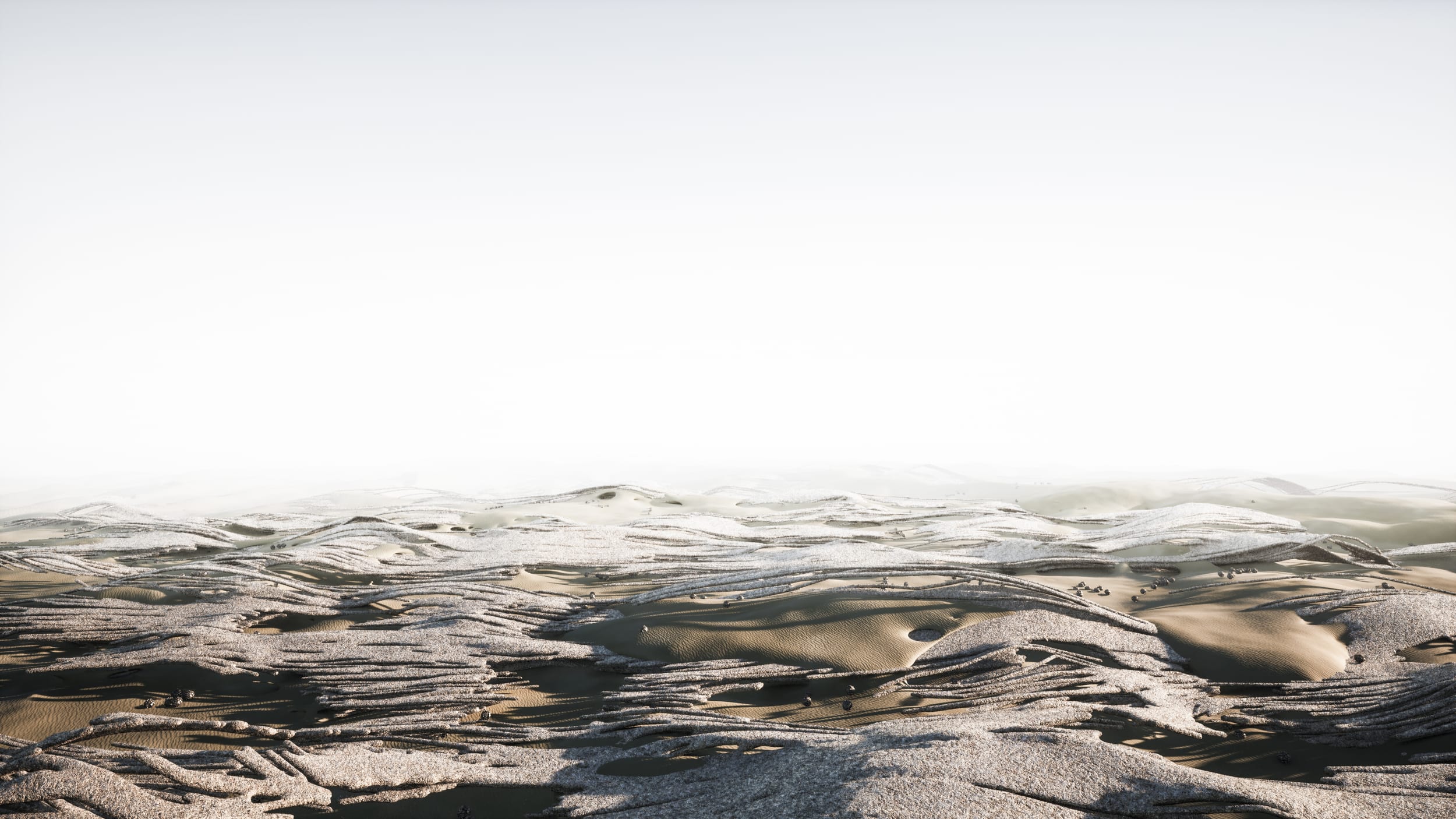
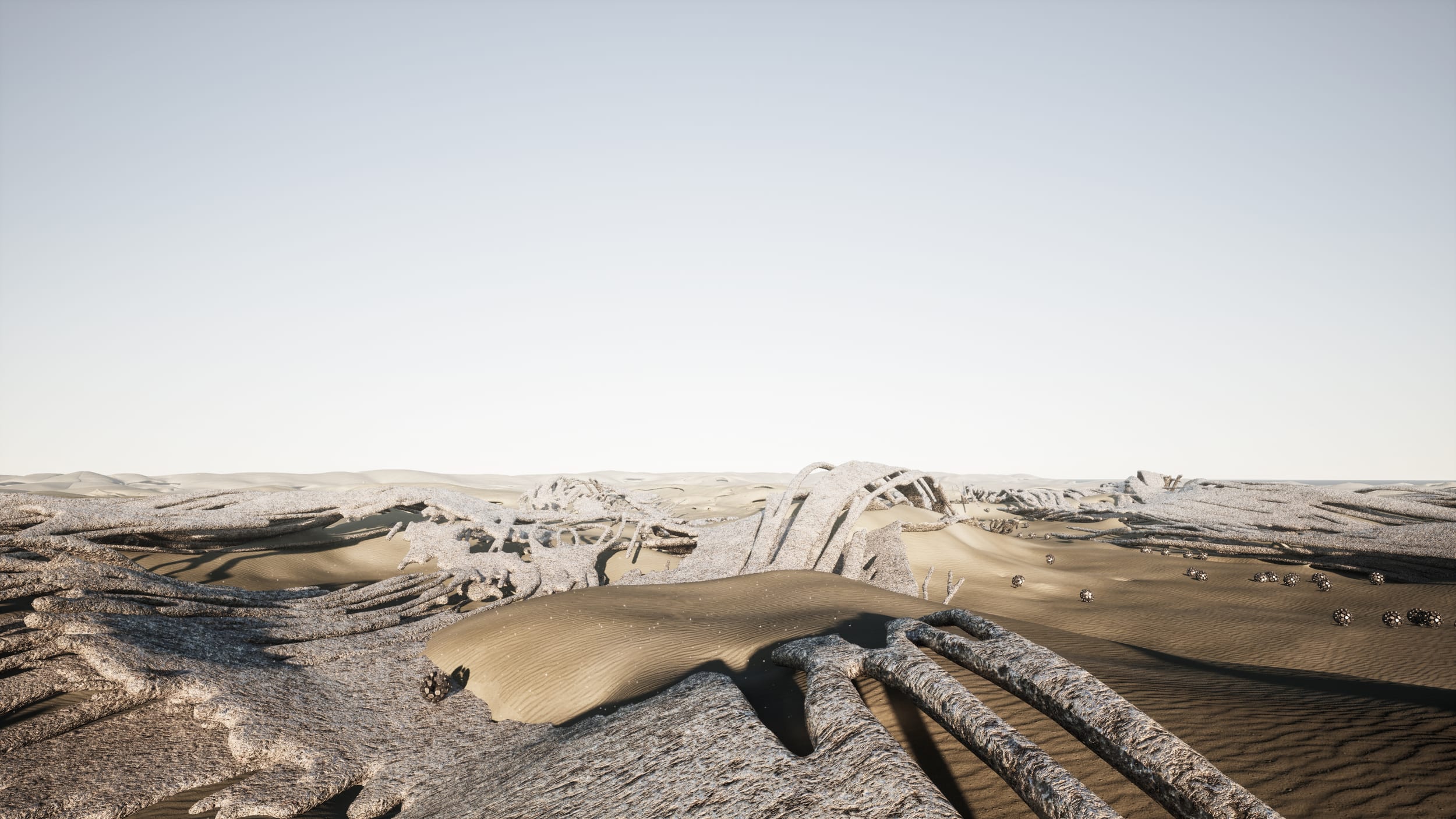
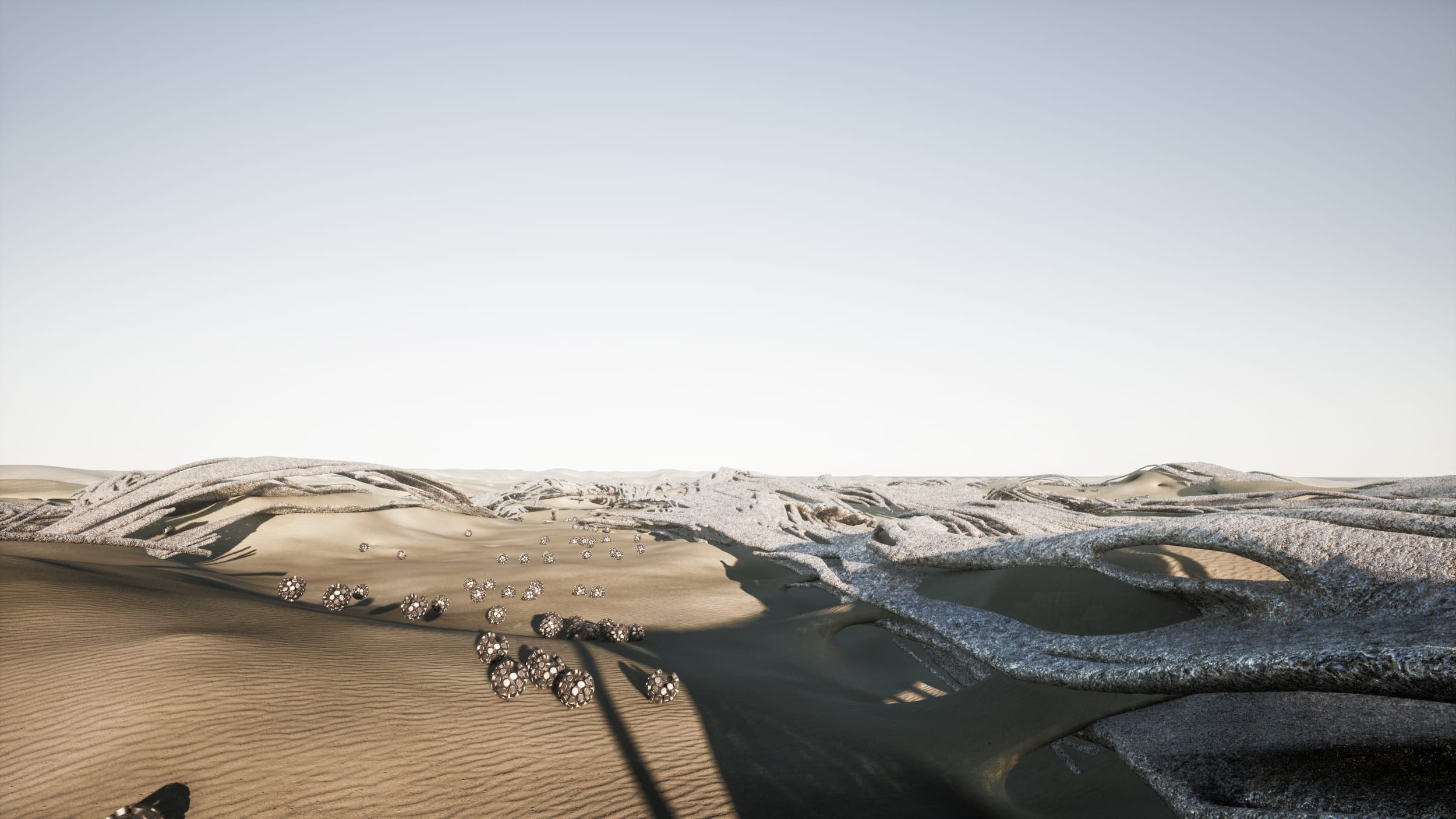
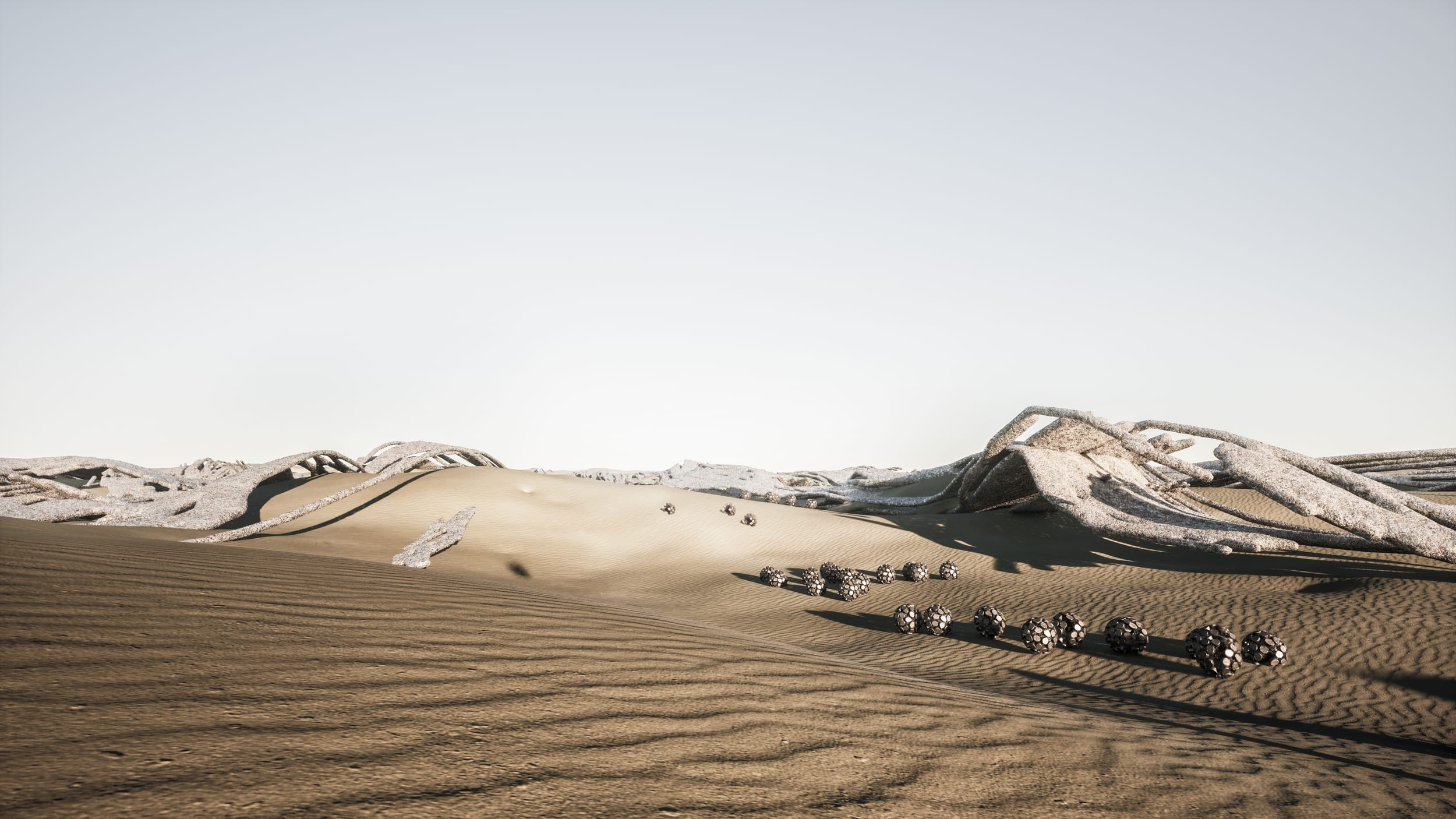
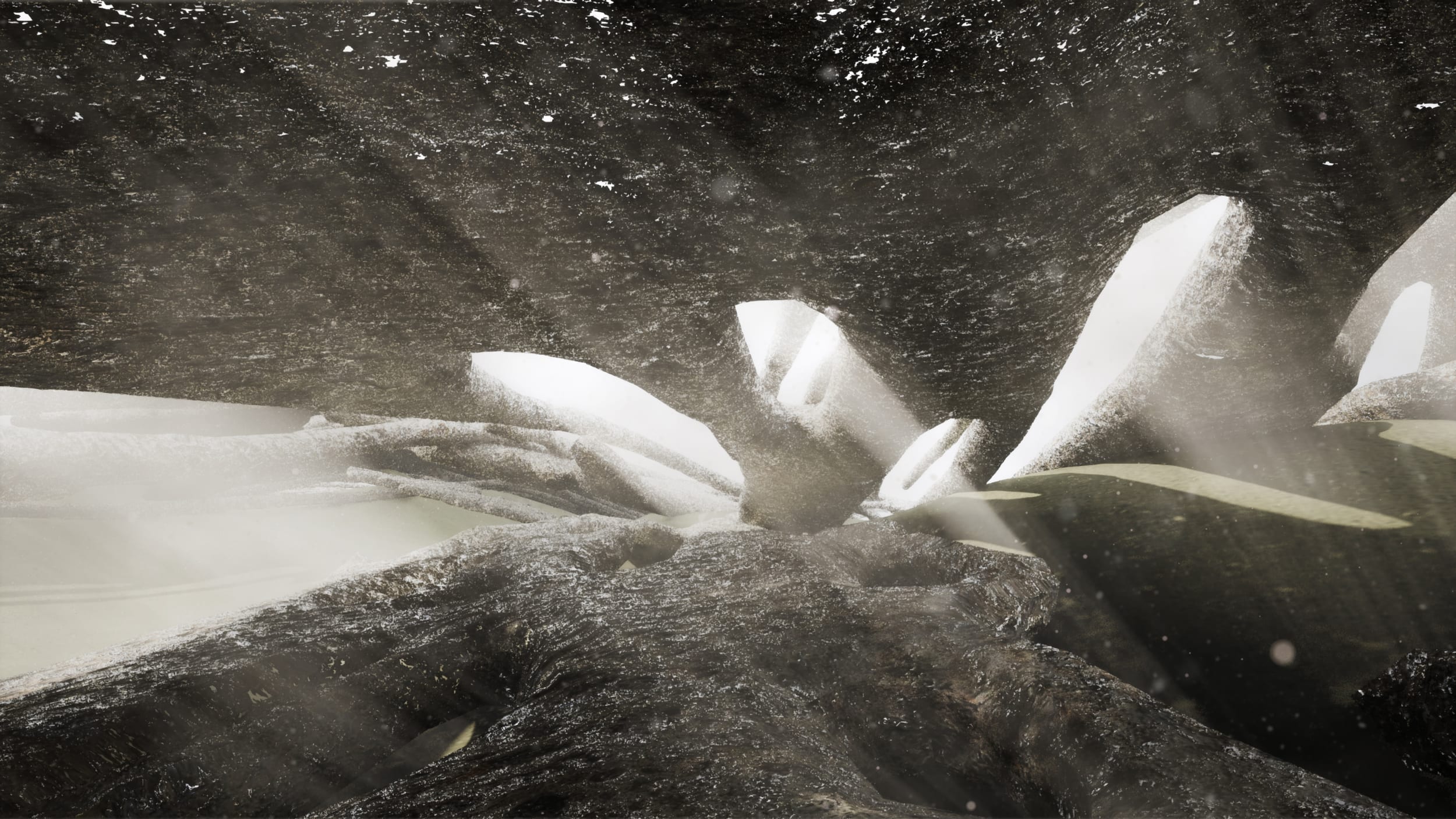
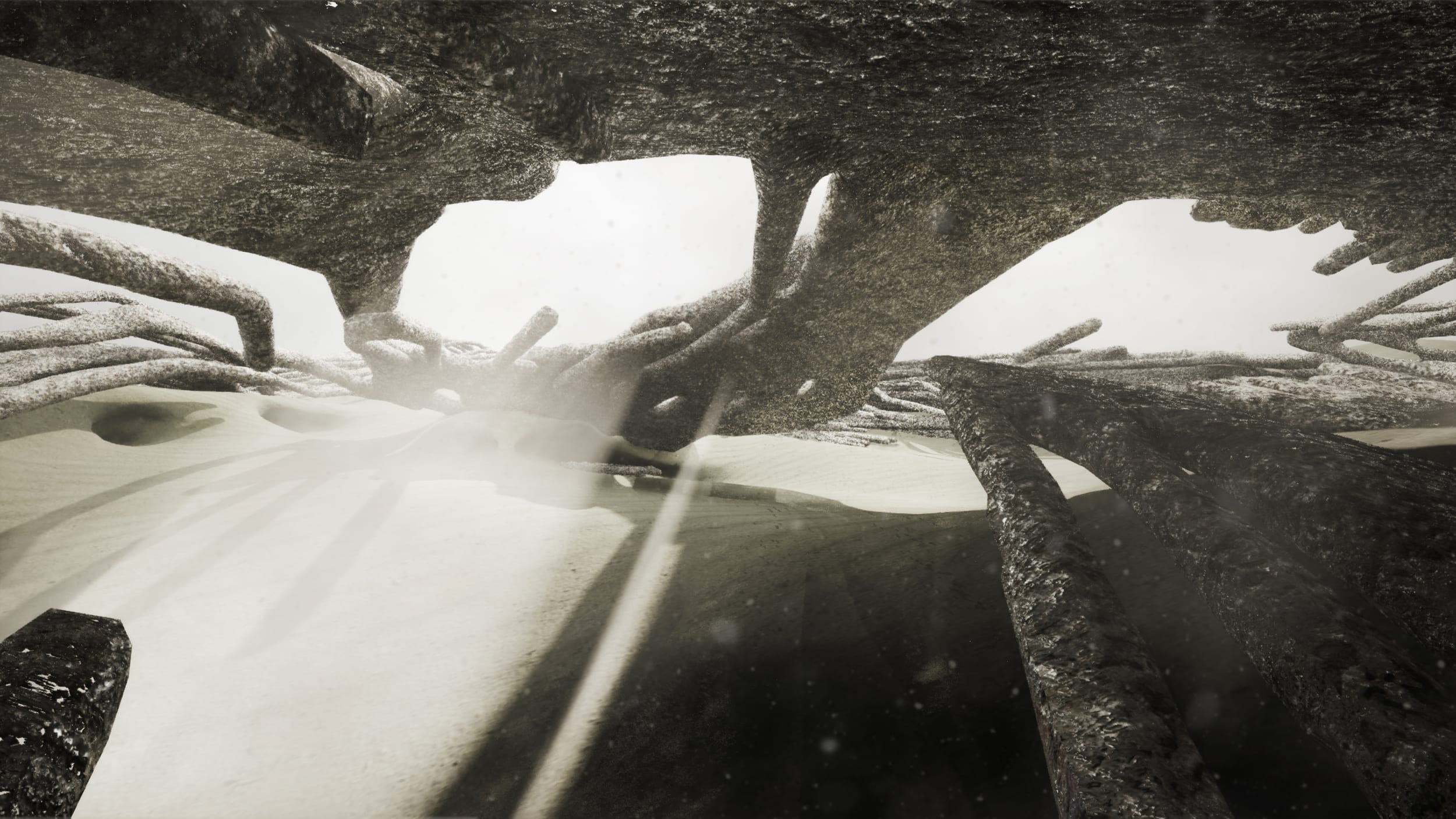
By implementing models which force the material transformation of sand, the research is looking into the fusion of sand into the glass under high temperatures. The process has revealed an opportunity for applications of the strategy for the onsite fabrication of infrastructural formations which addresses the primary goal — the intervention to the physical spread of the desert. The glass structures augment the existing landscape and act as an obstacle against particle movements and will grow together with the dunes. Looking into the dynamics of dunes the aim is to slow down and redirect certain particles in a way to shape a new boundary of a desert.
Due to the harsh dynamic context and the big scale of implementation, the structures are to be fabricated with the high population of robots-agents, which agency let them be autonomous in decision making in a constantly changing environment, where solutions cannot be preplanned, thereby introducing another aspect of the project: the systematic organisation of the collective behaviour of agents.
Spreading towards the desert, structures would create a safe trace behind, giving the opportunity for the development of natural or urban fabric. Therefore, the strategy works not only as the prevention of desert spread but also as an amplification of life within the desert.
Aeolian Series
On our planet, 30% of the surface is land, 30% of the land is desert which occupies 9% of Earth's area, where 20% of deserts are covered with sand. During the last century, the Sahara desert has expanded by more than 10%.
Climate change is expected to further exacerbate the vulnerability of dryland ecosystems which will lead to the acceleration of desertification in neighbouring areas.
Desert / Dune Behaviour
The goal of the project is to redirect particle movement and therefore the first steps of the research consisted of material physical and digital study of deserts behaviour and dune formation process.
By "freezing" back-side parts of dunes we are introducing a kind of natural obstacle to slowly intervene the direction of movement trails of particles.
Agent Based System
The collective behaviour of these agents is defined by its mediums of communications with the landscape from a more global overview and understanding, towards a local bottom-up intelligence. A cybernetic system is generated as the process relies on an continuous dialogue between machine and the dynamic landscape, creating a non-linear feedback loop between both entities. The following diagram represents the behaviours of these agents in relation and in dialogue with the desert terrain.
The terrain is analysed to gather key data points that will enable the agent-based system to make autonomous, real-time decisions. These values are translated into a colour map to provide a visualization of how the agents will perform in different areas. Orange areas have lower values and are characterized by stronger agent cohesion behaviour while blue areas have higher values and are characterized by stronger separation behaviour. This helps to optimize and improve the performance of the generated structure. For example, orange areas are denser than blue areas, providing a thicker, more rigid foundation to support the structure.
Layering
During each iteration, the agent-based system undergoes a cybernetic process in which the landscape is analysed at three different levels (global, intermediary, and local). Based on this analysis, the agents use cohesion and repulsion values that are influenced by mapped data to make decisions about where to deposit sand and where not to. The resulting structure is then tested by subjecting it to sand particles over time. If the structure is not able to fully repel the sand particles, the process is repeated until it is able to do so.
Physical – Digital Bridge / Concept Prove
A 3D Scanner was employed to capture the geometries of real-world dune typologies, which were created through manual manipulation of sand aggregations. This generated real world data was incorporated into a digital framework for simulation purposes allowing for further analysis and parametrisation of the terrain, for simulation of the agent based system. Then the resulting digital structure would be 3d printed and tested.
Though the process was repeated 3 times. Eventually, the performance of the structure to redirect sand in a specific direction is increasing, which proves the strategy in the real world.
Scenario
To test the strategy performance and understand its behaviour on the global scale we picked a specific location for the application. We selected the desert in Asia, Takla Makan; it is a sandy desert which occupies 337.000 km².
The desert borders with the city Hotan in China. The major wind blows toward the city expanding the desert and covering it with sand. For the strategy we divided the landscape in a grid of 1 km² where one group of agents is operating at a time.
Agents receiving height data from the satellite are autonomous in decision making on the landscape, communicating together they are fusing the specific parts of the dunes. Working in 1 km at a time they are fusing it with layers until the structure is performative enough. With a new layer robots will cover gaps and extend the surfaces. One robot welds 60 cm width structure in 5 min. One meter length of 60 cm width with 2.5 hours. And for one layer of a structure in the 1 km region it would take 25 days. By the time parts of the structure would be covered with the sand, after that agents are coming to produce a new layer but already on a new landscape. The location of fusion and movement path are always changing according to the ever-changing landscape and dune dynamics. Parts of the structure would be covered again. But with every iteration more of the structure is remaining clear meaning that it is performing and redirecting sand, where it is covered there is a need of another iteration of fusion.
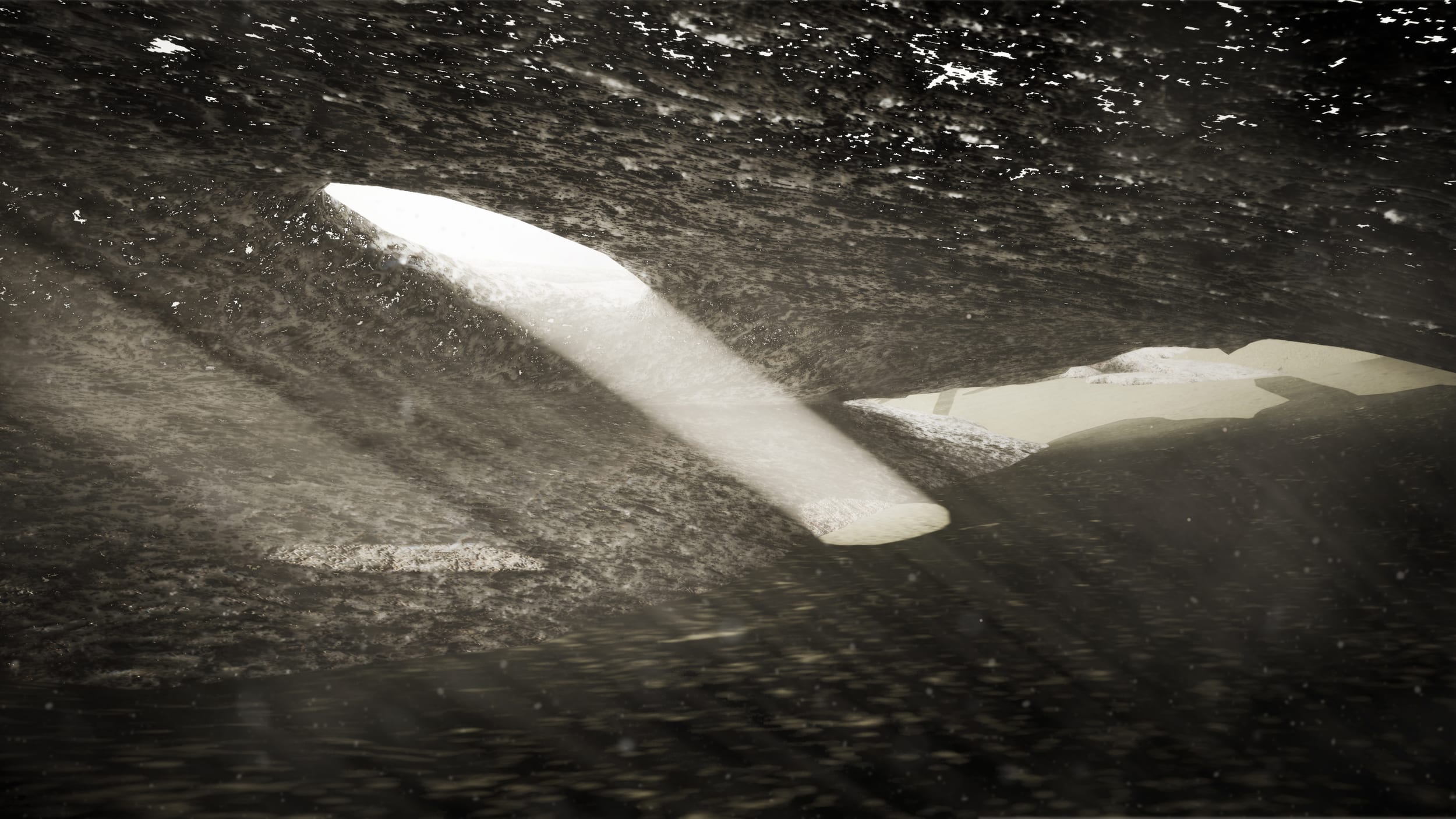
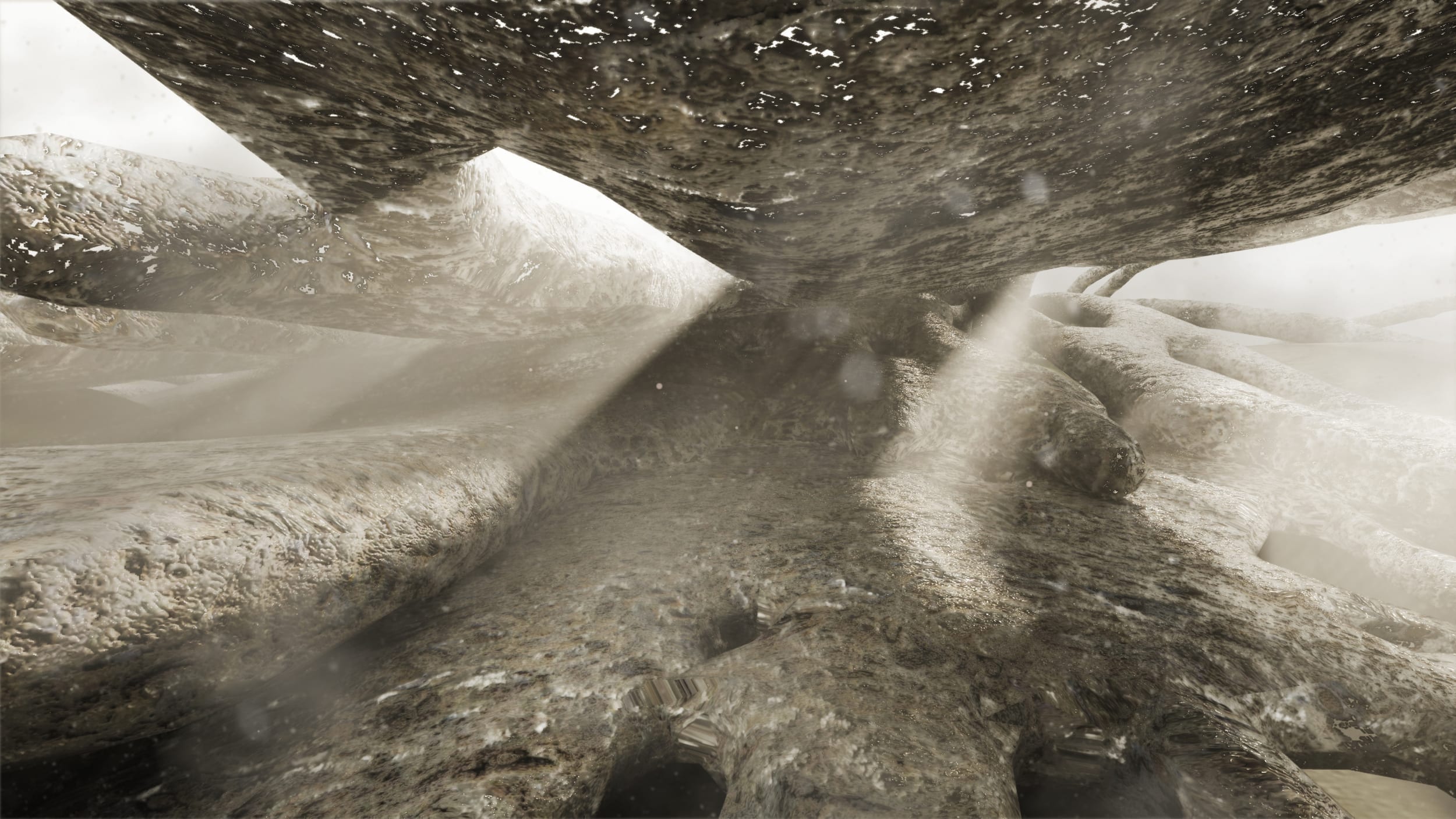
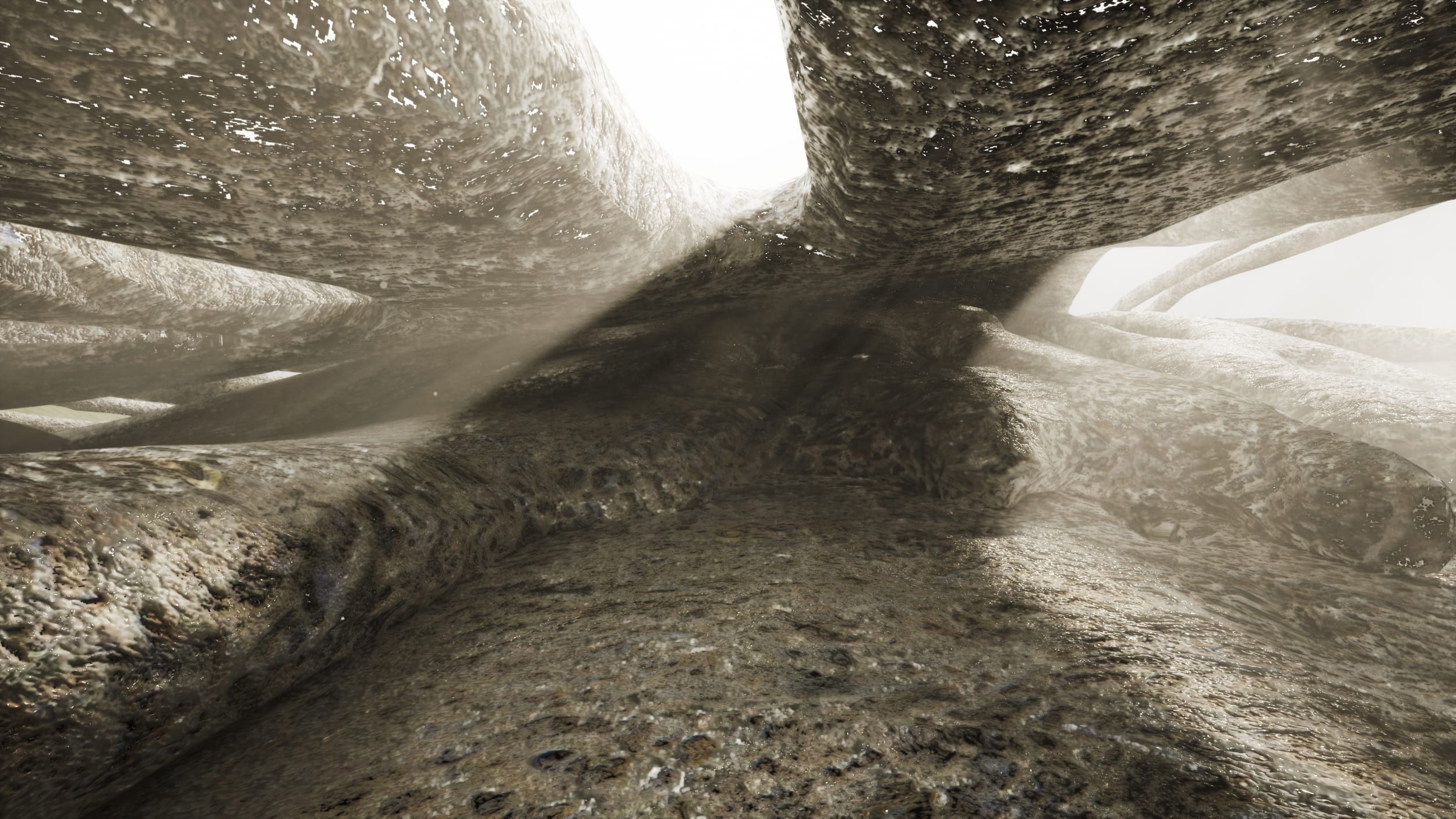
Aeolian Series
Index